
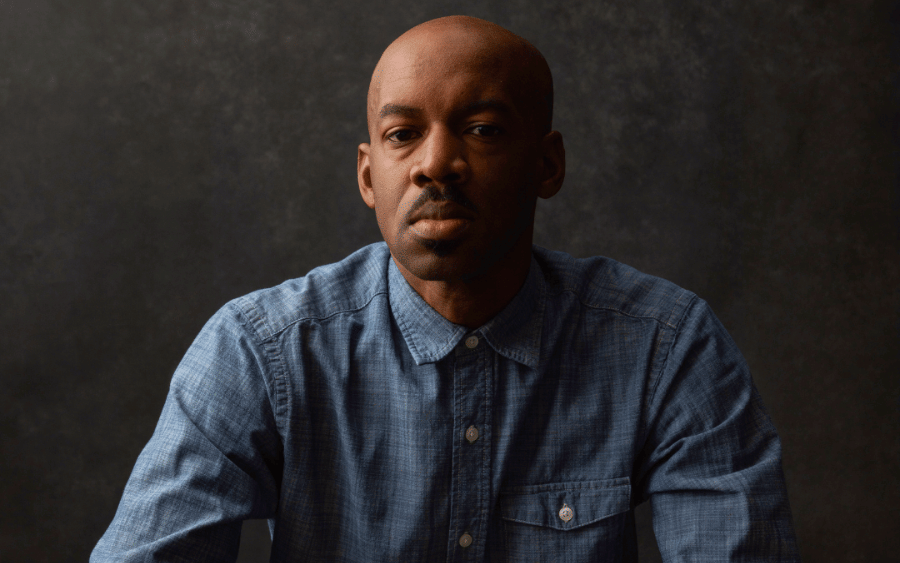
Krate Digga (Image courtesy of subject)
DJ Krate Digga has been behind the turntables since the fall of 1997, when he started practicing nightly in a dorm room at Kentucky State University. Twenty-nine years later, that origin story is the subject of The Krate Doc, a new documentary from The Ummah Creative Group, and the centerpiece of a two-part conversation on Queue Points. Host Jay Ray interviews director Dominic Lawson about the making of the film, while host DJ Sir Daniel sits with Krate Digga himself to trace a DJ career built on regional record-buying trips, HBCU homecoming crowds, and a musical philosophy that treats hip-hop DJ culture as distinct from DJing in general.
Lawson's path to directing the film runs through podcasting rather than film school. He has produced narrative audio work including Black Is America, and credits his mentor Krystal Hill with a lesson that shaped his approach to both mediums: "Bad audio is not a stylistic choice." That principle, he says, became a competitive advantage once he moved into documentary work, where he noticed many newer filmmakers focus on visuals at the expense of story and sound. He shot The Krate Doc almost entirely alone, using a Pocket 3 Osmo camera across five gigs in a single weekend in Columbus, Ohio, and built the film's structure around the conversations that happened in the truck between venues.

That editing process took roughly two weeks of reviewing three and a half to four hours of raw footage to arrive at a 34-minute final cut. Lawson describes the challenge less as technical and more as narrative triage: deciding what footage was essential to the story versus what merely looked good. One sequence he singles out is a slow-motion shot of Krate Digga performing, cut against the sound of the crowd reacting in real time, which Lawson uses to visualize the DJ's own description of a symbiotic relationship with the room he's playing for.
Krate Digga's half of the conversation moves into the specifics of DJing at a historically Black university in the mid-1990s, a role that required fluency across regional hip-hop scenes rather than mastery of a single sound. He had to move between the Southern catalog of Master P, UGK, and the Hot Boys on Cash Money Records, East Coast staples like Nas, Jay-Z, and Mobb Deep, the rapid-fire style of Chicago's Twista, and the Detroit-specific sound running through J Dilla's productions and the ghettotech records associated with DJ Assault. International students on campus expected reggae selections. Fraternities and sororities stepping to a routine had zero tolerance for a DJ who didn't already know the record.
That regional literacy grounded a signature move Krate Digga developed on campus: threading older R&B and funk records into hip-hop sets rather than sticking to current singles. He points specifically to pairing the Isley Brothers' 1983 track "Between the Sheets" with The Notorious B.I.G.'s "Big Poppa," a song that samples that same Isley Brothers record. He describes the underlying instinct as something that predates his technical DJ training entirely, rooted in noticing how a single musical idea travels across decades and genres.
DJ Sir Daniel asks whether DJs today have more to do in order to build a visual brand alongside their sets. Krate Digga traces the practice of using video to build a DJ's reputation back to the analog era of camcorder footage from DMC championships and live sets, arguing that visibility has always mattered. What's changed, in his view, is that digital tools have made the technical mechanics of DJing easy enough to automate, shifting the competitive differentiator toward content and personal brand rather than raw skill.
"The DJing point in terms of playing the music is almost at a point where it can be done without the human having to do much."
— Krate Digga
Listen To This Episode
Krate Digga & Dominic Lawson on 'The Krate Doc' Film
In this episode of Queue Points, we discuss 'The Krate Doc,' The Ummah Creative Group’s new film follows DJ Krate Digga through five Columbus, Ohio gigs in one weekend, p...
He resists blanket judgments about newer DJs, or about the current wave of criticism aimed at boiler-room-style sets, celebrity DJs, and mashup culture, arguing that different people enter DJing for different reasons and that a fair critique has to account for that context first. Asked directly whether he can imagine retiring, his answer is no. He describes DJing as inseparable from his identity, tracing the impulse back to childhood record players and mixtapes, long before he ever touched a turntable professionally.
Jay Ray closes the episode by tying both conversations together as one story about collaborative craft, whether the product is a documentary or a dance floor.
"This has been a special one for us, two conversations but one story about what it really means to build something as a collective, whether that's a documentary or a dance floor."
— Jay Ray
Editor's Note: Blog post was developed using AI assistance to repurpose content from our original episode, Krate Digga & Dominic Lawson on The Krate Doc Film, and was subsequently reviewed, fact-checked, and edited by the Queue Points team to ensure accuracy and voice.