

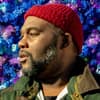
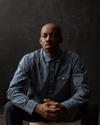

This episode centers on The Krate Doc, the new documentary from The Ummah Creative Group that follows DJ Krate Digga through five gigs in a single weekend in Columbus, Ohio. DJ Sir Daniel and Jay Ray split the conversation in two: Jay Ray talks with director Dominic Lawson about building the film's visual language out of his background in narrative podcasting, while DJ Sir Daniel sits down with Krate Digga to trace 29 years behind the turntables back to a dorm room at Kentucky State University. Between them, the two conversations cover documentary craft, HBCU DJ culture in the mid-'90s, and the current debate over branding, social media, and gatekeeping among working DJs. It's a two-part look at the same subject from behind and in front of the camera.
The Breakdown
How a podcast producer became a documentary filmmaker: Dominic Lawson explains how his narrative audio work on Black Is America and his mentorship under Krystal Hill shaped his approach to sound design, pacing, and cinematography on his first documentary.
Building a DJ set list for Kentucky State University in the 1990s: Krate Digga breaks down how the school's regional mix of students demanded fluency in Master P, UGK, and Cash Money's Southern catalog alongside Nas, Jay-Z, and Mobb Deep, plus the Detroit house and ghetto-tech influence of DJ Assault and the J Dilla school of production.
The mechanics and philosophy of blending genres and eras: Krate Digga details his signature move of dropping the Isley Brothers' "Between the Sheets" around Biggie's "Big Poppa," and how that same instinct for connecting eras extends to hearing Bob Marley's bars resurface through Drake and Dead Prez.
DJ culture, branding, and the gatekeeping debate: Krate Digga responds to criticism of boiler-room sets, celebrity DJs, and mashup culture by arguing that DJing means different things depending on whether someone approaches it through hip-hop culture, wedding entertainment, or pure commerce.
Watch the Film
Chapter Markers
00:00 Intro
00:04 Welcome and Introductions To Conversation
01:09 Introducing Dominic Lawson
02:08 The Conversation Begins
02:58 Origin of The Krate Doc
06:57 Columbus as a Character & Filming Process
10:56 From Podcasting to Filmmaking
14:30 The Evolution to Film
19:55 Start With What You Got
22:28 The Editing Process
25:05 Where to Connect
27:05 Transition & Introducing Next Segment
28:01 Welcome Back and Introducing Krate Digga
29:10 Origins: Starting DJing at Kentucky State
32:45 Quick Transition
32:46 DJing at an HBCU: Building Regional Range
42:16 DJs, Branding, and Social Media Pressure
48:43 DJ Culture, Tropes, and Gatekeeping
55:16 Quick Transition
55:18 Krate Digga on Retirement and Why he DJs
59:26 Connecting with Krate Digga
01:01:22 Closing Thoughts
01:02:35 Outro Theme
#DJCulture #BlackMusicHistory #HipHopDocumentary #HBCU #KrateDigga
Disclaimer: Episode Descriptions were developed using AI assistance and were subsequently reviewed, fact-checked, and edited by the Queue Points team to ensure accuracy and voice.
Transcript
*DISCLAIMER: Transcripts are created using AI, and may not accurately represent the content exactly as presented. Transcripts are provided as a courtesy to our listeners who would like to use them. For the accurate context of what was said, please refer to the audio or video of the episode.
[00:00:00] Intro
[00:00:04] Welcome and Introductions To Conversation
Jay Ray: Queue Points family, it's Jay Ray. Welcome back to another episode where we're dropping the needle on Black music history, and today we're doing something a little different. This is a special two-part episode built around a documentary that's been making noise in the DJ and creative community, The Krate Doc from the Ummah Creative Group.
Me and DJ Sir Daniel each sat down separately for this one. I talked to Dominic Lawson, the director, about how the film came together, how his years in podcasting shaped his eye behind the camera, and what pushed him from audio storytelling into filmmaking. Then Sir Daniel sat down with the man in front of the lens, Krate Digga himself, to get into his 29 years behind the turntables, his roots at Kentucky State, and what this documentary captured about DJ culture that most people never see.
So sit back, because this story is about craft, brotherhood, and about what's really happening underneath the surface of the culture. Let's get into it.
[00:01:09] Introducing Dominic Lawson
Jay Ray: Queue Points family, we are so excited to welcome our next guest to the show. He is the filmmaker and director of the new documentary, The Krate Doc. Dominic Lawson is an award-winning multimedia storyteller, documentary filmmaker, podcast producer, and host with nearly a decade of experience creating narrative content. His work has earned more than 40 industry honors and nominations, including recognition from the Webby Awards, the Ambies, Signal Awards, Communicator Awards, and W3 Awards. Through projects including Black Is America and his growing documentary work, Dominic uses history, culture, and contemporary issues to tell deeply human stories. He is also an FAA Part 107 certified drone pilot and continues to expand his work across audio, film, and field production. Queue Points family, welcome Dominic Lawson to the show.
[00:02:08] The Conversation Begins
Jay Ray: What's happening, man?
Dominic Lawson: Man, I am living a dream, man. I, uh, that check's in the mail for all those nice things you just said, so I really appreciate it
Jay Ray: That's you, brother, and, and I can't wait. we are ... We have you on because you are the, the filmmaker behind this beautiful documentary, and I say that with the utmost respect, um, of this documentary called, uh, The Krate Doc, which is out now. Um, as someone who started my artistic career working with DJs, my co-host, uh, Sir Daniel on this show is a DJ. Uh, I respect that craft so much, so I'm always fascinated, uh, learning more about DJs and their craft, and how they think through their work, and you certainly showed that in The Krate Doc with Krate Digga.
[00:02:58] Origin of The Krate Doc
Jay Ray: So let's start with how did the, the, the idea to create this document- this documentary come about?
Dominic Lawson: You know, honestly, uh, it, it, it started years ago. It was the, the first time, we have a mutual friend in Mr. Al Pete, and I listened to his, um, his narrative podcast, Tables Might Wobble,
Jay Ray: Mm-hmm.
Dominic Lawson: And learning the ins and outs of, of DJing. And I've always been fascinated with how when we see things, uh, on the surface, right?
You know, and, and we have one perception, uh, about it, and then we get to dig into what that thing is and this, that, and the other, and then you learn that, oh, no, there's a whole nother- You know, aspect to, uh, this, uh, this thing, this craft, this industry, whatever the case may be. It reminds me of when I was a kid, used to, uh, r- right before I used to work at Foot Locker, right?
So I used to, you know, go by the mall, see Foot Locker. Oh, all you're doing is selling shoes. And then, like, my first day on the job I'm in the, in my... I didn't sell not one shoe, 'cause I'm in the back putting shoes in the shelves and, and in the stockroom the entire time. So it's like f- from st- uh, entire time, so it's like from
experiences like that, it just made me realize that, like, you know, if that experience is like that, other experiences have to be that same way. Like, there, it's never just the thing that we see on the surface, that topical thing. You know, what lies underneath? And so, uh, that was kind of the, the, the premise or, you know, the kind of the pre-background story I guess, uh, for that, listening Tables Might Wobble, stuff like that.
But, uh, as it came to that weekend, uh, Krate was, and, and Al Pete were putting on a show called FLOH State where they were kinda, uh, bringing together both of their crafts as DJs and MC and, and stuff like that. Uh, and so they invited me and, uh Shawn Smith, S Squared of Dripping in Black Productions, uh, for that weekend.
And so you know what? We see that, like, we, you know, Krate has, like, all these different events and this, that, and the other, and I'm thinking like, "You know, five events in three days, that feels like a lot."
Jay Ray: Yeah
Dominic Lawson: that, sounds like a lot. I'm tired just saying five events in three days, right? I was like, "You know what?
We should probably document this," right? Like, just to kinda give you an idea of, or give, you know, the layperson the idea of what it's like to be in this industry. What is it like to, to navigate this craft, right? And so I have heard many of stories and, uh, good stories, bad stories, in between stories from Pete and Al, I mean, from Pete and Krate,
Jay Ray: Mm-hmm.
Dominic Lawson: uh, about what this life is like.
So I was like, "You know what? Let's put a lens on this and just show people what this looks like." And so basically, uh, I, I, I took a, a, a, a Pocket 3 Osmo camera, uh, and we just went around Columbus to all five of those gigs, uh, uh, documenting and sharing and getting different perspectives and stuff like that.
And, uh, and we used the, um, the, uh, the conversation in between those gigs, uh, as kinda the spine of the film, right? Just kinda in with Krate, seeing how he's doing but just kinda getting his philosophy on certain things for how, uh... Not just DJs to be honest with you, because Krate is a very big advocate for not just, just for people in the creative space,
Jay Ray: Mm-hmm.
Dominic Lawson: right?
I think DJing is just the avenue That he really is kinda known for. His focal point is that and the other, right? But we use those conversations, uh, in the truck during the, in between those, uh, gigs to kinda just talk about his philosophy but also just kinda, uh, get some shots of Columbus itself because honestly Columbus, the city of Columbus is almost kinda like a secondary character,
Jay Ray: Yes
Dominic Lawson: this film, right?
Uh, and so that's kinda how it came to be and I'm, like, just super grateful for Krate to, uh, allow me to kinda do that and, um, and, uh, to kinda tag along
Jay Ray: Yeah. Um, let's talk a bit, excuse me,
[00:06:57] Columbus as a Character & Filming Process
Jay Ray: let's talk a bit about that process because I definitely picked up on the fact that Columbus was almost like another... Like, you were telling the story of, of Columbus the scene, the people. Like, I really felt like as someone who visited Columbus many years ago, like, it was like, "Oh, this is dope.
I get to see folks." You know what I'm saying? Black folks in particular enjoying themselves out here and having a good time in the city.
Dominic Lawson: Right
Jay Ray: Um, how did you plan? Was there a plan? Like, how did you figure out what story you wanted to capture along the way? Like, what's your process?
Dominic Lawson: You know, it's, it's interesting, right? So one of the things as, as I've have evolved into filmmaking, right, is that like sometimes you can plan stuff. You can storyboard, which we did, this, that, and the other. You can storyboard, you can plan, this, that, and the other. But I had never been to Columbus before, right?
And so a lot of the venues, you know, like there's maybe one or two where we kind of went a day before to kind of check stuff out where I can kind of, uh, you know, look at some stuff here and there. But for the most part, uh, I, I think outside of one ... No. Every single place we went to, I had never been to before, right?
Like so, you know, 'cause I, I know Pete and Krate, they went to, uh, Cure. Uh, the third spot we went to, they went the day before to kind of check stuff out. Uh, but ideally you want to go the day before, kind of check stuff out, kind of look at the scene, get a vibe of stuff like that. Uh, but when you're just in it, you're honestly just kind of, you know, playing off what's ever available, right?
Playing off the environment, playing off the people, right? So it's like, you know, if you see people dancing in the corner having a good time, you kind of get a few shots, uh, here and there. You kind of set the scene outside, uh, of just getting some B-roll shots of like, you know, traffic going by, the, you know, the, the venue over in the, in the background.
Or, you know, if, if you're just kind of like at a, a, you know, the arts festival, which we were,
Jay Ray: Mm-hmm.
Dominic Lawson: uh, basically you're just kind of catching the vibe of the people, you know, and the performances, and people just kind of, uh, networking and, and mingling, and stuff like that. And so honestly, I, I'm a big fan of like the cinema verite kind of style of, of, of filmmaking.
So basically that is just like, you know, letting things happen as they are. Not a whole bunch of directing, not a whole bunch of like, uh, blocking or like directing people and stuff like that. You really just kind of want to see things happen organically, right? Uh, now there's a few times where I was like, "Hey, hey, come through that door one more time.
I
Jay Ray: Yeah
Dominic Lawson: that, you know, just g- get the nice little B-roll shot." Uh, but for the most part you really are just letting things happen organically as they would, uh, in life, and you're trying to capture that. Now that doesn't mean there isn't any work, right? Because as pretty much the primary single camera person, right, you know, you're, you're, you're trying to get as much stuff as possible.
Like there's a part where, uh, Krate is setting up, uh, at The Cure, right? You
Jay Ray: Mm-hmm.
Dominic Lawson: so basically there's like three consecutive shots of like, you know, me in front of Krate, then me behind Krate, then me kind of 45 degrees off, uh, of Krate's, you know, right shoulder, right? You
Jay Ray: Mm-hmm.
Dominic Lawson: And it all looks like it's the same exact, exact, uh, shot, but it's really not.
It's me moving super fast like, "Get this, 10 seconds. Get over here, 10 seconds. Get over here, 10 seconds," right? And so it all seems continuous like there's a, like there's a, you know, a whole film crew, and it's really just me primarily, right? And so those are just some of the things that you're trying to do.
Because what you're, what you ultimately want to do Is if you weren't there, to kind of, you know, give as much as possible that you were there, right? So you can get s- different angles, like if you were sitting at the bar, if you were just coming in the front, the front door, if you was coming back from the bathroom, right?
To kinda give all those kinda angles and vibes, and just kinda tell as, as complete a story as you possibly can
Jay Ray: Yeah. I love that. Um,
[00:10:56] From Podcasting to Filmmaking
Jay Ray: filming is, uh, as someone who has, uh, a d- one documentary film that I have produced, uh, it is a, it is a, it's a, it's a, it's a... You, you getting things done. It's a lot
moving. I, I am curious, how has your work in audio and podcasting as a form, a medium informed how you are storytelling in kind of this filmmaking medium?
Dominic Lawson: You know, it, that's a great question. And, and honestly starts with something that m- my mentor Krystal Hill tells me all the time that she got from her mentor, which is, uh, bad audio is not a stylistic choice. Right?
Jay Ray: Krystal for that. She got us together too.
Dominic Lawson: exactly, bad audio is not a stylistic choice. And one of the things I've learned as I've transitioned or evolved into film is that that was actually a competitive advantage for me, right?
Now because a lot of filmmakers, uh, from what I'm told and what I see on, you know, your YouTubes and your Instagram, because honestly Jay Ray, that's, that's kinda my film school is it's
Jay Ray: yeah. YouTube University.
Dominic Lawson: YouTube. Right. Exactly, right? That's, that's the film school I'm, I'm
Jay Ray: Yeah
Dominic Lawson: But a lot of things I've learned is that like, you know, a lot of new filmmakers, one, uh, they're not, you know, the, a lot of them, not all of them, a lot of them are not very keen on story and they're not keen on the audio, right?
And so being in podcasting and, you know, those two things were all I really had, right? So I had to focus on those things. I had to make those things work. And so it just transitioned over that, uh, transitioned that over into film. So making sure that, you know, I can hear Krate when we're in the truck, right?
And, and, and getting that sound right. But also When I was writing, you know, Black is America, when I was writing Mental Health Rewritten, I was always writing cinematically, using adjectives, using very descriptive language, very descriptive things and this, that, and the other. And then also the audio kicks in with like the, the Foley and the sound design and stuff like that.
So it's like I just took all of that into filmmaking. Uh, and so now it's just a matter of trying to get the shots right, get the cinematography down, get the videography down, right? And just really trying to make sure that I'm telling the story visually what I was kinda seeing in my head. 'Cause that's what I was doing when I was writing scripts for, uh, the podcast, the narrative podcast, right?
I was writing what I kinda saw, uh, in my head, right? So now I'm just trying to figure out, still learning, still, you know, I'm a, I'm a new filmmaker, right? So still trying to figure that out, but how can I tell these stories visually, uh, how I used to see them in my head? And so with the Krate doc, one of the things I was doing was playing with, you know, composition, playing around with like, you know, things in the background, things in the foreground.
There, there's a beautiful shot that I love when Krate is in, uh, one of the venues, The Cure, where he's over there setting up in the, in the, in the background, and there's like one of, like these pillars in the foreground, right? And it really gives like some, some, some, some depth, and it kinda gives you a little bit of storytelling that like, you know, like you really, you know, could have been, you know, how it would look if you were actually there, right?
And so that's one of the things that, you know, podcasting ha- well, two of the things that podcasting has really allowed me, uh, to kind of, you know, uh, translate over into, um, film. And so just trying to get the cinematography down to kinda catch up with what I already kinda learned with audio and with, uh, storytelling.
Jay Ray: Um,
[00:14:30] The Evolution to Film
Jay Ray: let's talk about this a bit because you, uh, folks will primarily know you from your, your podcast work, your audio work. How did this evolution start? What was the seed that, um, grew into you moving more heavily into this direction of storytelling?
Dominic Lawson: Y- y- you know, a- a- and just to be, just to be completely transparent, I'm not done with podcasting.
But I think what happened with podcasting, uh, and I'll g- be completely transparent, right? Um, I did an episode of Black Is America, uh, about the tree, uh, three track, uh, stars, right? It was, um, Sha'Carri Richardson, Flo-Jo, uh, and Wilma Rudolph, right? And I told this, this trilateral storyline kinda jumping back and forth between their stories and this and the other, right?
Um, and honestly, it's a good episode. It's an award-winning episode, this, that, and the other. But there was a part of me where it was like the challenge wasn't there, right? Like, I'm not saying that, like- Um, you know, I could have, like, wrote that story with my eyes closed, you know, you know, with one hand tied behind my back.
But what I am saying is that, like, it felt like work. It felt like, you know, I can just do this. I could, I could, I fe- being honest with you, I feel like I could just roll out of bed and win a Signal Award, honestly, right? And so, like, that challenge wasn't
Jay Ray: Mm-hmm. Mm-hmm. Mm-hmm
Dominic Lawson: uh, doesn't mean it wasn't good work,
Jay Ray: We're
Dominic Lawson: but it was one of those things where it's like there's nothing challenging me here.
And
Jay Ray: Mm-hmm.
Dominic Lawson: when I w- I, I had the blessing of winning Podcaster of the Year at the Black Podcasting Awards, I'm literally on stage, right, accepting that award, and it just dawned on me, like, this feels like the end of a chapter, right? This feels like a book-end of something that was a phenomenal run, very blessed that it happened.
Um, but it feels like I'm ready for something more, right? And so, honestly, it felt like the next step was film, right? You know, uh, that just felt like the next step, right? I had just previously bought, uh, a, a couple of drones, right, and, and was just practicing with them, this, that, and the other. And it was like trying to figure out, you know what?
I could probably story tell with these. I don't really know how just yet, but I can probably story tell with these, right? And honestly, it just kinda evolved, uh, from there. But honestly, it just started from I, I wanted a, a new challenge, right? And
Jay Ray: Yeah
Dominic Lawson: in, in diving into filmmaking, I, I, I've actually been, uh, it's kinda reinvigorated the podcasting part, right?
Like, new ideas for Black, for Black is America ha- has, has come up. And, uh, you know, I actually been hired on a few projects, uh, to, like, do some podcast producing,
Jay Ray: Mm-hmm.
Dominic Lawson: a- a- and things of that nature. Like, you know, in, uh, in the studio and also out and doing some field production as well. So it's like, honestly, film has reinvigorated my podcasting buzz, if you will. So, i- i- and so that's why I've been kinda- More so moving towards calling myself, uh, a storyteller more than like a podcaster or a filmmaker or a blogger, 'cause that's kinda how all of this started
Jay Ray: Okay.
Dominic Lawson: I was blogging,
Jay Ray: Mm-hmm.
Dominic Lawson: and then a year later I started podcasting, and then five years after that I started narrative podcasting, and now five years after that, here we are filmmaking,
Jay Ray: Hmm.
Dominic Lawson: and so who's to say what's next after that? Maybe it's writing a
Jay Ray: Yeah
Dominic Lawson: I don't know. Maybe it's something else. But the, the point is, is that, like, I think as storytellers, as creatives, uh, there's always this evolution, you know, this evolution that's happening, right?
Like, I mean, take what you and DJ Sir Daniel are doing, right? You know, you've had Queue Points, this, that, and the other, now you're adding this kinda new
Jay Ray: Yeah
Dominic Lawson: wrinkle to it with like, you know, how you're gonna do the interviews
Jay Ray: Yep
Dominic Lawson: like that, right? So I think as core creatives, we're always looking for some type of challenge, some type of evolution, right?
And for me, uh, from narrative podcasting, film just felt like the next step
Jay Ray: I love that so much, and it's so inspirational. And one of the things, I'm big on evolving in whatever that means, Right
So, uh, I started my first podcast in 2015. Uh, I have a picture of that shoot, which is amazing. I can't believe I had... I was sitting at a table and I had four people there. I was like, "W- Johnnie, what were you doing?"
There was so many people. And it was such a long conversation, but it was a starting point, right? And it gets, and it got me to this point where I am now with this medium, um, dabbling into filmmaking, dabbling into, you know, of course, photography was a big part of my world for a very long time.
So, uh, I feel you as a creative person, as someone who is committed to, uh, storytelling with others, but also your own story.
Like, 'cause you are also, as you do each of these projects, you're adding a new piece to your story, new chapters to your story.
I feel that so deeply.
[00:19:55] Start With What You Got
Dominic Lawson: Absolutely. And, and honestly, man, listen, that, that, you know, and, and I get in trouble for this sometimes, like, you know, obviously you wanna put out the best work possible, right? But honestly, I, I tell people, "Listen, just start with what you got," right? Even if it's, it's starting a little dirty, right?
Like, I, I get it, right? Like,
Jay Ray: Yes
Dominic Lawson: not as, uh, as polished or is that... Now, don't get me wrong, put your best foot forward,
Jay Ray: Yes
Dominic Lawson: But listen, we all ain't got iHeart Treasure Chest money, right? We gotta, we gotta
Jay Ray: We doing what we doing with what we got
Dominic Lawson: exactly, right? You know, like, listen, I would love to have, uh, RED cameras and
Jay Ray: Yes
Dominic Lawson: and that IMAX, uh, camera that Coogler uses, right?
I would love that, but I ain't got that kind of funding.
Jay Ray: Right
Dominic Lawson: much money. So what we gonna do is we gonna take this iPhone, we gonna take this Pocket OSMO 3,
Jay Ray: Yeah
Dominic Lawson: make it do what it do, right? And, and, and, and, and in doing so, right, maybe it's not as clean, maybe it's not as polished, right?
But people appreciate the story, they appreciate the direction you're, you're going a- and this, that, and the other, right?
Jay Ray: Yeah
Dominic Lawson: like, a- again, listen, you're, you're talking about that first podcast. I remember, listen, me and the Blue Yeti, we, we was doing what we
Jay Ray: You and the blue yeti, bruh.
Dominic Lawson: Me and the, me and the Blue Yeti was doing what we had to do, right?
Like, that's, that's what we
Jay Ray: Yes
Dominic Lawson: doing. And so it's like now to kinda see where we have both, both me and you
Jay Ray: Yeah.
Dominic Lawson: from those days, right? It, it's inspiring to each other and
Jay Ray: Yeah
Dominic Lawson: to ourselves, right? That like, listen, like, you know, and sometimes I just have to like, you know, not on some third person type or whatever, but sometimes I have to like, "You know what, Dominic, from the past?
Thank you.
Jay Ray: Hmm.
Dominic Lawson: you for, thank you for enduring the, the, uh, whatever shame people want to throw your way. Thank you for enduring any, like, cringey moments that you, you did or whatever. Uh, thank you for not listening to the people who said, you know, you're, you're doing too much by editing," right? When I was editing my podcast or whatever, it's like, "You're doing too much.
Like, nobody does that." But that editing has... Like, honestly from filmmaking and narrative podcasting, that's where the magic is.
Jay Ray: Yeah.
Dominic Lawson: editing.
Jay Ray: Yeah
Dominic Lawson: the magic is, right? And so, uh, thank you for, you know, thank you for not listening to those people. So sometimes we just have to thank our past selves when we get to certain plateaus and, and, and levels because listen, if we, if we had listened to those people, if we hadn't started in those moments, be here.
Jay Ray: Yeah, man.
Uh,
[00:22:28] The Editing Process
Jay Ray: before we get out of here, going, uh, of course, going back to the Krate Doc,
speaking of editing, as someone who's done documentary creation before, the footage, you have to n- you have to know what you got and watch what you got and make decisions about what is the story. That is the magic of documentary filmmaking.
It's like you got
all of this stuff, now what's the story?
Um, how much work was that? I'm just curious how much work was
that
Dominic Lawson: the, the doc is about, what, 34 minutes long, 34 minutes, 11 seconds long, right? I had to comb through about three and a half, four hours of footage
Jay Ray: Yeah
Dominic Lawson: out, like, what's gonna stay, what's not gonna stay,
Jay Ray: Mm-hmm.
Dominic Lawson: right? And, you know, um, that, that, that takes a long time.
Jay Ray: Yeah
Dominic Lawson: took me about a good, a, a good solid two weeks of just looking at raw footage to see gonna stay, this, that, and the other.
And then from there you're just picking out, okay, this is a cool shot that tells a story. is a cool shot that maybe is just decent enough for B roll, or like this part here is essential. Like, we have to have this part. Like that part where, uh, and we used it in one of the, the promos, right? That part where, uh, Krate's in slow motion and he's, like, looking from, from behind, from...
You know, we're, we're looking at it from his, his back, right? But the
Jay Ray: yeah. Yeah.
Dominic Lawson: and he's in the foreground, right? You know, and he's talking about in that moment about, uh, 'cause I think I had asked him, you know, if he's responsible for people's moods when
Jay Ray: Love that section.
Yes
Dominic Lawson: other, right?
Like, you know, like are you responsible for that? So, like, that slow mo where it's like we see this symbiotic kind of like, like he said in the answer, we have each other,
Jay Ray: Yeah
Dominic Lawson: so that slow mo is really, like, the epitome, the, the visual representation of them having each other or whatever. They're bouncing in the, in the background.
He's bouncing in the foreground, and it's just this vibe, whatever, right? And then we cut, you know, we cut his audio and go to the audio that's actually happening in the club, and like people are screaming, screaming and hooting and hollering and
Jay Ray: Yeah.
Dominic Lawson: like,
Jay Ray: Yeah, yeah
Dominic Lawson: And so it's like those are the moments where you're trying to figure out, like, okay, is this essential?
Is it just cool to have and can work as B roll, or we need to get rid of it? And so obviously that was one of those moments where that was essential
Jay Ray: Oh man, I love that so much. Um, so
[00:25:05] Where to Connect
Jay Ray: we will have information on how folks can check out The Krate Doc if they haven't seen it associated with, with this conversation. Where do you want folks to tap in with you, your storytelling, and the work that you are continuing to do? Where should folks connect with you, Dominic?
Dominic Lawson: I think the first place is just on Instagram, the real Dominic Lawson. That's where I, I post a lot of my snippets and clips and, and reels, and honestly kind of sneak peeks into things I'm working on next, like new projects that I'm, I'm also concurrently working on. Not you know, like not consecutively, but concurrently working on because I'm a crazy person.
Uh uh, 'cause I'm doing too much.
Jay Ray: I I feel you
Dominic Lawson: y- yeah, listen, but a- as a creative, I figured you would,
Jay Ray: Yeah
Dominic Lawson: uh, the, the real Dominic Lawson, that's where I put a, you know, a, a whole bunch of my clips and stuff like that. I'm, I'm, I'm definitely reorganizing my, my Vimeo and my, my YouTube pages for that as well, so that'll be coming soon.
Uh, but also if y- you know, you wanna see the suit and tie version, you go over to LinkedIn. It's just, uh, Dominic Lawson, D-O-M-I-N-I-C L-A-W-S-O-N
Jay Ray: Excellent. Dominic Lawson, you are a legend on purpose,
brother. You are, man. I'ma pour into you for a minute, and your, your work has inspired what we do here at Queue Points. And continue to do the thing that you do, man. Whatever you feel, we gonna be right there with you cheering you on, man. So thank you so much for The Krate Doc and this wonderful story that you've told about, uh, a group of folks that g- that get a lot of mess, and it's lovely to have these stories about them, and you really told this beautifully. Um, so thank you so much for being here and for the work that you do, man. We appreciate you
Dominic Lawson: I appreciate you and I appreciate what you and DJ Sir Daniel do with Queue Points, man. It's, it's a phenomenal show. Phenomenal show, and I love what you guys are doing with it, and, uh, I can't wait to see what's next.
[00:27:05] Transition & Introducing Next Segment
Jay Ray: That was filmmaker Dominic Lawson breaking down the making of The Krate Doc, how a weekend of five gigs in Columbus turned into a film that treats the city itself like a character, and how years of narrative podcasting gave him the ear for story and sound that most new filmmakers are still trying to figure out.
Now we're flipping the lens. Next, you're going to hear from the man in front of the camera, Krate Digga. DJ Sir Daniel sat down with the star of the documentary, who is a 29-year veteran of the craft and a Next Level USA Hip-Hop Ambassador, to talk about where this all started on the campus of Kentucky State University and what it means to be part of the Ummah Creative group, as well as the real conversation about joy, loneliness, and gatekeeping in DJ culture today.
Here's Sir Daniel with Krate Digga.
[00:28:01] Welcome Back and Introducing Krate Digga
Sir Daniel: Welcome back, audience, because we are continuing this dynamic conversation.
I have the honor and pleasure of speaking with a brethren of the break beat, a frat of the boom bap. I could continue- All right ... but I'm gonna stop. I'm gonna con- but I'm gonna stop and I will simply
Krate Digga: say- Nope.
Let, let me go get my wallet. I, I see where we going. Let, uh, let me get my wallet so I can put something in the plate for you. Keep going, brother.
Sir Daniel: Okay. Listen, if he wants to do, I could keep on, but no, but seriously, I could continue, but I will simply say in this dynamic world of creatives, DJ Krate Digga stands as a true luminary marking the 2026 year as an impressive 29 years of unwavering commitment to DJing.
He is a Next Level USA hip hop ambassador. Please welcome Queue Points family Krate Digga to the podcast.
How you doing, friend?
Krate Digga: What's good, what's good, brother? I'm well. How are you?
Sir Daniel: I am amazing. Listen, you are the subject of a phenomenal film called The Krate Doc, and we're gonna get into that a little bit later. What was that defining moment that ignited this career?
[00:29:10] Origins: Starting DJing at Kentucky State
Krate Digga: So I started, uh, DJing in 1997 on the, uh, the grounds of Kentucky State University during my sophomore year of college. Uh, I had attended Kentucky State my freshman year in '96, ran cross country, ran track, um, made great friends and was doing different things a- across campus.
Um, but music had always been part of my life since I was a little, little kid. Um, so i- in the process of my freshman year, you know, I went to plenty of parties and, and different things on campus and different events, and started to build a friendship with, uh, DJ Sicari, uh, who was one of the main DJs on campus.
So, you know, what up though to all my folks in the 313, my brother Sicari from, uh, Detroit. Um, so in the process of that kind of friendship building, you know, I talked about my different experiences with, um, kinda how I punched in and out of hip-hop culture as a teen and my influ- you know, in- influences and my interest in learning how to DJ and all those things.
And he would always say, "Well, just come by, come by." Um, so throughout my so- uh, my freshman year, it never really happened. Um, into sophomore year, some different things happened. An injury that I had, you know, since high school kinda started to flare up and, and started to slow me down and was just kinda influencing what my cross country experience was like that season Um, so it, it allowed me during some of that kind of recovery, injury recovery time to have a little more free time than I usually had.
Started hanging out with Sicari a bit, bit more, and that kind of turned into me just coming to his dorm room, uh, every night, roughly 9:30, 10:00. He would just let me practice. He would show me some basic things, but having seen Rap City, having seen, um, MTV Raps, having seen DJs in videos and all those things, I understood the basic mechanics of kind of DJing, knowing how a crossfader basically works.
Having had a, you know, a, a record player as a little kid, uh, playing my own 45s from Disney movies or my family having records and, you know, all those different things, like records, record players, mixers weren't new to me. Um, so he let me practice and sometimes I would stay in his room from 10:00 to 4:00 in the morning sometimes.
You know, old school folks would remember cassette tapes. So I would throw a cassette tape in, hit record, and I would just practice, and then the tape would auto-flip and it would record, and I would just keep practicing until I was like, I was tired. He had, you know, by that time probably been knocked out sleep for several hours, but he never kicked me out, never told me to quiet down or no, none of those things.
So just doing that, you know, r- repetitively and next thing you know, it's kinda like six weeks later, roughly, um, homecoming season, and what I thought was just another opportunity for me to set up sound to kind of prep m- uh, equipment for him to start a party, I kinda got thrown in doing my own party for the first time by myself.
Um, and I, I, I tell that, uh, story in other places and I could tell it another time. But I say all that to, to, to your question about kinda how that fall of '97 became 29 years later me, you know, coming to this point where it's something I've been doing since then in different contexts at different levels of frequency and, um, professionalism.
But it, it is no longer something that I do. It really became like part of who I am, and I've been honored and blessed to be able to use it as an opportunity to, you know, see the world, feed my family, meet a- meet amazing artists who have some, some of which who have truly become friends, and just live a life that I wouldn't have lived had I, you know, just kinda lived my normal college days and maybe become an accountant or whatever.
I probably would've been good at that, but I, I wouldn't have, wouldn't have been traveling the world because I was great with
numbers.
Sir Daniel: Right. And, you know, let's stay, stay there for a minute.
[00:32:45] Quick Transition
[00:32:46] DJing at an HBCU: Building Regional Range
Sir Daniel: Speak to our audience about the spec- specificity of DJing for a HBCU campus because you guys, we've got the enormous history of being on a predominantly Black campus, but then you have all the Greek organizations, you have everybody from different parts of the country.
Talk to us about what that experience of DJing and, and getting your chops, building your chops to that, with that crowd.
Krate Digga: So, um, we- we'll, we'll take a, a, a, a step back. We'll hop in the, the, what do they call it? The, the machine of yesteryear or whatever they call it, but- Time machine. Uh, the time machine. So going back
Sir Daniel: to
Krate Digga: 1996, those mid, you know, mid-'90s specifically for me-
Sir Daniel: Mm-hmm
Krate Digga: coming from Columbus, Ohio, where, you know, I grew up and went to, to high school, going to, uh, Kentucky State University in Frankfort, Kentucky. Even though it's only a three-hour drive, you know, we're going from central Ohio to n- almost central, but central eastern Kentucky. Um, but we're, once again, we're below the Ohio River now.
So a lot of the New York kinda hip hop influences give way to some of the West Coast influences, which heavily give way to Southern hip hop influences. So what a lot of folks were listening to in Louisville, Lexington, Frankfort, where a majority of those students, uh, on campus were from, was he- w- at that time was very much Master P, was very much UGK, was very much, um, Hot Boys when, you know, they, they came out roughly that, that same time.
Mm-hmm. You know, uh, Cash Money and, you know, of course there was the Nas, there was the Jay-Z, there was the Mobb Deep, there was the Twista. Um, and then o- of course, there's a very, uh, heavy population of, I call them just the I-75, but Detroit down 75 dating through Cincinnati into, um, Frankfort. So Detroit, uh, it's just the D- Detroit musical experience was heavy, whether that's i- incorporating the J Dilla hip hop aspect or very much the...
There, there's lots of kinda genre terms, but basically like that techno or Detroit club, Detroit house- Mm-hmm ... influence as well. So I say all those things to kinda set up how you have to be able to prepare and perform at any student event that has a DJ. You gotta rock for those folks who wanna hear that down south stuff.
You gotta rock for the folks who wanna hear that East Coast, West Coast hip hop stuff. You gotta hit the folks from the Chi who wanna hear a little bit of Twista or some Do or Die, et cetera. And you gotta be able to rock, you know, that, that, that Detroit stuff. So whether it's jit, whether it's, um, some... I, I call it kind of ghetto house or ghetto tech, but, um- Mm-hmm
you know, some of the stuff that DJ Assault and other folks were putting out, and I won't say all the titles, uh, on, on the air, but a lot of those very, um, risque- Mm-hmm ... sexually explicit ghetto house, ghetto tech kinda just club music that was great for having a great time. Even though a lot of folks may wanna quibble and quabble about the lyrics In the end, the music was about having a good time.
So it wasn't about, like, the lyrics didn't need to be e- ex- uh, excessively kind of comprehensive. It was about something that was catchy, it was hooky, and it was about bringing that community together because we were having a great time, high tempos, and all those things. So you gotta be able to move in and out of all that music, aside from just knowing it and then once again having access to it.
So whether it's record stores in the Kentucky area, going up to Cincy for record store shopping, um, on breaks, going, you know, going back home, whether it's Columbus, whether it's Detroit, whether it's Chicago, whether it's, you know, going to Tennessee and taking another road trip that we would do from time to time to physically buy the records.
'Cause once again, 1996, you know, we're, we're playing vinyl 99% of the time. Still playing
Sir Daniel: vinyl, yep.
Krate Digga: Yeah, so, um, so you gotta be able to move inside of all of those kinda regional things, as well as international students want to hear the reggae, so a lot of the Murder She Wrote, uh, Pliers, uh, Action, like that classic, like if y'all remember the Reggae Gold compilations, like if you just get- Mm-hmm
Reggae Gold from '95 to '99- ... like that core, like boom of, uh, uh, of dancehall music, um, like that had to be incorporated in as well. Um, so you gotta know all of the music and then know how to move in and out of it, because once again, to, to your question, the Greeks, fraternities and sororities, social clubs, they wanna step.
You can't let a song play out until it fades out and play the next song. You gotta keep it continuous. So that tradition of hip hop DJing, but still keeping it inside of your regional influence music-wise, uh, the, the core components of not letting the dance floor die, not letting the music stop, but being able to weave in and out of genres, uh, demographics, uh, tempos, all of those things, like you just gotta know.
And if you're not- Right ... doing it right, even though they're your peers, like y- they'll let you know, because once again-
Sir Daniel: Oh, for sure ...
Krate Digga: you ain't about to, you ain't about to mess- They have
Sir Daniel: no problem letting you know.
Krate Digga: Yeah.
Sir Daniel: Exactly.
Krate Digga: The Mus, the Alphas, the Kappas, the Sigma, like none of them want you coming in messing up their party.
So, like they'll let you know if you're not on top of it. So that, that kinda influenced in part like why I was able to spend those five, six hours a night practicing. And- Mm ... once again, quick cut back to that Part of why I did that was not just about learning how to DJ, but always already having, because I had been a musician and a performer since my youth, having a standard for myself, having a standard that I was raised in.
I didn't just wanna know how to do it, but I wanted to, to do it well. And even if I was never gonna be as good as Sicari, I was not gonna be like the weak link in the group. I wasn't gonna be like, "Oh, he's the, the new kid in the group." I, I wanted to be part of the group and hold my own the same as everybody else.
Um, and then also still do it with my own kind of, uh, style and character and kind of how I heard music. So it wasn't unheard of for me to drop, you know, a- and kinda the thing that I, I, I became somewhat famous for years later is, is to, I'ma drop the Isley Brothers before we go into, between the, uh, uh, in, before we go into "Big Poppa" by Biggie.
Mm-hmm.
Sir Daniel: Um,
Krate Digga: and I'm, I may come back out of it back into the back end of "Between the Sheets" during that kind of bridge or outro aspect of it. And while that was not unheard of, that was not a regular thing on campus because once again, we talking about music that came out in the late '70s, early '80s, et cetera, versus just rocking the hip hop joints.
So bringing the samples back into a lot of the songs we were listening to at the time was something that, once again, I was not the only one to do on campus, but really became, uh, a, a stylistic choice that I made very intentionally, was not always- Hmm ... um, wasn't always, uh- Received well ... kinda popular.
Mm-hmm. Yeah, but, but people still, once again, once they kinda understood what I was doing and recognized and realized it, it became received a bit more, uh, uh favorably because once again, I was ch- kind of changing up a lot of the things that had been the norms. Um, but once again, I know that's a very long answer, but to your question, I couldn't just know the hits or I couldn't just know what was, was hot on, you know, Cita's World or Hits From the Street or anything else that was on BET, MTV as far as playing as well.
Ooh,
Sir Daniel: Cita.
Krate Digga: Yeah. I don't wanna say corporate, but just that commercial TV aspect of hip-hop.
Sir Daniel: Radio. Radio-friendly stuff, yeah. Yeah, I,
Krate Digga: you, you had to know, you had to know the stuff that a bit, a bit deeper than that, a lot of stuff that wasn't played on, on radio. Luke and all that kind of stuff, you still gotta know those as well.
Um, so once again, to your question, you had to know more than kinda what was the hits and what was on, like, the TV shows and the countdowns. You had to really, um, you had to, you had to know those regional things and it was e- I won't say easy, but it was helpful that I was able to build friendships and, and relationships with folks from all over the country so I could say, "Yo, these cats is from Memphis.
Like, what's hot in Memphis or what's hot in Tennessee? What's hot in Nashville? These folks is from Atlanta, so I know OutKast, Goodie Mob, et cetera, but, like, what else are you listening to out of Atlanta or, you know, my Texas folks and all that?" So having, once again, not just the, the demographic from all over, but having relationships with those folks to where you can at least at minimum hop down with them at, at the caf during lunch and say, "Yo, give me three artists or three songs or whatever."
Right. And you kinda just start to build the repertoire from there. But it- it's work and, and once again, if you're not doing it right, they'll let you know.
Sir Daniel: And y- and you talk about relationships. You mentioned those relationships along the way that you've built. Um, watching the documentary, The Krate Doc,
a couple things came up for me. So there, the aspect of having your crew there, which is very... Because DJing can be a lone wolf kind of career, right? A lot of times you show up with your backpack, your controller, your, your crates, whatever it is, and it's just you and you doing the thing, right?
Um, the documentary shows you as a collective, um, working together, you know, for a specific product. Um, what came, what, what's coming up for me now in this particular age, in this moment,
[00:42:16] DJs, Branding, and Social Media Pressure
Sir Daniel: do you feel like a lot of DJs feel are, are now, do they feel the pressure to have to provide like a visual aspect of what they're doing?
Like, "I need to capture behind-the-scenes footage. I need to have clips. I need to do this for social media." Whereas as you stated yourself, having those people there allows you to be free to do what you do as a DJ, allows you to be free to concentrate on your sets and, um, what people are g- are making people move and enjoy the moment of whatever, um, event it is that you're a part of.
But do you feel like, um, DJs now are a little too bogged down with the other aspects of becoming not just a DJ, but becoming a, a product and becoming a, a, a, an entity outside of just the, the aspect of DJing?
Krate Digga: So short, the short of short answer, yes. However, I think there's a lot of different things that go into both what you're asking and how we got to this place.
So if we g- if we take it back to, once again, pre, we'll just say pre-2000, where, where when things were a lot less digital. They weren't not, you know, they weren't analog only, but they were a lot less digital, of course. But you still had, you know, plenty of folks who had, um, shows that they were doing, and you had people with their, you know, over-the-shoulder camcorders or their Hi8 cams or whatever, getting, getting video and all that and putting together video.
And a lot of times those videos, whether it be DMC championships, whether it be, you know, DJ Nabs in the lab. You know, I remember one, one spring break- Yeah ... going down to Atlanta, Club Kaya, and first time- Mm-hmm. Oh, yeah ... I saw DJ Nabs perform live. Um, and many other opportunities once again. But so, like, getting content, video content, visual content to, to kind of help elevate, uh, a, a, a DJ's brand or awareness of the DJ is not anything new.
Of course, once again, generally speaking, DJs had crews or collectives or communities that helped do that, in part because that grew out of the fact that a lot of times pre, once again, pre-heavy digital, but once again in this mainly analog era, like, we're talking about carrying crates, carrying turntables in, sometimes having to carry in your sound system.
So- Mm ... yeah, you could do that by yourself, but most times you weren't, because even though there was a level of loneliness to it, especially in the college context, you had, you know, you had your homeboys, you had your homegirls, you know, whate- whoever your crew was to help facilitate that. Um, as you became more of a professional, at times there w- there is those times where as a single DJ, you're gonna have to load in all your sound equipment, set up your DJ equipment, rock the show, break everything down, load it out, and you're doing that by yourself for the most part.
But once again, moving forward, as things became more and more digital, especially, and I, I say this in the context of kind of being honest but not trying to be judgmental, like, we've gotten to the point where, like, the DJing aspect almost can do it, that by itself. You know, whether you're using sync, whether you're using playlists, like, whatever the, the, the, the methodology is, the music is, is...
The DJing point in terms of playing the music is almost at a point where it can be done without the human having to do much.
Sir Daniel: Mm.
Krate Digga: At, at, at the very-
Sir Daniel: It's almost
Krate Digga: secondary ... at the very... Yeah, at the very basic level, being able to play one song, get, get, get the second song to, to tempo and beat match and g- and playing it afterwards, that is something that, uh, that the computer can almost do by itself if you choose to, to set it up that way.
That is, once again, now that that's so kind of commonplace, what are the things that elevate and distinguish and kind of give differentiation and dynamic? For some DJs, it's because they've been doing this for 30, 40, 45 years and they have a brand that doesn't require being on TikTok and dropping new what's-it-calleds.
And then you move to a lot of the newer, and I won't say just newer, but a lot of the newer the DJs who don't have four decades of brand recognition, but they got 4,000 views of this 30-second, 25-second, whatever long clip that is getting their name moved around. And once again, we're not just talking about the analog context of when, you know, I was in college where you got to go out and pass out flyers or maybe send an email or maybe send a video clip or really had to be hand-to-hand with flyers and street teams- Mm-hmm
and in person. Now you can upload a clip to a social media site or a website or what have you, and literally anyone around the world with access to that same platform can see it. You don't have to ever meet these people. You don't have to ever be in the same space with these people, and you can become a household name to them.
So-
Sir Daniel: So let- I think
Krate Digga: there's... Uh-huh? Yeah. Yeah.
Sir Daniel: So let, let's stop there because I... Mm. So you, we've gone here, so we may as well go all the way here. I just, I saw a video not too long ago of a young lady on IG. She's a DJ, and she basically said she's a fellow DJ, and she said basically, um, she was sharing her contention with a lot of DJs losing the plot, was the way she put it.
And she went on to, to name various DJ tropes that we see a lot of on social media now. A lot of the highly stylized boiler room type of sets, you know, um, the DJ, the, the s- the quote-unquote celebrity DJ, you know, who has, uh, whether they're a rapper or t- uh, an actor or whatever, they want to now DJ and make that a part of their brand.
And then also we have the, um, what would some describe as the unnecessary mashups. You know, uh, so many unnecessary mashups that we're hearing and et cetera. It goes on. Peanut
Krate Digga: butter, jelly, and pizza.
Sir Daniel: Yeah. You know, we're just seeing a whole lot of, a, a lot of DJ tropes now that seem... Should we start gatekeeping the art of DJing?
[00:48:43] DJ Culture, Tropes, and Gatekeeping
Krate Digga: Um, I say no, but. Um, one thing that I was not always intentionally aware of, and it took some maturity, some kind of time to understand for me is growing up, anytime anyone said anything about DJing, my mind automatically understood that through the prism and context of hip hop culture Everyone doesn't have that same understanding of what DJing is.
So even though as a kid and, you know, and since I've been to, to many weddings, not as the DJ but just as someone who went to a wedding, and of course we understand, like, that concept of a wedding DJ and what that's like. But my experience, once again, is all of the weddings that I've been to, in part because of, of cultural, uh, uh, you know, context, the DJs have always performed or been, like, wedding DJs in the context of, once again, hip hop DJing, hip hop culture.
So everyone doesn't come to, especially now, once again, everybody doesn't come to DJing from that specific context. Mm-hmm. So their understanding is different. I'm
Sir Daniel: not saying- They haven't seen Juice.
Krate Digga: Of course, or maybe never have seen, let alone touched or used turntables. Um- Mm-hmm ... so, you know, once again, I'm not saying that's good, bad or, or, or what have you.
I just understand it, that's what it is and how it is. So once again, to, to your question and to the, to the DJ's kind of, um, surmise, which I, I haven't read or seen, uh, directly, I think we have to, uh, reevaluate or recontextualize what, or, or at least be specific and intentional when we're talking about these things because a lot of times I think we're having different conversations using the same words, and when I say this, this, that, DJ blah, blah, blah, and someone else says y- this, this, that, DJing yada, yada, yada, we're using the same words but we're not using them in the same way and we're not really talking about the same thing anymore and we're really having five different arguments about five different things but only thing in common is we're using the same words.
So I think it's important for us to, to be more e- explicit and intentional on what we're saying. Um, so, so all of that to me means that when I'm speaking about DJing in the context of just playing music, my, quote-unquote, "expectations" or, or critiques or how I receive that is very different than when I'm talking about DJing in the context of hip hop culture because I think that one is very different than the other.
What does that mean for people who don't really understand music? It's like basketball. Like we've all, generally speaking, seen NBA, WNBA, college basketball, and then there's the Car- the Harlem Globetrotters. Like that's all basketball but it's not- Right. Right ... all the same type of basketball. Hmm. So I can't go into a WNBA game or a NBA game with this AND1 or Harlem Globetrotter mentality and critique the NBA based on my AND1 or Harlem Globetrotter or, you know, street ball, we're playing 21 at the park mentality because I'm mixing and mastering context, which, you know, once again gives impressions that maybe aren't fair to give or expectations ar- that aren't fair to have.
Um, so I think it's important to understand once again, and I'll land my plane with this, my belief is understand the why because that de- determines and dictates the how. I didn't get into learning how to DJ to become a DJ. It was just my next kind of page or phase of all of these different musical influences and, and, and ideas that I had, and it just happened during a time, in part because of my involvement in hip-hop culture and how I was in, in, raised and involved in hip-hop culture, and this is in part the language of my cultural engagement For some people, they get into DJing because they gotta pay rent or they gotta pay these college, "I gotta g- g- pay this, this college tuition.
So I'm gonna get me a controller and my homeboy's laptop or copy his files or whatever, or use Spotify or whatever, and I'm gonna do these parties and get this money because I g-," you know, I, I'm not one to really cr- to critique, like, whether your why is valid or not, 'cause it doesn't matter why you do what you do.
That's not, that's different than why I do what I do and vice versa. But if I understand why you're doing something, I understand best if I'm going to be a mentor to it, how to best mentor you, as well as how to best kind of contextualize any critique, assumption, opinions, how I receive what you're doing, et cetera, because I understand, once again, why you're doing it.
So I think why people DJ is very different for each person, and they may have more than one reason. Like once again, I didn't get into it to become a DJ, but as I got good at it and became a DJ, I had different things that meant more to me and were more of a, a, uh, priority to me than someone who may be in it because, "Man, I get to play music from my Spotify every week and I'm on stage and the girls love me, the guys love me.
I get free drinks and I'm famous," or whatever. Or, "My grandfather was a DJ, my father was a DJ, I'm now a DJ and I'm in this because it's part of who I am and what I grew up in, and why and how I approach it is very different. And I'm not pressed about being a superstar or, or being at the hottest clubs or b- or doing all these things that may mean something to somebody else because I love being able to go into this lounge once a month and play this selection of music for other people who really are gonna engage and, and, and, and critique and absorb what I'm presenting, even if it's not, once again, the hottest on the charts," and all the dynamics- Right
in between all those, tho- those kind of very generalized, uh, identities or, or examples that I shared. Um, so once again, to your question, I think it's important to understand what aspect of DJing we're talking to, uh, or talking about when we have these conversations because once again, I don't think all DJing is the same, just the, the same that I don't believe, like, all DJs are the same.
Sir Daniel: Right. And you know what? Spoken like a true, um, elder statesman.
[00:55:16] Quick Transition
[00:55:18] Krate Digga on Retirement and Why he DJs
Sir Daniel: Can you fathom the idea of retiring from being a DJ, and what would that even look like?
Krate Digga: Retiring from DJing? No. DJing is, is no longer, like, I don't know if it's ever been like what I do per se. It's, it, ever since I've learned, it's just been part of who I am. Um, 'cause, 'cause even before I knew how to DJ, I understood the concept of polyrhythms and, you know, once again, in high school before I ever, like, l- touched turntables and a mixer, I was hearing music and I'd be like, "Yo, it'd be great to hear like this, these drums with this bass line."
Or hear, you know, hearing, having heard mixtapes, you know, through high, through, you know, in high school and, and all that, years before I ever started learning how to DJ, like hearing these vocals over this beat or these, uh, uh, remixes of these songs. And so once again, all of those different concepts, which in part are really concepts of DJing, once again, playing an acapella and a, and an instrumental that may not be the s- uh, the instrumental to said acapella, but if the tempo, tone, et cetera match, you put them together, once again, whether you call them blends, mixes, mashups, like whatever term you want to use, like that at its core is a very hip hop centric, hip hop culture based component or, or creative element or product or whatever term you wanna use.
So for me, that predates me learning how to DJ, being a DJ. But in the end, like that's kind of just how I engage the world. I'm always hearing music. I'm always hearing how this sound and this sound and maybe this sound can go together, or how this lyric and this lyric align or may be the same. So taking something that Bob Marley put out and hearing how Drake used that same section of that bar and how Dead Prez used the same section of that bar, and how can I connect those three across very different time, timelines and different aspects or genres of music.
Like this, that's just how my brain works. So I always al- I will always physically be, mentally be, emotionally be, um, brain processing as a DJ even if I stop taking my equipment into a club or a lounge or whatever and performing for people. But even with that being said, um, I'm not, I don't see that happening soon.
Um, you know, the, the, the frequency may change, so I may not do it every weekend or I may not do the same club every month or whatever. But, uh, as long as I can physically do it, I think there's gonna be a, a desire to just get out and hear music loud. Like it's, it's a different, it's just a very important, in my opinion, it's an important activity to hear music loud because once again, we gotta remember that sound is just energy And when you have those sound waves, that energy m- move through your body, like that's, you know, when we get to the core of it, like that's, that's good for the soul.
That's good for the, the, the, the, the atoms and the elements of what a human being is made of. So- Wow ... just hearing music in a certain way, uh, at a certain volume, like I, I'm gonna always want that experience. Um, will it always be something that I do as a job or a profession or something that kind of requires a certain type of engagement from me?
I, at some point, I'm sure I'll, I'll kind of be okay with letting that part of it go, but, but the n- the, the aspect of, you know, being in the lab and putting things together or hearing ideas and seeing if I can make that idea come from my brain to something that everybody can hear, um, is something that probably would, would be with me as long as my body and my mind can physically, you know, cooperate with it.
Sir Daniel: Queue Points family, that is DJ Krate Digga. Krate Digga, I've, I've thoroughly enjoyed this conversation because I, just on a personal level, I, I, I relate to a lot of the things that you're saying. And, um, I'm sure that a lot of people out there that are in the DJ family are doing the same thing.
[00:59:26] Connecting with Krate Digga
Sir Daniel: Please encourage our audience to watch your documentary as well, and also where they can connect with you via social media.
And if you have any upcoming gigs that you wanna let us know about, please do so.
Krate Digga: Absolutely. Absolutely. Uh, so once again, thank you, thank you, thank you, um, to both, both you and Jay Ray for having me on, on the, uh, on the platform. I greatly appreciate y'all, brothers. Um, I am the Krate Digga, 24/7, 365. You can catch me on kratedigga.com.
That's K-R-A-T-E-D-I-G-G-A.com. We got music, we got video, we got tutorials, we got documentaries now. Uh, we got the merch spot and much, much more, um, on the website. But if you go to the website right there on the homepage, you can both watch a, um, kind of, it's not really a simulcast, but the, the, the documentary is there on the homepage.
Or if you're already on YouTube, you can go to youtube.com/@theummahcreativegroup, T-H-E-U-M-M-A-H creative group, and you can watch the documen- re- uh, the documentary there as well, as well as some other, uh, content and collabs that the, the UCG has put out. Um, but yeah, if you just hit kratedigga.com, it's an opportunity to kind of, you know, that's kind of the portal, as I say, to the, the Krate Digga universe.
And through that, you can get to my, you know, my, my IG, my threads, um, some other social media platforms, um, the, the UCG as well. But yeah, so kratedigga.com is kind of the, the one-stop shop for all things Krate Digga, and from there you can kind of choose what galaxy you wanna hop into.
Sir Daniel: Queue Points family, you heard it once again.
That is DJ Krate Digga. I am DJ Sir Daniel. Krate Digga, thank you so much for doing this. Thank you, brother. Thank you. We appreciate you greatly at Queue Points for stopping by and sharing your journey with us. Check out that documentary. I'm telling you, it's, it's super dope, well put together. Shout out to Dominic Lawson, Mr.
Al Pete, the whole Ummah crew, and, um, thank you once again.
[01:01:22] Closing Thoughts
Jay Ray: And that was Krate Digga closing us out with 29 years of wisdom, from cassette tapes recording practice sessions in a Kentucky State dorm room to a philosophy on DJing that goes way deeper than just playing songs that people already know. Queue Points family, if you haven't already, go and watch The Krate Doc for yourself.
You can find it on Krate Digga's website at kratedigga.com or on YouTube at the Ummah Creative Group's official channel. It's a beautiful piece of work. Shout out to the whole UCG, Mr. Al Pete, Shawn Smith, Ty Hicks, and of course Dominic Lawson and Krate Digga for putting this together and letting us be part of the conversation around it.
This has been a special one for us, two conversations but one story about what it really means to build something as a collective, whether that's a documentary or a dance floor. Thank you for rocking with us always. This has been Queue Points: Dropping the Needle on Black Music History. I'm Jay Ray, and on behalf of the host of the show, DJ Sir Daniel, we'll see you next time.
Peace.