
This post contains affiliate links. Making a purchase through links may earn Queue Points a commission. Read our Website Disclaimers here. This article was created from the video Liza Minnelli’s Black Music Crossovers with the help of VideoToBlog.ai.
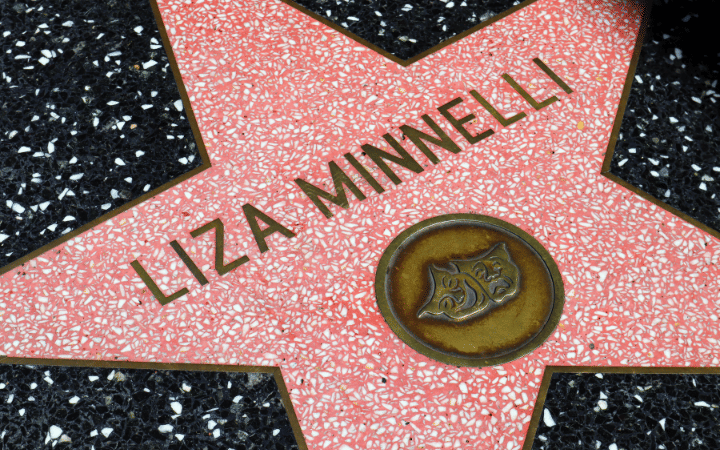
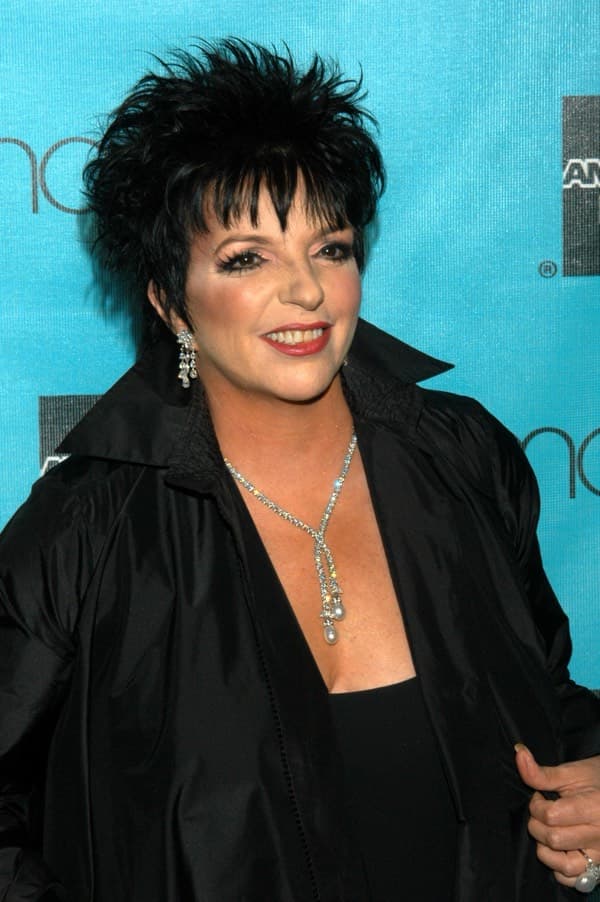
Liza Minnelli didn’t just inherit stardom—she transformed it. Born into the spotlight as Judy Garland’s daughter and shaped by a world of stagecraft and rigorous training, Minnelli became the kind of performer who could walk into any song and make it the Liza version. In a recent episode of Queue Points, hosts Jay Ray (Johnnie Ray Kornegay III) and DJ Sir Daniel trace that through-line: the many ways Liza Minnelli dipped into the Black music canon, honored those songs, and made them hers without ever pretending to replace the originals.
“She got it honest,” Jay Ray says early in the conversation—a neat way to summarize a career that navigated Broadway, Studio 54, Oscar glory, and a steady goodwill toward the music and artists who shaped American pop, soul, and R&B. This article unpacks the episode’s key moments, the performances discussed, and why Liza’s crossovers matter to listeners who care about musical lineage, interpretation, and cultural exchange.
Why Liza? Nepotism Done the Right Way
It’s tempting to reduce Liza Minnelli’s place in pop culture to her family name, but Jay Ray and DJ Sir Daniel push back on that quick judgment. Yes, she was born into Hollywood—Judy Garland as a mother, Vincente Minnelli as a director—but the way Minnelli built a career proves her talent and instincts. She brought Broadway training and a deep professionalism to every performance, which made her uniquely capable of entering songs from the Black music tradition and presenting them with a theatrical intelligence that felt like homage rather than imitation.
This point matters because Liza’s career highlights how influence and inspiration travel across communities and styles. Rather than erasing the source, her versions often amplified the originals by reframing them through stagecraft, diction, and dramatic timing. The hosts emphasize that Liza’s work shows how mainstream entertainers of a certain era engaged with Black music in ways that were cooperative and sometimes joyous.
The Broadway Schooling: Diction, Delivery, and the “Song Stylist”
One of the recurring themes in the episode is Liza’s stage training. Broadway performers of her generation were schooled not just in singing but in clear diction, projection, and a kind of neutralized speech pattern often taught to actors who wanted to appeal to mass audiences. Jay Ray and DJ Sir Daniel talk about that Midwestern-sounding diction many classic movie stars and stage actors adopted—training that ensured every lyric could be heard and understood by people across regions.
That training matters for two reasons. First, it explains why Liza’s covers sometimes sound different from the source material—her voice carries the clarity and theatrical inflection of a performer used to telling a story to the back row. Second, it positions her as a song stylist rather than merely a vocalist. The episode’s hosts make an important distinction: vocalists like Whitney or Mariah are celebrated for technical range and timbre; song stylists interpret, reframe, and deliver songs as dramatic statements. Liza’s versions are never attempts at mimicry. They are theatrical re-imaginings.
Key Performances: Songs Where Liza Crossed the Canon
Queue Points walks listeners through several standout moments where Minnelli entered the Black music canon. Each performance is a case study in interpretation—sometimes playful, sometimes reverential, often an exuberant wink.
“You Are the Sunshine of My Life” (Stevie Wonder, 1973)
In 1973 Liza recorded a version of Stevie Wonder’s classic that Jay Ray and Sir Daniel both praise for its tasteful restraint. Liza is in peak form vocally and offers a soulful reading that stops short of trying to out-soul the song’s author. The result is what the hosts call a “capable performance”—one you could drop into a Stevie tribute set and it would make sense. It’s a useful reminder that honoring a composition can mean choosing a different color rather than copying tone for tone.
“I Gotcha” (Joe Tex — From Liza With a “Z”)
On the variety special Liza With a “Z,” Minnelli takes on Joe Tex’s gritty, Southern soul number “I Gotcha.” Joe Tex and James Brown famously traded barbs and competitive heat on record in the 1960s, so the song carries a tough, earthbound swagger. Liza’s version trades that rawness for Broadway polish and camp—the dancers, the choreography, the theatrical wink make it a different kind of party. That’s exactly the point: Liza wasn’t trying to out-Tex Joe Tex. She was playing in a different register and inviting the audience to laugh, lean in, and enjoy the spectacle.
“You Are Not Alone” (Michael Jackson — 2001 Tribute)
Perhaps the most talked-about cross-over in the episode is Liza’s appearance at Michael Jackson’s 30th Anniversary Celebration, recorded at Madison Square Garden on September 7 and 10, 2001. The shows were later delayed on television because of the events of September 11th. Liza’s interpretation of “You Are Not Alone” is emblematic of her style late in her career: more rasp, plenty of drama, a piano-driven arrangement, emotive gestures, and a climactic choir-led finish. The hosts describe the moment as quintessential Liza—big, theatrical, and emotionally demonstrative. It’s also a reminder of her friendship with Jackson, visible in studio 54-era photographs and shared performance history.
“Single Ladies” (Beyoncé — From Sex and the City 2)
The conversation moves into modern viral culture with Liza’s playful take on Beyoncé’s “Single Ladies.” DJ Sir Daniel and Jay Ray trace an interesting lineage: Bob Fosse’s choreography—his 1969 “Mexican Breakfast” routine—has been identified as an influence on Beyoncé’s iconic, black-and-white viral video. Liza worked with Fosse (and performed in shows he choreographed), and later in life she staged a version of “Single Ladies” in Sex and the City 2, complete with the hand choreography and the humor. It’s a full-circle moment of choreography and influence traveling across decades and social contexts.
“Family Affair” (Mary J. Blige — Judy Garland Tribute)
Finally, the hosts recount a surprise moment at a tribute to Judy Garland when Liza popped up and delivered a playful, shortened version of Mary J. Blige’s “Family Affair.” There’s only audio surviving, which makes the memory more oral-history than viral clip. Still, it’s emblematic of what Jay Ray calls Liza’s “joie de vivre”—a performer who could laugh with an audience and join contemporary R&B momentarily on her own terms. The background singers’ encouraging responses made it clear: this was a celebratory, communal exchange rather than an act of impersonation.
Collaborations, Muses, and Studio 54
Liza’s network reads like a who’s who of mid-century and later entertainment: Peter Allen (her first husband and a composer who contributed to her early films), Sammy Davis Jr. (a mentor and touring ally), Michael Feinstein, Marvin Hamlisch, Halston (she was his muse in the ’70s Studio 54 era), and Bob Fosse (whose choreography shaped both Cabaret and the Liza With a “Z” special). These relationships matter because they contextualize why Liza was comfortable crossing genre lines. She didn’t parachute into Black music; she learned from, toured with, and collaborated alongside Black artists and creative figures who taught her the ropes of performance.
Sammy Davis Jr., for example, taught Minnelli the art of variety-night performance even if he didn’t teach her to tap dance. Touring with him exposed Liza to nightclub and cross-cultural performance styles that later informed her interpretations. The hosts note that these ties also make some of Liza’s crossovers less surprising: she was part of the circuits where Black and white entertainers shared stages and repertoires, especially in the postwar variety show and nightclub ecosystems.
What These Crossovers Teach Us
Jay Ray and DJ Sir Daniel use Liza Minnelli as a vehicle to talk about a larger idea: musical curiosity matters. In a streaming world that flattens cultural origins, it’s easy to forget the lineage of songs and the ways artists borrow, honor, and transform each other’s work. Liza’s career is a reminder that respectful interpretation can be an act of celebration. She didn’t pretend to be the source material’s author. Instead, she offered an interpretation shaped by her training, comic instincts, and a willingness to play.
That willingness is not trivial. It requires confidence to step into material rooted in another community and to acknowledge the original while also bringing a personal stamp. Liza’s versions are not erasures; they are performative conversations—sometimes campy, sometimes reverential, always theatrical. The hosts argue that this kind of exchange is part of how American popular music evolved: not as isolated masterpieces, but as artifacts of conversation and reinterpretation.
Final Notes: The Power of the Wink
If there’s a single through-line in the Queue Points episode, it’s the idea of the wink. Liza Minnelli’s covers are often playful gestures—an invitation to the audience to join her in the joke, the celebration, the shared history. Jay Ray frames it as the kind of joy that comes from a performer who’s lived a life in public, who can afford to laugh at herself and to lift up others in the process.
“When you understand that the new songs you love today probably trace their DNA to gospel, soul, blues, or early jazz, the listening experience transforms.” — Jay Ray
That curiosity—the willingness to track a song’s DNA, to ask who wrote it and why it sounded the way it did—is the mode Queue Points champions. Liza Minnelli’s career becomes an object lesson in why that curiosity matters. Her willingness to cross lines, to celebrate, and to stylize songs by Black artists offers a template for how performers can honor the music that inspires them.
Listen, Learn, and Keep the Needle Moving
There’s something old-fashioned and urgently modern about Liza’s approach: the variety specials, the studio performances, the surprise stage appearances—these are moments that once shaped a shared musical life. In an age when performances are often uploaded clip by clip, rediscovering those full-length exchanges matters. They teach technique, they reveal networks of influence, and they remind us that music history is a communal archive.
If you haven’t seen the Liza With a “Z” special, the Michael Jackson anniversary concert, or the Sex and the City 2 cameo, they’re worth hunting down—not to judge Minnelli’s vocal fidelity against the originals, but to enjoy what Jay Ray calls being a “keeper of the culture.” Liza’s covers are not about proving superiority; they’re about joining a conversation across decades.
In the final word of the Queue Points episode, DJ Sir Daniel leaves listeners with a choice: pick up the needle or let the record play. With Liza Minnelli’s crossovers as a guide, pick up the needle. Listen closely, ask questions, follow the lineage, and enjoy the wink.
— Jay Ray and DJ Sir Daniel’s episode offers a rich catalog of moments worth re-examining. If you love music history, curiosity is your ticket: start with Liza, then trace back to the sources. The songs will be even more rewarding for it.
Get the stories behind the episodes.
The Queue Points Insider lands every Thursday with what we're working on, what's coming next, and the stories that don't make the episode.
Subscribe Today