
.jpg)
The first thing you remember isn’t a date or a chart stat. It’s a feeling: that bassline sliding across your living room, Sade’s voice floating over it like slow incense, your parents’ two-step in the half-light while you sat there thinking, “Whatever this is… I want to live inside it.”
That’s the kind of memory Nick Bambach carries into the conversation about why Sade — the woman and the band — deserve their place in the Rock & Roll Hall of Fame. An academic librarian and host of Rock in Retrospect, Nick is one of those Rock Hall heads who tracks eligibility, politics and patterns the way crate diggers track rare 12-inches.
A band that refuses the box
On Queue Points, Nick broke down one of the things that makes Sade so powerful in music history: you can’t stick them in a single bin. They’re quiet storm, they’re R&B, they’re smooth jazz, they’re sophisticated pop — and somehow they’re all of that without ever sounding like anyone but themselves.
He traces their lineage through Roberta Flack’s intimacy, Chaka Khan’s elegance, Luther Vandross’ quiet storm mastery and even the theatrical singularity of Kate Bush, all filtered through a post‑punk, Black British lens. That refusal to belong to just one lane is exactly what made Sade feel like grown‑folks music and future music at the same time in the heart of 80s and 90s R&B culture.
“Sometimes there’s just artists that they just don’t fit any mold and they’re just, um, distinguished, because they’re so, um, uncategorically themselves.”
— Nick Bambach
Listen to This Episode
The Sade universe and community joy
Sir Daniel and Jay Ray remind us that Sade isn’t just an artist; she’s a universe. You hear it in the side projects like Sweetback, where the band experiments with ambient textures, neo‑soul, trip‑hop edges and collaborations with voices like Maxwell and Bahamadia. Those sounds boomerang back into later albums like Lovers Rock, folding that experimentation into the main Sade catalog without losing the band’s emotional core.
That Sade universe connects directly to the larger lineage Queue Points often lifts up — from quiet storm skating rink slow sets to line‑dance nights that turn R&B into community ritual and collective memory. This is R&B culture as community joy: intimate, intergenerational and deeply Black, whether you first heard “Hang On to Your Love” on BET or caught “No Ordinary Love” on late‑night radio.
“I felt sophisticated as a kid in 1985 listening to Sade because it was so unlike everything else that was on the radio at the time.”
— Jay Ray
Listen to Rock In Retrospect
The Rock Hall receipts
From a Rock Hall perspective, Nick is clear: the case for Sade is airtight. Every Sade studio album has gone multi‑platinum in the U.S., with several selling upwards of four to six million copies — an extraordinary run for a band that takes up to a decade between releases and refuses to chase trends.
They’ve already appeared on Nick’s “Top 100 Rock Hall Prospects” project multiple times, and the Hall itself has noticed: Sade were nominated in 2024 and again for the 2026 ballot. Beyond the numbers, Nick argues that Sade represent something the Hall has consistently undervalued: 80s and 90s Black R&B artists whose work defined global soundtracks but are still waiting outside the museum doors alongside acts like Luther Vandross and New Edition.
“Sade created their own path to superstardom and on their own terms. They never compromised their artistic vision to industry pressure… A woman taking ownership of her art and career is not only refreshing, but that does not get any more rock and roll than that.”
— Nick Bambach
Watch This Episode
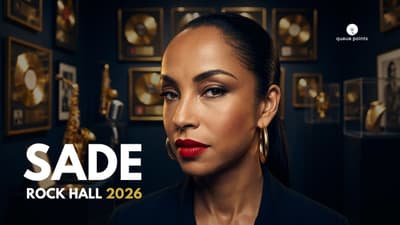
Why Sade is the Most Rock & Roll Artist of the 80s
Red lips, slicked-back hair, and a sound that defined the "cool" of a generation—Sade has always been more than just a voice; they are a blueprint for artistic mystery. F...
Timeless songs for your rotation
When it comes to the music, the episode turns into a love‑soaked curation session — a perfect starter kit for anyone ready to deepen their Sade journey. Nick points to “Smooth Operator,” “Paradise” and “No Ordinary Love” as essential texts: the blueprint for the band’s blend of sensuality, restraint and emotional weight that still feels modern in 2026.
DJ Sir Daniel reaches for the dancefloor: “Turn My Back on You” for its slinky, ska‑kissed groove, “Love Is Stronger Than Pride” for its brutally honest lyric and blend‑friendly acapella, and “Cherish the Day” for that aching guitar that feels like a siren call you can’t resist. Jay Ray rounds things out with “Your Love Is King,” “Lovers Rock” and “Nothing Can Come Between Us,” a suite that shows how Sade can simmer, sway and straight‑up groove without ever breaking their own quiet spell.
Sade is what happens when you let the record play across decades, across genres, across oceans, and realize the groove never stopped. That’s why this moment, this ballot, matters for Black music history.
Listen to the Queue Points Episodes Featuring Rock & Roll Hall of Fame Nominees and Inductees
Seth Neblett on Parliament-Funkadelic Women & 'Mothership Connected'
In this episode, Seth Neblett discusses his book Mothership Connected: The Women of Parliament-Funkadelic, highlighting Mallia Franklin and the women who kept P-Funk’s mu...
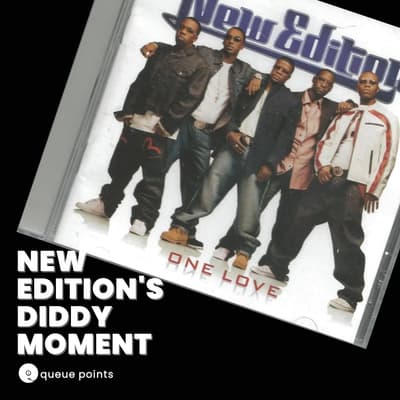
New Edition's Diddy Era: 'One Love' Is A Twenty Year Old Musical Moment We Forgot About
In this episode of Queue Points Podcast, hosts DJ Sir Daniel and Jay Ray revisit the 20th anniversary of New Edition's 'One Love' album on Bad Boy Records, exploring the ...
Honoring A Tribe Called Quest, Phife's Legacy & more: #RockHall2022 Series (Guest: Rasta Root)
“Queens is in the house represent…” A Tribe Called Quest is hard to sum up. A four-man crew, that, for the majority of their commercial career, operated as a three-man te...