
![[Show Notes] Donwill on Rap, the Interview Game, and Staying in Your Life Bag](https://images.beamly.com/fetch/https%3A%2F%2Fsites.beamly.com%2F65e385bcdcfc57fb25f741f6%2Fmedia%2F621892d47776de2c16ce.png?w=1200)
Editor’s Note: Show Notes were developed using AI assistance to repurpose content from our original episode, Donwill on The Almanac of Rap & The Art of the Interview, and were subsequently reviewed, fact-checked, and edited by the Queue Points team to ensure accuracy and voice.
The Big Picture
Donwill — rapper, DJ, Webby Award-winning host of The Almanac of Rap, and one half of Tanya Morgan — sits down with Queue Points for a wide-ranging conversation about hip hop journalism, the art of the interview, and what 20+ years of staying in your bag actually looks like. From the origin story of a pandemic-era Twitch rant to opening Michelle Buteau's comedy tour as a full-on rap act, this episode covers the full arc of a working-class hip hop artist who never stopped building. It closes with a tribute to Rob Base and a real question: what does the term "one-hit wonder" actually cost the culture?
The Question Just Outside the Frame
Donwill's whole interview philosophy comes down to one image: look at a photograph, then ask about the person in the background. What were they pointing at? That forensic curiosity — built from years of writing rhymes, digging for samples, and being on the receiving end of bad interviews — is what drives The Almanac of Rap.
Research standard: At least one week per guest, minimum
The frame question in action: Donwill asked Raekwon why the Purple Tape was purple. Raekwon said they didn't have green.
Prior podcasts: Bad With Names (art of conversation) → Book of Rhymes (lyric interviews) → The Almanac of Rap (Twitch rants turned Webby Award-winning series on Okayplayer)
Origin moment: A pandemic Twitch rant about LL Cool J being "unhinged the entire time" convinced DJ Lindsay that Donwill had a show on his hands
The Clip Is the Whole Thing Now
Hip hop journalism can't compete with Instagram, so most outlets have stopped trying. They ask about the post, not the person. Donwill doesn't think you can fight the algorithm — but he doesn't think you should surrender to it either.
"The best way to combat it... I don't know if we can. I think we're here. Our job as media, content creators, and artists is to do whatever our version of that is. Get in your bag. Embody whatever moment you're in."
— Donwill
"Poddin'": The term (popularized by Joe Budden) for when a podcast steps into its true character — and why clipping culture reduces that whole moment to a fragment
The AI problem: Typos are more important than ever. Imperfection is the one thing AI can't replicate.
Advice for artists on social media: Be yourself on camera — but understand the difference between the art and content about the art.
Michelle Buteau Said Rap
Donwill had been hiding in plain sight as a DJ for years — on stage every night, but not always front and center. Then Michelle Buteau walked up after a show and asked him point-blank: how come you don't rap?
"That's one of the most unlikely sources for a person to push you to rap — a comedian. And I'm eternally grateful for her letting me pull out the raps real quick."
— Donwill
The challenge: Making boom bap translate to a comedy tour crowd who didn't know his music
The solution: Beat switches, crowd work, and what Donwill calls "a magic trick" — winning the room one song at a time
DJing as ministry: Of his three crafts — rapping, producing, DJing — he came to DJing last, and says it's the one thing he feels luckiest to do.
"See how your friends push you. Community, man — it's super important."
— Jay Ray
Rob Base Wasn't a One-Hit Wonder
The episode closes with a tribute to Rob Base, who passed away at 59. DJ Sir Daniel sparked the conversation: what do we lose when we call someone a "one-hit wonder"?
"Here at Queue Points, we believe in speaking to people who are genuine articles of the art of hip hop. People that actually love the music."
— DJ Sir Daniel
Donwill's reframe is simple and devastating: "To say one-hit wonder means that artist worked in service of an industry — and not a community." Jay Ray extended it further: "It Takes Two" and "Joy and Pain" were bridge songs — records that our parents danced to at the same parties we did. That generational connective tissue is its own kind of legacy. Rob Base, Donwill says, "is as important to the culture as Rakim."
FAQ: Your Questions About the Episode
Q: What is The Almanac of Rap and where can I find it?
A: It's Donwill's Webby Award-winning podcast, produced by Okayplayer, combining deep rap conversations with fandom and satirical humor. Find it wherever you get podcasts or at @AORShow on Instagram.
Q: What does "the just-outside-the-frame question" mean?
A: It's Donwill's interview philosophy — asking about the overlooked detail everyone already assumed they understood. Example: Why was the Purple Tape purple? (Answer: they didn't have green.)
Q: What is Donwill's New Music Tuesday newsletter?
A: A section of Donwill's Substack where he spotlights music he genuinely wants to hear — focused on working-class musicians and artists who've lost blog coverage. No trashing, only signal-boosting.
Q: What's the album Donwill has coming out?
A: A boom bap project with producer The Expert from Ireland — described as "exactly what you'd expect from the man who made Moonlighting." Due in fall 2026.
Q: Why does Donwill call DJing his "ministry"?
A: Because it came last, and because there's nothing like turning on the mixer after a hard day and playing the song you've been dying to hear — while the room wants to hear it too.
Q: What does "one-hit wonder" actually mean, according to Donwill?
A: It means the artist worked in service of the industry, not the community. Getting even one hit is hard. The impact of that hit on culture — on dance floors, DJ sets, family gatherings — doesn't have a chart metric.
The Ultimate Takeaway
"If you're in your life bag — it works out."
— Donwill
Watch the Episode
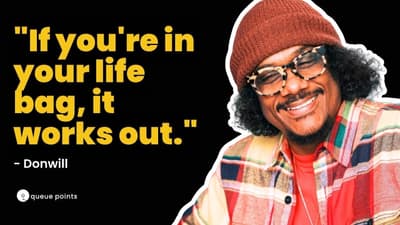
Donwill on Rap, the Interview Game, and Staying in Your Life Bag
Donwill asked Raekwon why the tape for his classic album “Only Built 4 Cuban Linx” was purple. Raekwon said because they didn't have green. That's the kind of question Do...
Listen to the Episode
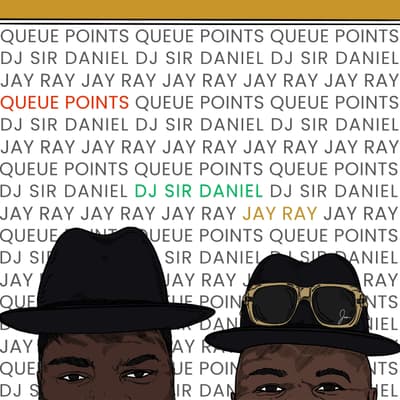
Donwill on The Almanac of Rap & The Art of the Interview
Donwill, the DJ, rapper, and Webby-winning podcaster behind Okayplayer's The Almanac of Rap, sits with DJ Sir Daniel and Jay Ray to unpack the craft of interviewing and w...
Related Episodes Playlist
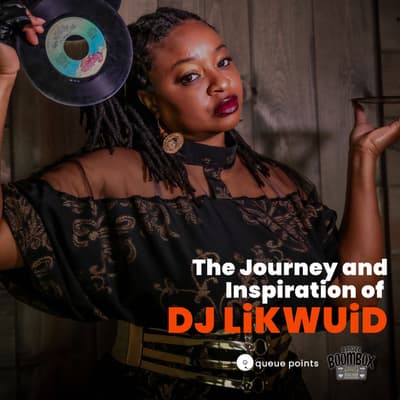
The Journey and Inspiration of DJ LiKWUiD: Discussing this year’s Banjee Boombox festival
This bonus episode of Queue Points focuses on the Banjee Boombox festival, a vibrant QTBIPOC celebration of diverse voices in music and art. Featuring an interview with f...
Celebrating the Life and Career of J Dilla (Guest: Mr. Al Pete)
DJ Sir Daniel and Jay Ray welcome special guest, Mr. Al Pete, to discuss the impact of producer and rapper, J Dilla on the music industry, remembering his work and legacy...
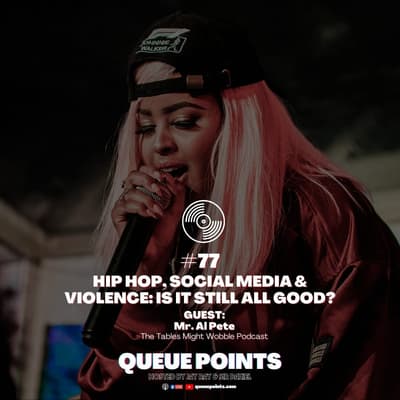
Hip Hop, Social Media & Violence: Is it still all good? (Guest: Mr. Al Pete)
The murder of Takeoff has shaken the world as a whole, and like many times on Queue Points, we’re asking the question “what can we do?” Well, for this episode we ask the ...
Bibliography & References
Donwill Website: The official website of rapper, producer, and DJ Donwill.
Music Referenced
LL Cool J – "I'm Bad" (Official Music Video): The official remastered video for the track Donwill cited as the origin of his legendary Twitch rant about LL Cool J being "unhinged the entire time" — the seed that became The Almanac of Rap.
Rob Base & DJ EZ Rock – "It Takes Two" (Official Video): The official music video for the 1988 classic discussed in the episode as a "bridge song" and cornerstone of Rob Base's community legacy — evidence that "one-hit wonder" is the wrong frame.
LL Cool J – "Mama Said Knock You Out" (Official Music Video): Illustrates the later-career resilience of LL Cool J — relevant to Donwill's point about LL being "unhinged the entire time" across decades, not just one era.
Contextual Links For Reference
Raekwon Shares Gems About "Only Built 4 Cuban Linx" | On The Record: Raekwon discusses the making of the Purple Tape in this HipHopWired interview, offering first-person context for the stories Donwill explores on The Almanac of Rap.
Tanya Morgan – YGWY$4 Album Review | DEHH: Video review of Tanya Morgan's fifth studio album, providing an accessible entry point for viewers unfamiliar with Donwill's discography as a member of the duo.
How "It Takes Two" Defined Hip-Hop's Golden Age | Rolling Stone: Rolling Stone's long-form feature on Rob Base and DJ EZ Rock's 1988 classic, tracing how it was designed as a party record and became a global phenomenon — directly supports the episode's reframe of Rob Base's legacy.
"It Takes Two" – The Complete History of a Hip-Hop Classic | The Boombox: Detailed breakdown of the samples, cultural context, and chart history of "It Takes Two" — essential background for the episode's discussion of Rob Base as a community artist, not a one-hit wonder.
Tanya Morgan – Moonlighting (Album Review) | RapReviews: Critical review of Tanya Morgan's debut album, released in 2006 — the 20th anniversary of which is referenced in the episode as a touchstone for Donwill's career arc.
Tanya Morgan – Moonlighting (Album Review) | PopMatters: PopMatters' take on Moonlighting, offering critical analysis of the group's voice and lyrical approach that shaped Donwill's artistry across two decades.
9AM in Brooklynati: A Tanya Morgan Interview | Cabbages: First-person Q&A with Tanya Morgan, published in a respected independent hip hop newsletter — reflects the kind of community-centered journalism Donwill champions throughout the episode.
Hip-Hop Journalism's Blurry Code of Ethics | NBC News Academy: NBC News Academy analysis of accountability and ethics standards in hip hop media — provides academic grounding for Donwill's critique of "gotcha" journalism and clip-bait culture.
Sage Francis: Why Hip-Hop Journalism Is Broken | YouTube: Underground hip hop artist Sage Francis breaks down why modern hip hop journalism has fallen short — a practitioner's perspective that enriches Donwill's argument from another working artist's point of view.
Tanya Morgan – Brooklynati (Album Review) | Planet Ill: Critical review of Tanya Morgan's sophomore album, tracing the group's artistic evolution — useful context for understanding the full arc of Donwill's career as a working-class hip hop artist.
People & Places
Genres & Formats
Boom Bap — Wikipedia: A style of hip hop production defined by hard-hitting kick drums and snares; foundational to 1990s East Coast rap
Backpack Rap — Wikipedia: Lyric-forward, independent hip hop associated with intellectual and socially conscious themes
Podcast — Wikipedia: An on-demand audio series; referenced throughout as the medium Donwill has mastered across multiple shows
Get the stories behind the episodes.
The Queue Points Insider lands every Thursday with what we're working on, what's coming next, and the stories that don't make the episode.
Subscribe Today