
![[Show Notes] Faith Evans' Faith Turns 30: An R&B Masterpiece](https://images.beamly.com/fetch/https%3A%2F%2Fsites.beamly.com%2F65e385bcdcfc57fb25f741f6%2Fmedia%2Fce0859cad6056cf442e0.jpg?w=1200)
Listen To This Episode
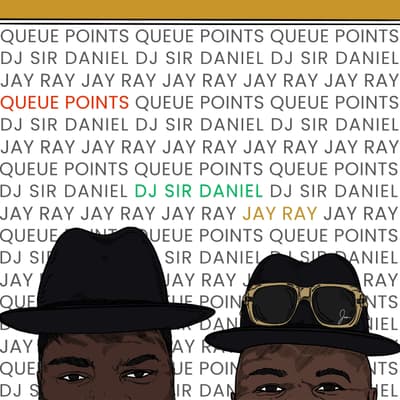
Faith Evans' Faith Turns 30: An R&B Masterpiece
In this episode, DJ Sir Daniel and Jay Ray celebrate the 30th anniversary of Faith Evans’ debut album Faith by weighing whether it outshines Mary J. Blige’s What's the 41...
The Big Picture
DJ Sir Daniel and Jay Ray mark the 30th anniversary of Faith Evans' self-titled debut album by posing a direct question: does Faith hold up as a stronger debut than Mary J. Blige's What's the 411?? The hosts ground their argument in shared production credits, competing rollout strategies from Bad Boy Records, and the two singers' overlapping but distinct vocal identities. Rather than framing the conversation as a rivalry between Evans and Blige, the hosts use it to examine how Chucky Thompson's production connected both records and how Bad Boy's marketing machine shaped public perception of each artist. The episode treats Faith as a record that has been historically underexamined relative to its peers in the 1995 R&B landscape.
Show Notes
Editor's Note: Show Notes were developed using AI assistance to repurpose content from our original episode, Faith Evans' Faith Turns 30: An R&B Masterpiece, and were subsequently reviewed, fact-checked, and edited by the Queue Points team to ensure accuracy and voice.
The Producer Who Connects Both Records
Chucky Thompson's fingerprints run through both albums at the center of this discussion. Thompson produced significant portions of Mary J. Blige's My Life (1994), an album widely regarded as her creative peak, before carrying that same production sensibility into Evans' debut.
Thompson layered soul samples with hard drum programming, a technique that became a signature texture of Bad Boy's early sound
Evans was newly signed to Bad Boy while My Life was being recorded, and contributed background vocals and writing to that album before making her own
The hosts argue that if Thompson's sound reached full maturity on My Life, that same maturity carried directly into Faith, strengthening the case for Evans' debut as a fully-realized R&B statement
Vocal Pedigree Versus Star Power
The hosts frame Evans and Blige as representing two different paths into R&B stardom. Evans came from a gospel background and had already been developed by Al B. Sure!, who is credited with helping launch several R&B artists into the industry.
Blige entered the industry through Uptown Records, founded by Andre Harrell, an executive credited with pioneering the "hip-hop soul" sound
The hosts describe Evans as possessing a stronger vocal foundation built on gospel training, while acknowledging Blige carried greater star power and cultural impact at the time
What's the 411? leaned into rap features and a harder-edged hip-hop sensibility, while Faith was constructed as a more traditional, "squarely" R&B project
The Vibe Cover and the Bad Boy Marketing Machine
Evans' public rollout was inseparable from Bad Boy's marketing strategy under Sean "Diddy" Combs. Before her image was widely known, promotional materials obscured her face, a tactic the hosts compare to the shadowed cover art used on Blige's debut.
That mystery ended when Evans and The Notorious B.I.G., married that same year, appeared together on the cover of Vibe magazine in 1995
The Vibe feature ran as two separate profiles, one on Biggie and one on Evans, timed to coincide with the commercial peak of Biggie's debut album Ready to Die (1994)
The hosts note this rollout coincided with a run of Bad Boy roster activity that included Craig Mack, positioning Evans within a tightly coordinated label moment
Soon As I Get Home and the Quiet Storm Legacy
The hosts single out "Soon as I Get Home" as the album's most enduring cut, situating it within the quiet storm tradition of smooth, romantic late-night R&B.
Quiet storm as a radio format originated in 1976 with Melvin Lindsey at Howard University's WHUR-FM, and shaped how slow R&B ballads were programmed for decades
The hosts argue the song captured a specific cultural tension for Black women in the 1990s: navigating new financial independence while still wanting emotional connection
They contrast Evans' softer, more traditionally feminine presentation on the track with Blige's tomboy-coded image on What's the 411?, framing both as valid but distinct representations of Black womanhood in R&B
FAQ: Your Questions About Faith Evans' Debut
Q: When was Faith Evans' debut album released, and on what label?
A: Faith was released on August 29, 1995, by Bad Boy Records.
Q: How is Faith Evans' debut connected to Mary J. Blige's My Life?
A: Producer Chucky Thompson worked on both albums, and Evans contributed vocals and writing to My Life before recording her own debut.
Q: What role did Vibe magazine play in introducing Faith Evans to the public?
A: A 1995 Vibe cover featuring Evans alongside The Notorious B.I.G. gave the public its first widespread look at her image, following a promotional period where her face had been kept obscure.
Q: What is quiet storm, and why does it matter to this episode?
A: Quiet storm is a radio format built around smooth, romantic R&B that originated in 1976 at WHUR-FM; the hosts place "Soon as I Get Home" within this tradition of slow-jam programming.
Q: How do the hosts differentiate Faith Evans' debut from Mary J. Blige's What's the 411??
A: They characterize Faith as a more traditionally structured R&B album, while describing What's the 411? as blending R&B with hip-hop features and a grittier sensibility.
The Ultimate Takeaway
"Faith Evans literally was built for creating R&B music, creative aspect of making music... Faith Evans was built for it. And then on top of that, she has a, an amazing voice." — DJ Sir Daniel
Bibliography & References
People & Places
Genres & Formats
Quiet storm: A late-night radio format built around smooth, romantic R&B, originating in 1976 at Washington, D.C.'s WHUR-FM.
Slow jam: A subgenre of R&B ballads defined by slow tempo and emotionally direct vocals, a frequent staple of quiet storm programming.
New jack swing: A fusion of R&B, funk, and hip-hop rhythms that dominated late-1980s and early-1990s Black pop music and shaped the sound coming out of labels like Uptown Records.
Hip-hop soul: A style blending R&B vocals with hip-hop production and sensibility, closely associated with Mary J. Blige's early career.
Other References & Music
Official YouTube Music Videos and Live Performances
Faith Evans - You Used To Love Me (Official Music Video): The lead single from Evans' debut album, marking the first widely seen visual introduction of the artist to the public.
Faith Evans - Soon As I Get Home (Official Music Video): The quiet storm ballad the hosts identify as the album's defining track.
The Notorious B.I.G. - Ready to Die (Official Audio): The title track from Biggie's debut album, released the year before Faith's rollout coincided with his commercial peak.
Reputable Journalism
Andre Harrell: Remembering The Pioneer Of Hip-Hop Soul: A profile detailing Harrell's role founding Uptown Records and shaping the hip-hop soul sound that predates and informs the Bad Boy era.
Producer Chucky Thompson Revisits 25th Anniversary Of Mary J. Blige's My Life: Thompson's first-person account of producing both My Life and Faith Evans' debut, including how he met Evans and wrote "Soon As I Get Home."
Get the stories behind the episodes.
The Queue Points Insider lands every Thursday with what we're working on, what's coming next, and the stories that don't make the episode.
Subscribe Today