


Hip hop classes love Tupac, Lauryn Hill, Common and Talib Kweli. Christopher R. Rogers, Ph.D., grew up on State Property, DJ Clue mixtapes and Jadakiss, and he wants the academy to "learn how to listen to people." In Part 2 of Soundscapes of Chester, Jay Ray talks with Rogers about My City Need Something, the book he made with photographer Karim brown, which began as a letter to PnB Rock the week the Philadelphia rapper was killed in 2022.
The Rundown
- A letter to PnB Rock and a dissertation written for home
- Sampling Karim brown's photographs like records
- Hip hop in the academy and who gets studied
- Chester's Southern roots, from line dances to Double Dutch
- Sound systems, Theo Parrish and the DJ's real test
Chapters
00:00 Hook
00:27 Intro Theme, Welcome, and A Love Letter to Chester & Philadelphia
01:25 Genesis: Writing Home Beyond the Academy
05:51 Fear, Permission & Honoring PnB Rock
10:33 Bringing Hip Hop & Contemporary Artists into the Academy
14:06 Karim brown's Photography & Sampling Images
18:10 Quotes as Interludes & Album Culture
20:03 Chester & Philadelphia: Two Connected Cities
22:11 Southern Roots & Black Culture in Chester
27:23 Unlimited Blackness & Seeing Home Anew
29:42 Sound Systems, Vibration & the DJ's Test
32:44 A Black Studies Syllabus & Book Lists
37:11 What Chester Can Discover About Itself
40:26 Closing Thanks & Where to Find Chris
42:42 Outro Theme
Which artist from your city belongs on the syllabus? Tell us in the comments, and watch Part 1 on Engineered Grace Vol. 1 next.
Get My City Need Something (Common Notions): https://link.queuepoints.com/mcns-1
Watch Part 1
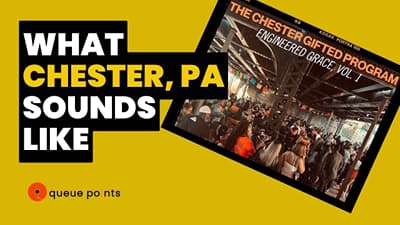
What Does Chester, PA Sound Like? Inside Engineered Grace Vol. 1
Watch Jay Ray, Christopher R. Rogers and DJ Naij B discuss Engineered Grace Vol. 1, an EP made from field recordings across Chester, PA.
#QueuePoints #MyCityNeedSomething #PnBRock #HipHopEducation #BlackMusicHistory
Disclaimer: Episode Descriptions were developed using AI assistance and were subsequently reviewed, fact-checked, and edited by the Queue Points team to ensure accuracy and voice.
Transcript
*DISCLAIMER: Transcripts are created using AI, and may not accurately represent the content exactly as presented. Transcripts are provided as a courtesy to our listeners who would like to use them. For the accurate context of what was said, please refer to the audio or video of the episode.
Christopher Rogers: hip hop in the academy is starting to ... And you know what I hate, bro? So I grew up on State Property. I grew up on DJ Clue mixtapes. I grew up on Jadakiss bars.
I grew up on-
Jay Ray: Bronx in 1973 and kind of staying in this... Right
Christopher Rogers: And, uh, or, or, or they do this thing of, like, you know, Tupac, Lauryn Hill, Common, Talib Kweli. Like, yo, can we... Can you just l- learn how to listen to people?
Jay Ray: Welcome back y'all, thank you so much for tuning into Queue Points. My name is Jay Ray, and I am back with Dr. Christopher R. Rogers. And we are gonna talk about his book, My City Needs Something, which is a partnership, photography by, uh, Kareem Brown, uh, My City Needs Something. so I wanna start by talking about love.
Christopher Rogers: Yes
Jay Ray: and this book um, a love, it feels like a love letter to your two cities, right? So there's Ch- the love letter to Chester, and there's a love letter to Philadelphia, and just a love letter to Black people. And I feel like it's all in there. And so I would like for you to talk about this book and, uh, the genesis of it. How was this created?
Christopher Rogers: Yeah, and I really appreciate the note starting with love and, um, yeah, because it, yes, it was, it certainly was. So the genesis of this book is Oh man. This is, I am, um, starting my dissertation, uh, writing. Uh, I graduated from University of Pennsylvania. I got my PhD from University of Pennsylvania, with distinction, uh, as my elders always tell me to add on to things.
Um, and um, as I'm starting writing that, that dissertation, which is called, uh, Storying, uh, uh, Storying of Black Village Poetics of Landscape and Literacies in West Philadelphia. Um, that's like the long title. I just call it Storying in a Black Village. Um, the thing that I knew, and this kinda sucks going in, um, is like, oh man, I'm turning this into a university.
I'm turning this into a committee. This is a piece... I'm s- I just spent four and a half years of my life thinking about my community, thinking about my people, thinking about, you know, what it means to do this work in the world, but this dissertation that I'm writing is going to a committee of five people, who I dearly love, right, but are judging me based on the framework of an academy that don't love me at all.
You know what I'm saying? And um, I'm like, "That ain't gonna hold me
Jay Ray: Yeah
Christopher Rogers: through the writing of this book." Like the, I, and I got... Look, my joint was 263 pages. So that same week, um, was the week in which PnB Rock was, uh, murdered, um, in Los Angeles at Roscoe's Chicken and Waffles. The video was, you know, going across our social media timelines.
There was a lot of, you know, fallout, grief, uh, mourning here in, uh, Philadelphia. And on the date I was supposed to start writing up my data or whatever, um, I had a Victory Golden Monkey. I'm on, uh, on South Street. I had a little hotel on South Street, my little writing joint, and I wrote a letter to PnB Rock,
Jay Ray: Hmm.
Christopher Rogers: um, or a tribute to PnB Rock.
And it's one of those things where I was like, "I need to do this in order to find the will within myself to be able to do the other thing." So it was like a shadow project that was underneath my dissertation of like, I didn't work this hard to only be in conversation with academic whatever. I'm trying to go home, you know?
I'm doing this work to come home. So I wanted to, you know, the language of it, the thing, it's like, yes, you can tell that I read a lot. Um, but at the same time, I'm trying to find a form, um, in which to share my lessons and learnings- That I think, um, honors the fullness of the sort of like knowledge and ethics and, you know, ph- uh, philosophy and culture of the place that actually, you know, educated me.
The p- the place that actually taught me what I needed to know to survive. And it wasn't University of Pennsylvania, and it wasn't the academy, and these conference presentations ain't gonna be the thing that, you know? So I wanted to figure out how to do a project that was about coming home. And certainly there's a, you know, a lot of foundation, uh, around that.
You know, Aimé Cés- Aimé Césaire, uh, Journey to the, uh, uh, Notebook or The Return to My Native Land. Like, that's, is like, I'm looking at that, I'm looking at some of the surrealist folks, and I'm like, "I wanna figure out how to come home in my writing." Which is to say I need to figure out how to unlearn most of the things that I was taught in this five years of becoming a distinguished PhD
Jay Ray: Hmm. Man, um, what was, anything... I'ma get back to the PNB Rock thing, 'cause I wanna come back to that.
Christopher Rogers: Gotcha
Jay Ray: Um,
what was the scariest thing about once you really got into this and figured out what this was gonna be, what fear started to crop up for you?
Christopher Rogers: Ooh, that's good. Um I think Certainly, and I, and I, I've heard people, you know, the sort of personal nature of the storytelling. Um, obviously, like, you know, you in the room and you're like, "Do I need to call people
Jay Ray: Hmm.
Christopher Rogers: before I do this?" You
know?
Like, do I have to... You know, uh, the... But it's also, like, I don't know, I come out of like, uh, you know, underground rap, you know?
That's like... And I, I think about the specificity of it, and that was the thing that always brought me, um, into these worlds. It was like, nah, you need to... You know what I mean? Um, as Beanie Sigel might say, "Yo, the truth spoke." You know? Like you gotta, you gotta, you know, get into it. So I, I did think about, um, the, like, do I, is it my right to tell this story?
Obviously, because I am also invoking, um, PNB Rock, uh, in some ways, but I think the way that I do it, I was able to feel like land. But certainly at the time I was like, do I, do I need permission to invoke, you know, PN- But I think I was able to get over that by thinking about like, yo, these mus- these songs live with us, you know?
And any artist who releases a song knows that, like, it is... I hope they would know. It's no longer theirs, you know? Um, but it belongs to the people who, you know, claim it, who search for it, right? Um, and like this was the... So I, I thought about that in, in some ways. And I think one of the things, uh, for me too, as a organizer, um, you know, I, I'm part of this abolition school project.
It's also- The, the gaps and ruptures and, like, I think that we can sometimes know what the, uh, like, what being on the right side of history sort of, like, means, or we're trying to sort of, like, talk about what we should do. But what we should do don't hit, like, the truth of our, like, life. And I also feel like one of the things I was navigating in my writing is just, like, yeah, there's ways I could, you know...
Um, like for example, when I'm doing that, uh, uh, stay ready so you ain't gotta get ready chapter around sort of, like, wrestling with Black feminist thought and, um, you know, and I'm wrestling with my brothers as well of, like, the things that we navigate. I've, I feel like I've seen folks, and particularly writers, um, take the route of, like,
"Y'all don't understand so let me tell you how you supposed to be living." And that don't work with my people. So I felt like if I was going to be able to do that, I had to put myself on the operating table, and June Jordan was extremely helpful in that. Um, uh, her essay The Requiem for the Champ, uh, where she's sort of, like, responding to Mike Tyson, and this idea of, like, talking about the lessons you just learned last year, which becomes the sort of basis of the chapters and the tracks in the book.
It's like I'm having a conversation with PNB Rock about the things that I have just learned last year, and trying to land in that space of, like, learning and discovery and mistakes and getting it back together and striving and, you know. Rather than the, like, "I gotta make it seem like my life is all together to be able to do this."
Jay Ray: Hmm
Christopher Rogers: Nah.
Jay Ray: Hmm. That itself explains the emotion. I think there, there's an emotion in the, a range of emotion in the way that you write and the way that you construct, and I feel like you leaning into that idea of like, "This is not, my life is not perfect," and just like, "Here's what it is," resonates. Um, so thank you for being willing to do that. Um,
Christopher Rogers: Juzwiak
Jay Ray: I found also interesting, so I'm, I'm older, right? I was tangentially familiar with the work of PNB Rock. I actually learned more about him he passed away, and I was also not living in, this area when he ascended into, you know, who he became. So I was like, "Who is this person that is from Philly that just was murdered that I should probably know something about?" And so there's two things, um, I was reflecting on as you have done this work. One, you have entered PNB Rock into the academy, which is dope because we do need, uh, more of our contemporary artists in spaces like this, and you did that. And I don't know if that was conscious, but you did it.
Christopher Rogers: I, I, if you, look, we can talk about that 'cause I was someone ... Uh, so my sort of, like, academic sort of dreams maybe began, like, 2012, you know? And, like, hip hop education, hip hop in the academy is starting to ... And you know what I hate, bro? So I grew up on State Property. I grew up on DJ Clue mixtapes. I grew up on Jadakiss bars.
I grew up on-
Jay Ray: Bronx in 1973 and kind of staying in this... Right
Christopher Rogers: And, uh, or, or, or they do this thing of, like, you know, Tupac, Lauryn Hill, Common, Talib Kweli. Like, yo, can we... Can you just l- learn how to listen to people? You know what I'm saying? And people, and for me, it, like, one of the things, and, you know, particularly coming out of K to 12 education, you know, was, like, I listen to who the young people listen to because the type of stories that they're attracted to tells me a lot of where they are.
And if you can figure out how to follow... Like, and I've been in a music studio, and, um, so I understand that it's not, um, the process of music, right? You understand, like, someone is going to the studio to become something, to become somebody, and you're judging them based on, like... So it's the, the, the problem that I have with hip hop scholarship is that piece of...
Jay Ray: Okay
Christopher Rogers: Right, that sort of, like, the re- the respectability that goes into it, the sort of level of, like, what is considered intellectual rap. Um, like, it's, it's, it's a whole lot going on in that. Um, and yes, I think one of the things that I'm trying to do is, like, yo, if you look at this young man's life, you like, it's, it's a s- it's a really rich opportunity to reflect on an experience that is shared amongst a whole generation of Black boys, um, within the city.
Um, so why are we looking for, like, that one specific artist that has the perfect line that, like, no, this is, like, what people feel. Like, this is what people are nodding to. Let's figure out why that is. So I appreciate that, for sure. Like, that was definitely a conscious thing.
Jay Ray: that's dope. my
city needs something. Um Kareem's,
Kareem Brown's photography is here.
Christopher Rogers: At all
Jay Ray: How did that factor into how... What came first, the chicken or the egg? Was it happening together? Did you write it and then you s- the
Christopher Rogers: Queue.
Jay Ray: came later? Like, what was that process like? Because these, these images feel like they belong where they belong. They are right where they're supposed to be. And I'm like, "Well,
Christopher Rogers: Yes
Jay Ray: happen?"
Christopher Rogers: Right. So I've, yeah, I appreciate that, and certainly I think I mighta had the idea, the inkling of the idea, um, before I had the images. But what Kareem's images, and this is Kareem Brown, who's a incredible African American history educator in the city. We sort of met at the bookstore, um, between Making Worlds Bookstore and also Hakeem's Bookstore.
My thing was like I'm coming out of the academy, and I needed those photos, um, because those photos brought me home, you know? It, it was able, it, those photos and looking at them w- was the thing that I needed to be able to detach myself from how I was just being positioned as, like, a PhD academic to being like, "Nah, I remember being outside," you know?
And, like, what the feeling of being outside, you know, is. Um, so, like, that was, like, where it started. But then I think for me, um, this is, like, the improv part of it, I was like, "Kareem, one, please don't, I don't wanna know the story of the photos that you know," you know? Because then I would feel responsible, you know, to those stories, and I don't want to, like, so j- if you don't tell me, I can kind of, you know, sample them,
Jay Ray: Yes.
Christopher Rogers: you know?
And, uh, I used to make beats when I was y- you know, uh, younger, so sampling is a huge thing for me. So it was like I can just find particular notes that remind me of something, and then integrate that photo into it. So it became, like, he sent me, and I didn't, and I also didn't argue with him about which photos he was gonna send.
I just said, "Yo, send me ones that you f**k," oh, excuse me. "Send me ones that you mess with." Um, yeah. And, uh, I'm gonna find a way to... So it was, um, Tina Campt, uh, has this book called Listening to Images that does pretty well, and a lot of people have, you know, and her work is incredible around vernacular photography, and this idea of, like, sitting with images, you know?
Um, so it was like translating what I'm feeling from the image, and then finding a way to, you know, sample it. Like, if I could, the way I would think about it is like Kareem is on the beat and I'm on the, I'm on the verse, you know? Like, you setting the tone and I'm trying to rhyme over it. And then if you think about all the quotes that are in it, there's also- With, and there's the DJ Premier tribute in the back.
Like, that man's memory is, like, top tier. Like, he would tell you, like, "Nah, Biggie had on this, you know, suit. He had on this, you know, Coogi. It was this color in '97." You're like, "What?" Like, how? And what it, and what it signaled to me, and one of the things, you know, Premier talks about is, like, when he's doing the hooks on those songs, he's doing that from here.
He's going like, "All right. What, what? All right." And then he's going to the record Jones and like, "All right. It- look, I'm gonna take this MOP jawn and then put it in the..." So, like, there's also a, a, a, a underlying sort of metaphor there with the quotes and everything of like, yeah, I kinda needed Etheridge Knight to be able to explain myself.
I needed, uh, Toni Morrison. I needed Tony Cade Bambara. I needed these people to enter in, 'cause those were the voices I was hearing as I'm trying to figure out what is this sorta, like, feeling that I'm navigating
Jay Ray: Yeah. That lands so clearly because, um, first of all, as a visual creator as well, the space that the quotes were given to like occupy meant something to me, and it helped me to understand. It felt like a, like records sometimes do, where there's like the space in between the next track starting and then the intro and then the thing, right? You know what I mean? And so someone also coming from, uh, uh, '80s and '90s album culture where there's a interlude, I felt like those quotes served in many ways like interludes to
Christopher Rogers: Oh, yeah, yeah. I'm definitely one of... So I, I had a, a, and I'm probably like the final of this generation, where I had the boombox in my bedroom with the, you know, tape deck and recording the radio. Uh, you know what I mean? You know what I mean? Uh, and I actually w- I actually got a chance to upgrade that to the VCR with Rap City: The Basement, so now I got the VHS and the VCR.
I can record the videos. Um, um, so like that, that, that culture to me is, is something that's, you know, really stands up. So like the space in between the records, like means something. Like the, especially when you're dealing with like tape and knowing that like, all right, this song has ended, and then you could be in a car and you can, you know, anticipate when the next song.
Like those moments, and just like that sort of level of close reading,
Jay Ray: Mm-hmm.
Christopher Rogers: it means something to me, and I always feel like I'm translating my love of music into the, uh, sort of like book format. Like that's what I'm a- attempting to do as I sort of like subvert the traditional form of a book
Jay Ray: Yeah. So I went to
Temple, and spending like a lot of time in Philadelphia, I then started to feel like it is so weird that my entire growing up, this felt like an entirely different world, but it's so close
I just want you to talk about that.
Uh, now you live in
Christopher Rogers: Oh yeah,
Jay Ray: Chester. Like
Christopher Rogers: you're right
Jay Ray: thing of like these two cities actually have a lot in common.
Christopher Rogers: Right
Jay Ray: people from Chester that live in Philly all the time.
Christopher Rogers: Yep. Yeah
Jay Ray: they're interconnected in so many ways, and I think we can learn a lot from each other, but we s- we're like, ah, so far apart.
Christopher Rogers: Yeah. Yeah. I mean, and I, I've learned to, to love that. Like, you know, I'm in, I'm in Philly now and I do a, a number of things in Philly, but I'm still, uh, the like, "Though I'm from Chester, I work here." You know, you know, let's keep that going. Uh, but it's also to a point now, 'cause I do a lot of history work, right?
So it's like, "And I know y'all history, but y'all don't know mine." So you know what I mean? So it's, it's a bit of a, you know, play on that. But I would say like, the things that I, I love about like, I feel like the, the chain migration of Chester and being how small the city is, it feels so, um, like real and like, um...
And I don't know how much it is, and I was talking to a homie from Philly about this, of like, I don't know how much of it is like growing up in a place versus like, you know, 'cause I'm a adult now. I'm an adult when I moved into Philadelphia, so it's like I kinda have more, you know, transactional relationships of like, oh, I worked at a thing and then she was there or da, da, da.
In Chester it's like, no, that's a She was in my class and I know that's her cousin. You know what I'm saying?
Jay Ray: much Chester. My mom relates to people based on where they live. "Oh, that's Miss So-and-so. Her grandmom used to live here." Like, like there's this relational
Christopher Rogers: Right. And I'll say, like, yeah, the, the, the, the, the sort of like, close-knit relationships of like, being in place. And it also is the multi-generational thing, right? Of like, um, there wasn't too many spaces in which your, like, youth culture could be sort of like, further apart from...
So it's like, we did a block party on, um, Saturday as Chester Gives the program alongside The Missing Plug.
Jay Ray: Yeah. Yeah
Christopher Rogers: It's all right. It's all right. But it's like, so we had a line dance showcase. Um, we had a jump. Like, these were main stage cultural activities. The line dance showcase, a, a, a fashion show, um, jump rope, a dance crew.
Um, and like, these were like, relationships, you know? And it's, it's like, I think about like, the multi-generational nature of Chester. Like, we feel, I feel like we're older in a sense, or like, that sort of like, Southern tradition feels more present and visible than I have felt in Philadelphia. Um, and I, you know, that's probably some, you know, I, I know the history goes back of like, you know, the, the people who came North and was trying to like, shake away some of those Southern moves, and then their cousins who came and was like, "Nah, we gonna be who we gonna be."
And I feel like Chester is much like that cousin who's just like, "Yeah, we moved up here, but ain't nothing changed. Ain't nothing changed." Like Nor- New Orleans bounce music, um, is getting played every weekend at Boots and Bonnets. You know what I'm saying? Like, we're doing, like, we are doing, um, like it's... And I have learned to appreciate that connection.
Like, um Zora Neale Hurston, 1934, Characteristics of Negro Expression.
Jay Ray: Mm-hmm.
Christopher Rogers: You can, I look at that today and I go like, "I grew up in that." I grew up in everybody knowing your business. I grew up in the sort of like, uh, things sitting at an angle, right? And nothing sort of like straight. I grew up in the sort of like double talk of like, "He like you, but do he like you like you?"
Like, I grew up in the sort of like that tradition of like feeling so close to those, um, southern roots, where like I remember getting into an argument, and I would love to hear your response on this, I'm like, "Fam, we was... I feel infinitely more closer to Washington, DC, though it takes longer to get there, than I do to, uh, New York City."
I'm not going to New York City. I'm going, you know, I'm part of the Mid-Atlantic. I'm going down south
Jay Ray: That is so interesting that you mentioned that. So first of all, my family are all Southern roots, so mom's side South Carolina, dad's side North Carolina. So I spent my summers going to both of those places and spending time, just as part of what we did. Uh, there was always a reunion to do. Um- DC, which is crazy, right? York to me is a hop, skip, and a j- Like, when you do it, it's, like, really, really close. Like, except for
Christopher Rogers: Right.
Jay Ray: and I'm in this tunnel
Christopher Rogers: Yes.
Jay Ray: hour. Get me out of here. I'm in the city now. Can I just be in the city?
Christopher Rogers: Right
Jay Ray: but I spent my formative years in college.
Now, this is equidistant. Actually, DC is a little further than New York, really.
Christopher Rogers: Yeah, it is
Jay Ray: I spent more time going to DC than going to New York, even though technically there was more things in New York for me to, like, do, especially in the music side of things. Like, there was more.
Christopher Rogers: Right
Jay Ray: I feel you on the southern nature.
Chester does feel like a northern southern city. It is a small, small town. And even s- what's crazy is it's way smaller now than even when I was a kid,
Christopher Rogers: Yeah
Jay Ray: It shrunk by, like, 20,000 people. So it feels even smaller.
Christopher Rogers: here's a good example too of just, like, these southern things of, like, I'm there on Tuesday. The city sponsors Oldies Night at Ethel Waters Park, and it's just, just playing '60s and '70s music, you know? And I'm like... And then the city also does a, a Double Dutch competition. I'm like, yo, I've been to Philly.
They ain't... The, the, look, they slacking on their recipes nowadays. It ain't... You know what I'm saying? We still locked in. We still locked in. So what? I don't know. That's, um, that's my argument, and I would love to debate any Philadelphian around Black aesthetics and how it shows up, um, you know, between Chester and Philadelphia, and I'm, I'm kinda very open to that
Jay Ray: Yo, you know, it's, um... I got one more question for you, but I do wanna say this. Um, my uh, Charles Stephens, he wrote once this, this lovely, he used this term unlimited Blackness, like this quest, uh, for unlimited Blackness. And I thought that was so poetic, and I remember getting to Atlanta being like, "Yeah, this is everything."
And I lived in the Detroit area and then, which is also Blackity Blackity Black, but it's a different kind of Black than when I got to Atlanta, and I was like, "Ooh, yeah." But I realized, and Pierre said this to me when we were having a conversation. He was like, "But when you really take a step back and you look at Chester, all of those same things that I experienced in those places where I moved were here." Now I can see them
Christopher Rogers: Right.
Jay Ray: that I'm back,
Christopher Rogers: Right
Jay Ray: and I'm like, "Oh, those things were right here. I was reared in this thing."
Christopher Rogers: Yes
Jay Ray: And you just have to, and I think you said this in the last segment, sometimes you just have to kind of leave it to see it.
Christopher Rogers: Yeah
Jay Ray: I needed, ah, is when you were talking about the fact that you needed to, like, leave to be... I had to leave to become this person. I couldn't have become this person in the same way. That just wasn't in the cards. I don't know how that would've worked. now that I'm back and I see it, um, I get so much joy I, uh, from the
Christopher Rogers: let me tell you. Let me...
Jay Ray: grow up in
Christopher Rogers: Yeah.
Jay Ray: What you are doing with your book, what you are doing with your, your, your work, this is true for, for all, for, for, for the Chester Gifted Program period, is it's almost like you are giving permission for, uh, us as residents of Chester to see our city in a different way Um, it's something that we might feel, but we don't, y'all are giving us permission to kind of look at it.
Nah, but the block party, see the, like, no, see? See how
Christopher Rogers: Yes.
Jay Ray: this is
Christopher Rogers: And this gets back, and we, and I could have mentioned this in the other segment, but like, uh, sound systems, right? Um, as this, um, this is an amazing poem, um, uh, from R- Roger Robinson. He has a new book coming out. He's from the UK. This is, is... Uh, he's talking about sound systems as his way of like, we sort of like through these newfangled technologies found the vibrations, right, that brought us back home, right?
Like, this music has always lived with us, and now we, you know, we're building speakers and, and building these systems to reclaim place, to bring us the vibrations of, you know, what it meant to be home, what it meant to be in the village, right? So, like, the, the sound system and its homage as to the sort of like, uh, Jamaican sort of like, its Jamaican heritage, its birth, it's about, um, recognizing that this so- sound is, is a technology, right?
Um, Georgeann Waldron talks about like, you know, um, Black music as a, as a, as a, as a ancestral technology of how we regulate our nervous systems. You know what I'm saying? So, like, it is about vibration. It's about, you know, how can we use sound to change the vibration of, of, of a space? And certainly that is, you know, uh, hopefully, you know, what, what we in- intend to do, right, in these many different avenues in which we, w- which we take the work.
And it, it reminds me of a final story, we'll say like from DJ, um, Theo Parrish, right? Who I lo- like, talk about interview, like, like, you watch the interview with him, it's, it's gems. Just the entire thing is gems. But he said this one thing about, um... He said, um, "You know, sometimes," he said, "I think as a DJ, I think you can get anybody moving.
The question is," and you said I could curse, "the question is, do you have the f**king records to do it?"
Jay Ray: That is always the question.
Christopher Rogers: and then, and where he says it's like the thing is, is we get tripped up in, in ourselves, right? 'Cause we like, "Oh, I'm a, no, I'm a, I'm a taste DJ." You know, I'm not gonna play the corny record. I'm not gonna play the, the, you know, like in Chester I would say like, what was it?
You know, last year you like, "Oh, you don't wanna play Boots on the Ground? You too good to play Boots on the Ground? Oh, you, you think you, you think you better? You think you better than that?" Like, you know, and it's like, nah, that's gonna get, that's gonna get our folks moving. And then what he says is like the, the test of it is like once you get 'em moving, then that's the test of the DJ of like now can you keep 'em moving?
And can you, through the transitions, figure out ways to take them somewhere else while the, while they're still dancing? And before you know it, and this is what he says, and I believe it 'cause I've seen him at work, of like before you even know it, three, four songs later they still dancing. They don't even know what they listening to, but they know the beat
Jay Ray: Oh, First of all, I have danced many a nights at Theo Parrish. Um, his partner in crime, Kai Alce, is just one of my favorite DJs, and I re- I rem- uh, so I was in, this place no longer exists in Atlanta, but it was called The Sound Table. Everything we wanted in life happened in that
Christopher Rogers: Right
Jay Ray: One night, I was, um, there and I was getting my life.
There's lots of pictures of me getting my life there, and Ky, played George Benson's The World is, uh, a Ghetto, and I turned and looked at him, and he's like, "That was for you." And I'm like, "Yes! You know where we need to go."
Christopher Rogers: Yes. Yes
Jay Ray: DJ just be knowing what you need, what we need in that moment, and that's what you're channeling in this. My city needs something.
Christopher Rogers: Right. And that's, and it, and it, and so that's how you get, for me, you know, one of the experiments there is like, it's a book and conversation with P.N.B. Rock, but if you read that, you getting a whole Black studies syllabus in the midst of that conversation. You know what I'm saying?
Jay Ray: of these quotes are, there are so many people in here that you could literally just highlight, "Okay, I gotta go find out who this is. I gotta go do the... Okay, yeah, yeah, yeah." Like, everything is here. Oh, I didn't know I was gonna ask you this question, but here we are. Since we actually ended
Christopher Rogers: Yep.
Jay Ray: sound systems,
Christopher Rogers: Yeah
Jay Ray: maybe this isn't a question, but more of a maybe this is something you should do. So 1992, uh, Caron Wheeler released her Beach of a War Goddess album. Caron Wheeler of Soul II Soul put a book list in the insert of the album
Christopher Rogers: Yes
Jay Ray: I was like, "What?" Like, there is I Adore You and a book list
Christopher Rogers: Yes
Jay Ray: folks should, these are the books that you need to pick up
Christopher Rogers: Right
Jay Ray: to Beach of a War Goddess.
So to that point, is there a book list coming? Do you have, like, a
Christopher Rogers: Look, so, you know, I'm a, I'm a, I'm a week away from teaching, um, my writing seminar again, which is called, uh, B-Sides and Blues Visions: Uh, Black Music and Social Movements. part of that class is, like, that piece of, like, um... And Shana Redmond, um, Dr. Shana Redmond is, like, the, she's the sort of, like, writer, academic that sort of brought me into a way of, like, figuring out how to do this in integrity, right?
Like, how to speak from within the, how to speak on the tradition from within the tradition. Um, and I feel like this class, yeah, I'm kinda building a reading list, if you will, around just, like, you know, uh, Stephen E. Henderson, The Blues is Black Poetry, right? Uh, Larry Neal, who I run a, a writing workshop about, uh, in, um, North Philly.
Like, these are folks who have always thought that, like, if our organizing could only catch up to what Black music does, we will already... Like, you know, that's George Clinton, you know? Um, free a** and your mind will follow. Like, y- like, that, that's where the class is going. So, like, I love the folks who sorta sit within that sorta, like, space.
Like, of, uh, uh, Serpent with Feet, you know, incredible vocalist, right? Always at they shows is gonna pull out, "Look, this what I'm reading, y'all." You know what I mean? Um, like, I think, like, yeah, that, that, that connection, you know? And, um, it, it's important. It's important. And I, and I hope folks see it, and I hope folks recognize it and think, um...
Like, when you said love somebody, like, going back to all about love, right? That's 'cause I was writing with, uh, Patti LaBelle,
Jay Ray: Mm.
Christopher Rogers: Somebody Loves You Baby.
Jay Ray: Mm-hmm, mm-hmm, mm-hmm, mm.
Christopher Rogers: I wrote a whole chapter of my dissertation listening to that song,
Jay Ray: Okay. Okay.
Christopher Rogers: So it's like that, that... I don't know. I hope people catch those things.
That's all.
Jay Ray: So final question. Um What do you hope Chester discovers about Chester through both My City Needs Something as well as Engineered Grace?
Christopher Rogers: Yeah, I, I in many ways n- am in a process of, like, returning and trying to create these spaces of reflection. It's not that we need, you know, these incredibly sort of like high-tech tools to be able to tell our stories. Um, what I hope to do is deliver platforms to saying, like, "Yo, if we speak our truth, uh, and we go about asking our, like, asking ourselves and one another, um, you know, pointed questions about, you know, who we are, um, who we could become, um, who we once were," you know?
Like, these are the, the beginnings, the mustard seeds, if you will, to being able to transform, um, ourselves, our city. Um, but also see ourselves in relationship with, um, you know, and for my purposes, see ourselves in relationship with oppressed peoples all around the world, right? That we're in the midst of a, a global sort of like community of resistance, and that much of what we've experienced in our lives connects us to that, right?
That it's, um
Rather than seeing ourselves as isolated, we can see ourselves as, like, incubating something, you know? Like, working towards something. Like, we're on our way to something, right? That we don't have to feel, um, sort of like, you know, locked in.
Jay Ray: Yeah
Christopher Rogers: Toni Cade Bambara says this, right? Like, "You don't wanna feel boxed in on all four sides and forget that we have the opportunity to build up."
Right? That- that's where, uh, this project is, right? And for me, it's also about delivering the tools of how it was made. I'm one of those believers, Madlib says this, right? "Drum machines don't have no soul." Um, we bring that, you know? So, like, when we get these, you know, tools in our hands, it just allows us more avenues to be able to, uh, reflect the brilliance that i- already exists in us.
So I try not to do anything where people look at it and go like, "Oh, man, who could have done this?" You know? Like, I'm one of those people who just like, yo, I want it as long as it sound good in the headphones. You don't gotta orchestrate the music 'cause you trying to do an arena tour. Make it sound good in the headphones, and that's what good music should do
Jay Ray: Yeah.
My brother, Dr. Christopher R. Rogers, um, author of My City Needs Something, but also one third of the Chester Gifted Program sound system. thank you so much for taking time out of your schedule to spend some time with me and, uh, just talk about Chester and the work that you're doing and, I appreciate you, man. Thank you.
Christopher Rogers: Thank you
Jay Ray: interact, uh, with
Christopher Rogers: I'm on,
Jay Ray: All of that
Christopher Rogers: I'm on Instagram as justmaybechris. Um, so please, you know, that's where I do a lot of my, um, you know, sort of like note-taking and reading, so there's a lot of connections to be made there. Um, and then I run, um, uh, Friends of the Tanner House, and I'm happy to be able to note that we just closed on Henry Ossawa Tanner's childhood home.
Um, it's a national historic landmark property in Philadelphia. So we're in the midst of recovering, uh, you know, this sort of Black heritage national historic landmark and turn it into a arts and cultural heritage hub. Um, so please savethetannerhouse.org is that website. And then anyone who's interested in the political work can find me through Abolition School, uh, which is Instagram, Abolition School.
We're starting a course with Haymarket on the Mexican Revolution. Um, and uh, we got our, another cohort for organizers and activists to come up. 13 weeks of, you know, building of a, a shared vocabulary of resistance and a theory of change that we can go out and experiment in the city. Uh, and when I say that, I mean Philadelphia that time, of going out and doing this political work
Jay Ray: Dope. Listen, thank you so much for being here, and thank all of y'all for tuning in for this episode of Queue Points. We really appreciate it. If you can see our faces and hear our voices, make sure that you subscribe. Uh, check out the article related to this particular interview and, uh, we will definitely see you all soon. Chris, thank you so much for being here, man. Thank you so much for all your work. All right. Peace, y'all.