



DJ Sir Daniel and Jay Ray examine Kim Wayans' run of music parodies on "In Living Color" and trace how her characters critiqued the treatment of Black women in pop music while making audiences laugh. The conversation covers her castmate collaborations with T'Keyah Crystal Keymáh and Kim Coles, her parody of Crystal Waters' "Gypsy Woman," her Vanessa Williams sketch tied to the singer's ousting from Miss America, and her Tracy Chapman bit that doubled as commentary on the music industry's demand for repeat hits. The hosts also revisit her film appearance in "I'm Gonna Git You Sucka" and the "Rhythmless Nation" sketch aimed at Whitney Houston and Janet Jackson, arguing Kim Wayans used impersonation as a tool of cultural observation rather than mockery.
The Breakdown
How Kim Wayans and T'Keyah Crystal Keymáh's "Cook It" sketch turned Salt-N-Pepa's "Push It" into an "In Living Color" showcase for Black women rappers and R&B artists dominating the charts in 1990
Why the "My Songs Are Mindless" parody of Crystal Waters' "Gypsy Woman" and the "Kiss My Ass" send-up of Vanessa Williams' "Save the Best for Last" used comedy to comment on Black women's treatment in the music industry
What the Tracy Chapman "Fast Car" parody revealed about the recording industry's pressure for artists to repeat a hit, and how "Rhythmless Nation" played off Whitney Houston and Janet Jackson's contrasting public personas
How Kim Wayans' appearance as the Lounge Singer in Keenen Ivory Wayans' "I'm Gonna Git You Sucka," alongside scene-stealing turns from Anne-Marie Johnson, set up her run of R&B and hip-hop-era caricatures on "In Living Color".
Parodies Discussed in this Episode
Chapter Markers
00:00 Intro Theme
00:16 Introduction: Celebrating Kim Wayans
04:29 The Salt-N-Pepa Parody: Cook It
06:54 Quick Transition
06:55 Crystal Waters Parody: My Songs Are Mindless
11:05 Vanessa Williams Parody: Kiss My Ass
13:23 Tracy Chapman Parodies
16:32 Quick Transition
16:33 Whitney Houston & Janet Jackson: Rhythmless Nation
20:03 Kim's Respect for the Artists She Parodied
21:56 I Love LaQuita: The Lucille Ball Parody
24:09 Transition
24:15 Kim Wayans' Scene Stealing Appearance: I'm Gonna Git You Sucka
29:03 Shoutout to Anne-Marie Johnson
31:10 Quick Transition
31:11 Closing Thoughts & Call to Action
33:42 Outro Theme
Listen to this Episode With Music
Kim Wayans Parodies: From Crystal Waters to Vanessa Williams (Remix)
FREE & PAID MEMBERS: In this episode, the hosts explore Kim Wayans’ groundbreaking parody work on In Living Color, highlighting how her bold, boundary-pushing humor shape...
DJ Sir Daniel & Jay Ray Watch When The Saints Go Marching In (Insiders Only)
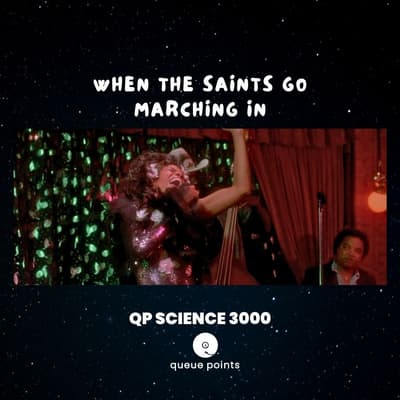
QP Science 3000: When the Saints Go Marching In
PAID MEMBERS ONLY: On QP Science 3000’s Queue Points, the hosts revisit a memorable moment from Keenen Ivory Wayans’ blaxploitation parody I’m Gonna Git You Sucka, focusi...
#KimWayans #InLivingColor #BlackMusicHistory #WayansFamily #90sPopCulture
Disclaimer: Episode Descriptions were developed using AI assistance and were subsequently reviewed, fact-checked, and edited by the Queue Points team to ensure accuracy and voice.
Transcript
*DISCLAIMER: Transcripts are created using AI, and may not accurately represent the content exactly as presented. Transcripts are provided as a courtesy to our listeners who would like to use them. For the accurate context of what was said, please refer to the audio or video of the episode.
[00:00:00] Intro Theme
[00:00:16] Introduction: Celebrating Kim Wayans
Sir Daniel: Greetings and welcome to another episode of Queue Points podcast. I am DJ Sir Daniel
Jay Ray: And my name is Jay Ray, sometimes known by my government as Johnnie Ray Kornegay III. And Sir Daniel, we are about to take a little detour outside of what we normally do, but it is squarely within what we normally do. This is about
Sir Daniel: Listen, it's a fun detour. It's a funny detour
Jay Ray: Mm-hmm
Sir Daniel: I have long said we've talked about this particular show as being so culturally relevant to Black culture and to music just as, uh, just as, uh, Soul Train, just as much as Soul Train, Yo! MTV Raps. It is just as important. And this also, um, signifies this family des- um, dy- this family dynasty of comedy, which includes, and I've always said this, you can quote me on this, the funniest Wayans ever, in my opinion, you can argue with your mom and your dad, is Kim Wayans.
Hands down, Kim Wayans is the funniest Wayans of the whole family, and she has kept us in stitches for decades, Jay Ray
Jay Ray: I, that I agree. It's, I agree that she's kept us in stitches for decades. I f- I really would love our audience to weigh in. Like, Sir Daniel just made this provocative statement that Kim Wayans is the funniest Wayans. Who do you think is the funniest Wayans siblings? You weigh in and let us know. But Kim is definitely high up there because, and we'll get into this tonight, she is iconic.
Like, she will have these many parts that become the cultural touchstone, so we'll get into that in a second. Before, I do wanna mention that one of our podcast cousins, They Reminisce Over You, has a great episode on the history of In Living Color. So if you want to go and check that out, definitely go and listen to their episode.
You will enjoy it. Also, we discussed on this show, this is maybe three years ago now, with, um, about the importance of how In Living Color basically started the
Sir Daniel: Super Bowl
Jay Ray: Bowl
Sir Daniel: halftime show. What makes Kim Wayans, as I said, the funniest Wayans, is her complete dedication to going balls to the wall for it. There is a reckless abandon that you have to have in order to do comedy, especially when you do, um, what they call a... She has, there's a b- she has a very big physical,
Jay Ray: Shit
Sir Daniel: aspect to her comedy, whether it's throwing herself around
Jay Ray: Mm-hmm
Sir Daniel: or by, like playing LaQuita and, you know, arching her body and, and, and sh- and having a stretchy face and, and exaggerating her, um, expressions.
Uh, LaQuita, you know, those things, she does that and she has no, there's no boundaries to her. She does, she completely unleashes everything that she has into these caricature, caricatures of a lot of people that we've grown to know and love culturally. And I've always believed that everybody that she's ever, um, impersonated on the show, that she had a lot of respect for them and she had a lot of love for them, and which wasn't always d- which always didn't come across, and we'll talk about that in, with a specific artist.
Jay Ray: Yeah
Sir Daniel: one of the first, when I think about it, one of the first episodes, few episodes of In Living Color where we first see Kim Wayans dive into, uh, music parodies, she was, um, teamed up with Tika Crystal Lemons, which is, which was her castmate, and the two of them together are just extra funny. Another comic legend, comic actress legend, sitcom legend, Tika Crystal Lemons are absolutely hilarious women.
[00:04:29] The Salt-N-Pepa Parody: Cook It
Sir Daniel: They deserve all the flowers and the praise for the all the stuff that they've done. But Jay Ray, do you remember Cook It with Salt-N-Pepa?
Jay Ray: I do.
Sir Daniel: And the whole, it was, no, it was her, T'Keyah, and, um, um, what's my girl? The other, uh, Kimber- that was in, in Living Single. Kim Coles, the other Kim. So the three of them were Salt, Pepa, and Spinderella.
Kim Coles was Spinderella in the back, and she was, she was DJing with two, I think, pots and pans or maybe, like, a, a food processor. And Kim Wayans and T'Keyah were Salt N Pepa, and they were, like, mixing up food in the kitchen, and they were rapping along, very well I might add, to a pr- uh, to a parody of "Push It," but instead of "Push It," it, of course it was called "Cook It."
"Ah, cook it." And they were talking about all types of food, dishes and whatnot, af- at the same time being hilarious. So I think, um, Jay Ray, I'm willing to bet that that, um, that particular sketch probably did very well. And they were like, "You know what, Kim? You're a woman. You're a Black woman. Lean into these, um, characters that a lot of these, uh, female performers are giving."
Especially at that time. We're talking about 1990.
Jay Ray: Yeah
Sir Daniel: So there was an, the, there was, like, an onslaught of Black women artists that were killing it on the charts, a handful in particular, and they were larger than life. So of course for a comedic actor, that's a goldmine right there. That is so much to, so much, um, source material to work off of.
And so that's why Kim Wayans has so many great parody, um, uh, parody songs in the In Living Color pantheon
Jay Ray: Yeah. No, I agree with every, with all of that. And I think the other thing, uh, about Kim that is unique is it's funny, it's not bad. Like, it's not bad performance, you know what I'm saying?
Sir Daniel: Right
Jay Ray: is purposefully exaggerated performance. And it's like, "Oh, okay, she's able to do this because she can kind of bend, uh, her voice in these very interesting ways to kind of pull it off."
[00:06:54] Quick Transition
[00:06:55] Crystal Waters Parody: My Songs Are Mindless
Jay Ray: Sir Daniel, I think it's worth talking about a, a, a few of these performances that really, made an impact. And this one stands out for so many reasons. But the Crystal Waters parody,
Sir Daniel: Yes
Jay Ray: My Songs Are Mindless, was legendary. So
Sir Daniel: To this Jay
Jay Ray: school, to this day, so I remember in high school, I can't remember exactly when it aired on, but I remember in school us having these very intense conversations about seeing Kim Waters do this parody.
Because to put this in perspective, y'all, Gypsy Woman was such a huge house record. And it's crazy to think about now, but back in the olden days, kids, in the early 1990s when house music was ascending, everybody needed a house track and, and, and they were hitting the charts, like going gangbusters. And Crystal Waters, of course, uh, came to us with Gypsy Woman, uh, which is a beautifully written song.
It's like this true story. She like, you know, about an experience that she had, you know, seeing this woman, uh, this, this woman who was experiencing, uh, homelessness on the street. But we didn't have the kind of context for that song then that we have today, and it was just an easy song to parody because people with the la da dee, la da da felt like it was just kind of a throwaway series of lyrics, not really understanding the full meaning behind it.
And so, uh, uh, My Songs Are Mindless, which K- Kim Wayans does a lot in all of these parodies, is kind of like exaggerating this idea of taking like real-life experiences and like putting them into the lyrics. Like, «I'm on the show with Sir Daniel. We are recording the show now. We gotta do the show now.»
That's Kim Wayans.
Sir Daniel: Y- absolutely. And like j- like you said, taking the hook and replacing la da di da da da with ha ha hee ha ha ho, I'll be rich, you'll be poor. I am s- you know. And you're absolutely right because In Living Color came on on Sunday nights, so it was fodder all morning long, Monday morning long on the, on the ride to school on the school bus, and in first period class we were talking about you had to have watched what happened on In Living Color the night before b- if you wanted to be one of the cool kids involved in the cool conversation about the funny skits that we, the funny sketches that were aired the night before.
And, um, it, and shout out to the, the production team
Jay Ray: Mm-hmm
Sir Daniel: In Living Color because it's not just about her putting on, um, a, a wig and a, a suit. Like, they really took the time to do a parody of the video because the video back then was just like a kinda basic white block, color block video with dancers and s- and some, um, some graphics, and tight close-ups of Crystal Waters' face, which made it all, which at the time was very, um, tech savvy to us because it was like, oh, wow, this video to us kinda just came out, and here you guys are making a parody of it.
So which meant that In Living Color really had its finger on the pulse of, of pop culture, period. And to your point earlier, um, about the ascension of house music, S- "Gypsy Woman" squarely was a crossover hit. It
Jay Ray: Oh,
Sir Daniel: it was not just bubbling in, on the house charts at that point. That song had crossed over crazy, which made it prime time for prime time television.
And, um, and another artist that was having a resurgence in the early '90s as well was Vanessa Williams, and you had to remind me of this 'cause I almost forgot about this one
[00:11:05] Vanessa Williams Parody: Kiss My Ass
Jay Ray: Yeah. This is a very interesting one, and I feel like this, uh, crosses over into a really important piece of being a woman in, uh, pop space, and being a Black woman and being able to talk about the experiences of Black women. So one of the parodies that, uh, Kim Wayans did was, uh, a, a parody of Vanessa Williams' Save the Best for Last, which that song was huge.
It changed Vanessa Williams' entire career. Vanessa Williams was having such a big moment between that song. She was in The Equalizer with, uh, with Arnold Schwarzenegger. Uh, oh, no, uh, I
Sir Daniel: You know, it was the,
Jay Ray: the... What
Sir Daniel: the Eraser. The Eraser. Mm-hmm
Jay Ray: Uh, she was in The Eraser, and so she was having this, like, really huge Hollywood moment at that
Sir Daniel: I'm ready. Yep
Jay Ray: but Kim did a song- did a parody of Save the Best for Last, and the song is called Kiss My Ass. Now, is this important? Because what this song is basically about is the experience of Vanessa Williams as a Black woman who had been stripped of her, uh, Miss America title,
Sir Daniel: Correct
Jay Ray: of this photo shoot that she had done. Despite all of that, and Kim sings this in the parody, "I'm now a superstar." Like, you know, 'cause at this point Vanessa's got hit songs. She's in movies now. Miss America thing is in the background. Like, she has ascended past that, and she is still to this day our Miss America. Like, do we know any of the other ones?
Like, Vanessa Williams is Miss America to us. But Kim basically, Kiss My Ass is basically the F you to, uh, uh, to white America that despite being stripped of this title that y'all said I couldn't have because of this thing, I'm now signing autographs of this thing as a superstar. And it's a great critique of the treatment of women, in particular the treatment of Black women, in a comedic way.
[00:13:23] Tracy Chapman Parodies
Sir Daniel: Absolutely. And so going back to Kim's natural ability to shape-shift and to become the artist, this next artist, she looks so comfortable becoming Tracy Chapman.
Jay Ray: Mm-hmm
Sir Daniel: Chapman at the time was... She was, so this is like, and Let Me Clear My Throat started in 1990. Tracy Chapman was a bonafide mega star,
Jay Ray: Mm-hmm.
Sir Daniel: Grammy winner.
Fast Car was like her pinnacle hit, her signature hit song. And so, you know, leave it to Kim to, to strip down all her makeup, to put on a dreadlock wig and some, and some jeans and kinda, and kind of sturdy up her, her posture You know, being, being respectful but also being respectful but also saying, showing that, hey, you know, um, Tracy Chapman is a c- a sturdy woman.
She's a
Jay Ray: A starry woman
Sir Daniel: she's a sturdy woman. She's a, you know, a woman of, of masculine energy. And so, um, so, so her doing that and doing a parody of Fast song. And, and here's another, um, Kim, Kim doing really great work at pinpointing the ridiculousness of sometimes of pop culture
Jay Ray: Mm-hmm
Sir Daniel: just picking apart the fact that this song, which was a Grammy o- Grammy-winning song, when you listen to it, is about observation
Jay Ray: Yes
Sir Daniel: and, and it's a, it's a, it's a, a, a stream of conscious- consciousness song that Tracy originally sings.
But the follow-up, there is another, um, uh, another, um, rutabaga. What's the word I'm looking for? Another rutabaga. What Kim is doing is another commentary on the art of songwriting,
Jay Ray: Mm-hmm.
Sir Daniel: and she picks apart Tracy Chapman's songwriting, not her abilities, but the fact that Fast Car was such a huge hit that the industry was expecting a follow-up.
Jay Ray: We need
Sir Daniel: And I... We Need Another One of Those, which is a, a commentary on the music industry,
Jay Ray: Mm-hmm
Sir Daniel: which is the m- the music industry is very much cut and paste. Cut, copy, and paste. We want that again, repackage it so we can have more of that, of that result. And the, the, the, the sketch finds Tracy Chapman in her one bed- in her bedroom apartment out in the city, just looking out the window and literally singing the four chords of Fast Car, and s- literally singing what she's seeing and writing it down, and she's like, "Oh, this is gonna be a hit record."
Even to the point of a woman getting assaulted in the alley, she was like, "Oh, this is gonna be a hit," and she wrote that down and sang it too. So, uh, once again, Kim Wayne's doing more than just slapstick comedy, but actually holding a mirror up to society and the music industry in her sketch comedy.
[00:16:32] Quick Transition
[00:16:33] Whitney Houston & Janet Jackson: Rhythmless Nation
Jay Ray: it's interesting that we just had two back-to-back experiences of talking about kind of the experiences of, of Black women in, in music. One of the most famous, unforgettable moments in In Living Color history is Rhythmless Nation, um,
Sir Daniel: 'Cause we get a super in this one
Jay Ray: get a twofer in this one, right? So Whitney Houston this moment in time is really struggling with identity in terms of her public persona, who she is as a Black woman, because Whitney Houston is a sister through and through, but her public persona as a pop princess was causing this very intense division, which has been talked about ad nauseam.
If you watch any documentary about Whitney Houston, you watch any movie about Whitney Houston, she has talked about how hurtful it was to experience it. And it's interesting because, uh, this is an aside, but even within that, the one of the most hurtful nights of her experience, she also meets one of the loves of her life in Bobby Brown, so like this is all happening at the same
Sir Daniel: at the same time, yep
Jay Ray: same time. But Rhythmless Nation happens, and it is a parody of both Whitney Houston as a performer, in particular a Black woman performer that we are, that In Living Color is identifying as rhythmless, and Janet Jackson, of course, in Rhythm Nation. So you get this juxtaposition of these two Black women, uh, in pop culture and, uh, but of course the center of it all is, is Whitney Houston.
And I think this was hurtful. Like Whitney has been on record, like at, you know, this was a time when these types of things were jabs taken at her. It is not the only jab that In Living Color took at her, because they did, was it Got Your, Got Your Babies Tonight?
Sir Daniel: I don't want your babies to
Jay Ray: Want Your Babies Tonight. Uh, and um, this one, funny, 'cause I'll never forget it, still remember it.
I remember it being introduced, "And Rhythmless Nation," we didn't know what it was gonna be, and of course it was this. So one, this one is complicated. Super funny, but we also know that the harm that it caused behind the scenes now.
Sir Daniel: Yeah. It, um, I often wondered, so Kim Wayans has never responded to Whitney Houston's criticism, which probably was, you know, best
Jay Ray: Mm-hmm.
Sir Daniel: because I'm pretty certain, you know, Kim respected Whitney and Janet for that matter. And I can't imagine that in Hollywood, Hollywood for Black, for Black entertainers is small.
And so I can't imagine that they're not running into each other, they're not running into or running in the same circles. You know, or going to the Arsenio Hall Show and seeing each other at some point. You're gonna run into each other, and I'm sure, you know, some words are gonna be exchanged or who knows what happened. I think that as we've said, uh, we
[00:20:03] Kim's Respect for the Artists She Parodied
Sir Daniel: can, what we're gleaming from these performances of Kim Wayans, um, and her parodies of these Black women specifically She did them with some care. She did them with care. Um, I think that she had to pick them specifically because they were iconic. She would do people like Grace Jones, even though Grace Jones, the Grace Jones parody was, had nothing to do...
Well, she did sing a little bit. But it was very over the top and, um, and would magnify the, the masculinity and the strength of a Grace Jones. But Grace Jones was a powerful figure, and Kim knew that, and it was like, "Oh, this is a p- somebody that is, people are going to respond to in this sketch." Oprah Winfrey.
She's done, she's run the gamut of women. Lucille Ball, I think may have been the only white woman that she impersonated. But even that is, even that to, to Kim's genius, the fact that, um... taking the fact that if y'all are, y'all who are probably not old enough to remember, some of the premises, the premise of the Lucille Ball show was that Lucille's husband, Desi, or I mean Ricky, was in entertainment,
Jay Ray: Yes
Sir Daniel: band director.
Lucy probably didn't have any talent, but she wanted so desperately to be in the limelight that she tried every and any trick she could to get, um, Ricky's attention
Jay Ray: Mm-hmm
Sir Daniel: even his industry friends' attention to get her some type of spotlight or some, some shine on the show. And Lucy's parody, I Love LaQuita, was like this Compton-out, big bangle earrings-wearing, long, uh, Shanaynay nails, hood rat, uh, in a, in a, in a one-piece leotard suit.
[00:21:56] I Love LaQuita: The Lucille Ball Parody
Sir Daniel: And her a- her and Ethel were like, had a salt and pepper routine, and it was just where they were beatboxing and rapping. It just, it was, it was also, it was just Kim also tapped into the zeitgeist because female rappers were very huge at that time as well.
Jay Ray: yeah
Sir Daniel: And a lot of her parodies were on female rappers and the importance of, uh, and the power that female rappers were gaining at that time, so she tapped right on into that as well.
So for, again, just giving weight to my, my earlier statement that Kim Wayans is the funniest Wayans of them all
Jay Ray: I feel like, I mean, I think are so many... Of all the In Living Color moments, and I can say this with my whole chest 10 toes down, my favorite In Living Color moments all involve Kim Wayans. Like we just mentioned the Grace Jones, like the Grace Jones skits, uh, uh, Rhythmless Nation, you know, these, all of these skits. Uh, uh, r- was it Cephus and Reesey?
Sir Daniel: Cephus,
Jay Ray: Phus
Sir Daniel: Cephus and Resi and, um, Della Reese's Pieces when she was Della Reese. I mean, the list goes on and on. Lil Magic.
Jay Ray: Oh, Little
Sir Daniel: Magic
Jay Ray: So think that's really critical. And I mean, before we talk a, a bit about, um, how we came to see her the first time, 'cause I think this is really important, do wanna just note, um, what me and Sir Daniel are talking about is squarely within Black tradition.
She's telling a joke, right? But she's offering clever critique indirectly, right? So it's like saying the thing without saying the thing. It's a little ironic. It's a little teasing. It's a lot of storytelling, but what we're trying to do is we're really making deep cultural critiques about what's happening in our culture and in the world overall.
And so, um, whether she was trying or not, um, she was doing this, and she continues to do this thing that, uh, is really important to Black culture.
[00:24:09] Transition
[00:24:15] Kim Wayans' Film Debut: I'm Gonna Git You Sucka
Jay Ray: the first time we see Kim Wayans, this is her first film, okay? Kim Wayans is in her brother's, uh, film. Before we get into, to her moment, I'm Gonna Git You Sucka is really important.
Sir Daniel: Yes
Jay Ray: Keenen Ivory Wayans and Robert Townsend are at the, uh, the, the foundation of kind of the new Black r- film renaissance. So this is happening in the mid-1980s. Uh, in 1987 we get Hollywood Shuffle, which, uh, Keenen Ivory Wayans co-writes with Robert Townsend. It's a Robert Townsend film. That very next year we get Keenen Ivory Wayans' I'm Gonna Git You Sucka. Um, and so this is, uh, 1988, and it stars Keenen Ivory Wayans and a Bernie Casey. Shout out to Bernie Casey, who is a, a film, a Black movie legend. And it's basically a parody of, of a, uh,
Sir Daniel: the blaxploitation films
Jay Ray: the Blaxploitation films kinda rolled up into one. Um, and it's super funny, but there's a moment in the picture Where we get introduced to the lounge singer.
This person ain't got no name. Like, their name in the credits is Lounge Singer. But Lounge Singer is played by Kim Wayans. Sir Daniel, what is this lounge singer doing?
Sir Daniel: First of all, it, let's do the, when you see the opening shot of, um, Bernie and, um, Kenan walking into the bar, making their way to the, to the counter. No, making their way to a, a, a s- a table,
Jay Ray: Well, they
Sir Daniel: they sit down
Jay Ray: You were right, they go to the counter first, then they go to the table.
Sir Daniel: And they go to a table. You can hear Kim first before you see her. And, uh, and so when they sit down, their order, they're getting their order, which is funny in and of itself because Bernie orders a, a Jack and Co- a Jack, uh, uh, just a whiskey or something strong.
Whereas Kenan's character is such a, you know, is, is such a choir boy, he order, he orders a double Coke
Jay Ray: A double Pepsi,
Sir Daniel: A double Pepsi. A double Pepsi, right. Sorry, Coke. It was a double Pepsi on the rocks. Was it on the rocks or was it d- yeah. And the waitress is like, you know, "Oh, big man, double Pepsi." And so while they were talking and g- getting their order taken, they are interrupted by the caterwauling, and that's the best word that I can call it is caterwauling, of the lounge, this lounge singer that is doing the absolute most.
And the song that she's singing is "When the Saints Go Marching In." And they finally cut to the stage where Kim Wayans, a young Kim Wayans, is on stage going as I s- she, again, from the very beginning, going for it 100%. Foolishness. She is stretching her face. She is singing all these, drawing out all these notes.
At one point, she ends up on the floor rolling around and getting wrapped up in the microphone cord, and I believe she even falls off the stage at one point. And, and K- and, um, Keenan's, Keenan and Bernie's characters are like, "Who the hell is that?" As far as like, "Who is the s- who is that?" To, to the waitress, and the waitress is like, "Oh, that's the director's sister."
So we get this fourth, the breaking of the fourth wall moment, and she, they look at, they both look at, at Keenan, and then Keenan kinda looks at the camera breaking the fourth wall. And then we just get this really great comedic moment where Kim Wayans doesn't even really have lines, but she stole that scene.
Jay Ray: whole scene.
Sir Daniel: That whole scene was absolutely hers. That is her scene, and that's the only time she shows up in this movie, and you remember it to this day. If you have not seen I'm Gonna Git You Sucka, if it's on streaming, you really must take a, take the time out to watch the entire movie because a lot of those, first of all, a lot of the people that were in the movie are no longer with us,
Jay Ray: Mm-hmm
Sir Daniel: it's just a g- it's just great satire, um, parody filmmaking that is just truly comedic, a little over the top, but just good, wholesome fun, great jokes.
Jay Ray: Yeah
Sir Daniel: before we end, but I know we're about to wrap up, but I
[00:29:03] Shoutout to Anne-Marie Johnson
Sir Daniel: can't, Jay Ray, I cannot talk about this, this lounge scene without giving flowers to another amazing comedic actress
Jay Ray: Mm-hmm
Sir Daniel: absolutely is a scene stealer in these, in these next, um, uh, uh, sequences, and that is Anne-Marie Johnson
Jay Ray: Baby, that woman right there
Sir Daniel: That,
Jay Ray: big one
Sir Daniel: she is comedic gold.
You re- if you grew up and you went and you spent a lot of time at your, at your mema's house, your gran- your nana's house, your grandma's house, and you watched television with grandma, then you were watching In the Heat of the Night. She was in In the Heat of the Night.
Jay Ray: yes.
Sir Daniel: She was in
Jay Ray: wife.
Sir Daniel: Virgil's Wife. She was in What's Happening Now.
She w- Rogers' Wife. She was playing, always playing somebody's wife. And she stole, she was a scene stealer in, um, in Living Single, where she got her wig caught in the, in the door. Iconic scene
Jay Ray: moment. Iconic
Sir Daniel: So Anne Marie, so what I'm saying is Anne Marie Johnson is, she's comedic gold. She's, she's a mainstay in Robert Townsend's, um, canon of, um, um, uh, HBO specials.
Anne-Marie Johnson, of course you, if you're a fan of this movie, you know that she is the voluptuous sex siren wearing the very hot red leather outfit. She sticks out like a sore thumb in the night lounge.
Jay Ray: With
Sir Daniel: And she, with the, with the big volume, voluminous hair, very tight, juicy, got you crazy suit.
And, um, so she and Keenen Wayans have a very, very iconic, very legendary scene about, oh, I don't know, about 12 inches some- of something, and of things, and you just have to go and see it for yourself. But I just, I just wanna take that moment. Thank you, Jay Ray, for allowing me to take this moment to give Anne-Marie Johnson her things because she's so hilarious to me.
She's just, between her and Kim Wayans, they stole that movie.
[00:31:10] Quick Transition
[00:31:11] Closing Thoughts & Call to Action
Jay Ray: You know, um, glad we had this conversation. I think this is really important that we... Black music is within every piece of our culture, right? There's really nothing Black folks touch that doesn't in some way involve music. Um, it is one of the things that has empowered the civil rights movement.
It's part of our, our way of communicating with one another, right? So Kim, Kim Wayans is that girl. You know what I'm saying? And, you know, she definitely told some important stories in what she was doing, but, you know, and she made us laugh, and I think that's really, really important. So glad we spent some time honoring our sister.
Sir Daniel: That's the most important part. Absolutely, that's the most important part. So Kim Wayans, we thank you. Um, Kim Wayans has her own web series now, so go check that out. So if anything, go check out why Kim Wayans is the comedy GOAT and the, the GOAT of the Wayans family, in my opinion.
Jay Ray: Yeah,
Sir Daniel: my humble opinion
Jay Ray: listen, I, I, listen, let us know. Y'all, so first of all, couple calls to action. Let us know what y'all think. Who do you think is the funniest Wayans? Um, so Daniel says it's Kim. Who do you got? Um, we also have a playlist of Kim Wayans parodies, uh, that you can check out on YouTube, so definitely do that. But thank you all for hanging out with us. If you can see our faces and hear our voices, go ahead and subscribe wherever you are. Visit our website, um, at queuepoints.com. You can do a ton of stuff over there. Watch the archive of Queue Points episodes, become a member, check out our blog, um, and hang out with us.
We have a ton of stuff that we do, uh, outside of this particular show, and you can get access to all of that on our website. Uh, visit our store, uh, at store.queuepoints.com, and, you know, just keep hanging out with us. We appreciate y'all and we love y'all
Sir Daniel: We certainly do, and like I say at Rutabaga, we certainly do, and like I say at the end of every show, in this life you have a choice. You can either pick up the needle or you can let the record play. I am DJ Sir Daniel
Jay Ray: And my name is Jay Ray, y'all
Sir Daniel: And this is Queue Points podcast, dropping the needle on Black music history. We will see you on the next go-round.
And I ain't one to gossip, but you ain't heard that from me.
Jay Ray: heard that from me. Peace, y'all.
Sir Daniel: Peace, y'all.