
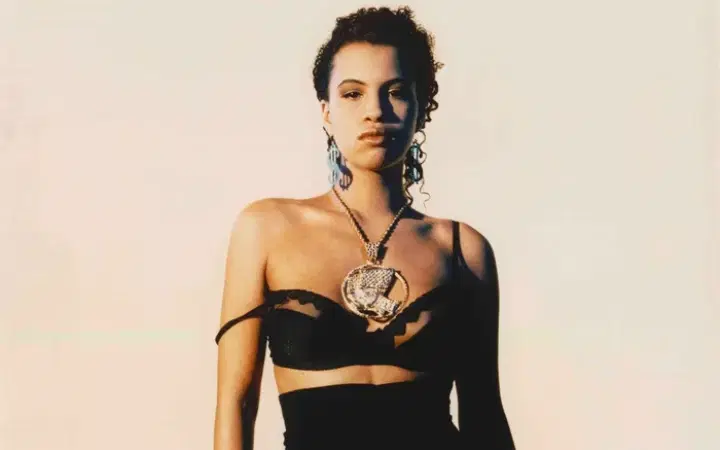

You’re on the couch on a Friday night, TV volume a little too loud, waiting on Video Music Box to drop the latest hip hop videos. Then that colorful clip comes on: a fly Black woman with wet hair, a big dollar-chain medallion, biker shorts, a bra top, and a look that feels more London street than Queens block. The beat is hip hop, the synths are pop, the attitude is punk, and before you even catch all the lyrics, you know one thing for sure — “Buffalo Stance” is different.
That’s the energy DJ Sir Daniel and Jay Ray tap into as they walk through Neneh Cherry’s story on Queue Points, treating her not just as a "one-hit-you-remember" memory, but as a key chapter in Black music history and Black women in music who refused to stay in one lane.
Listen to this Episode
Neneh Cherry, Punk, Rap and the Making of a Black Icon
Neneh Cherry sits at the crossroads of punk, rap, pop, and Black music history, and this episode shows how she carved a lane that still feels outside the box. Tracing her...
Neneh’s life reads like a map of the diaspora. Born in Sweden to a Swedish mother and a Sierra Leonean father, raised around Don Cherry’s jazz world, riding through Istanbul in a VW bus and meeting James Baldwin like it’s regular life — all of that becomes part of the music. Jay Ray paints her early years as a kind of living Black arts residency: a kid surrounded by artists, sound systems, and scenes, long before the world knew her name. When teenage Neneh hits London and falls in with The Slits, the New Age Steppers, and Rip Rig + Panic, she’s already blurring punk, ska, reggae and early hip hop in ways that point straight toward the future.
“Art was at every point in her life. Her mother’s an artist. Her father’s an artist. Her stepfather’s an artist. It was in her blood from the very beginning.” — Jay Ray
By the time “Looking Good Diving with the Wild Bunch” gets reworked into “Buffalo Stance,” all those threads come together. Sir Daniel remembers seeing the video on Video Music Box in Brooklyn, clocking the UK feel immediately — the trainers, the sweats, the cranked-up drip — and recognizing that this wasn’t the same hip hop he was used to from around the way. It still sat firmly in hip hop history, but it bent the rules: a woman rapping and singing, pulling from pop and new wave, and looking like she could headline a runway and a block party in the same night.
“They would take whatever the blueprint of B-boys and B-girls was and crank that up ten times. They always had a good sneaker on, a nice velour suit. They love sweats.” — DJ Sir Daniel
But it isn’t just about the music video nostalgia. Jay Ray connects Neneh’s work directly to activism and community joy. He remembers MTV playing “I’ve Got You Under My Skin,” hearing her say the word “AIDS” in a rap verse, and suddenly realizing you could stand for something and still make records that knocked. For him, that was a turning point — a reminder that Black music culture has always been a site of truth-telling, not just entertainment.
From there, the episode moves into the 90s, where Neneh slides into that jazzy, laid-back pocket. Homebrew brings in Guru and DJ Premier, tying her even more tightly to hip hop’s golden era while still letting her move between rapping and singing in ways that today’s “genreless” artists would recognize immediately. The conversation lights up around “Buddy X,” a video that looked like a Gap ad but felt like a mini-movie about gender politics, featuring every shade and texture of woman on screen.
Then Sir Daniel drops a gem: the Jeep remix of “Buddy X” with a young Biggie Smalls. It’s one of those deep-cut stories that reminds you how rich Black music history really is — Neneh singing over boom bap, Biggie sliding through with that unmistakable flow, and a remix that could have rocked the Tunnel or any Jeep with the windows down.
“Hearing somebody sing over boom bap beats is just a treat… It solidifies how important remixes were to us in the nineties. It made that song completely different.” — DJ Sir Daniel
That’s where the conversation gets real about remix culture. Jay Ray and Sir Daniel connect “Buffalo Stance” back to “Looking Good Diving,” then zoom out to talk about the importance of DJs having agency, Sir Daniel recalling the magic of a DJ flipping over the single for Salt-N-Pepa’s “Tramp” revealing the brilliance of “Push It,” and how producers hearing something new inside existing records built whole eras of R&B culture and hip hop. It’s a reminder that community joy often comes from those second, third, and fourth lives of songs — the versions you hear at the club, on college radio, or on the late-night mix show.
Watch This Video
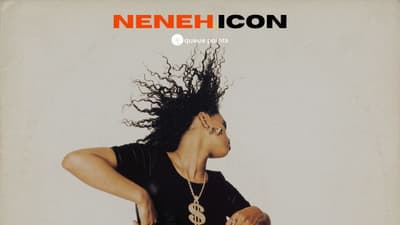
Neneh Cherry Was Ahead of Everybody
That Buffalo Stance video popping up on Video Music Box Fridays, with Neneh Cherry's flow cutting through the synths and those rigid backup dancers cranking the UK hip-ho...
Even when Neneh steps back from the spotlight, she doesn’t disappear. The hosts shout out “Twisted Mess” from the Best Laid Plans soundtrack and her later jazz collaboration The Cherry Thing, framing her as part of a lineage that includes Kelis, Santigold, and Res — Black women who never quite fit the industry’s boxes but always felt like the coolest person in the room. For Queue Points, that’s the heart of Black music history: artists who move freely, experiment boldly, and still feel like family.
“There is not a Neneh Cherry project that I don’t like. You are getting Neneh every time you get Neneh.” — Jay Ray
By the end, this isn’t just a recap of one artist’s discography. It’s a love letter to a Black woman who stood at the intersection of punk, rap, jazz, and pop, and to the communities — from Istanbul tours to London punk clubs to Brooklyn living rooms — that shaped her. It’s also a call to keep honoring those stories, to keep digging into the records, remixes, and late-night videos that built the soundtrack of our lives.
Get the stories behind the episodes.
The Queue Points Insider lands every Thursday with what we're working on, what's coming next, and the stories that don't make the episode.
Subscribe Today