
Editor’s Note: This article was developed using AI assistance to repurpose content from our original episode, The Quiet Storm Era & the Decline of R&B: Amani Roberts on What We Lost, and was subsequently reviewed, fact-checked, and edited by the Queue Points team to ensure accuracy and voice.
There was a time when the quiet storm wasn’t just a late-night radio format, it was a ritual. You knew exactly when Smokey’s “Quiet Storm” would fade in, when the dedications would start, and when that one song might come on that said everything you were too shy to say yourself. Those nights shaped how a generation of Black listeners learned about love, heartbreak, and possibility. On Queue Points, DJ Sir Daniel, Jay Ray, and guest Amani Roberts walk us through how that world got disrupted, and what we lost when corporate radio took over.
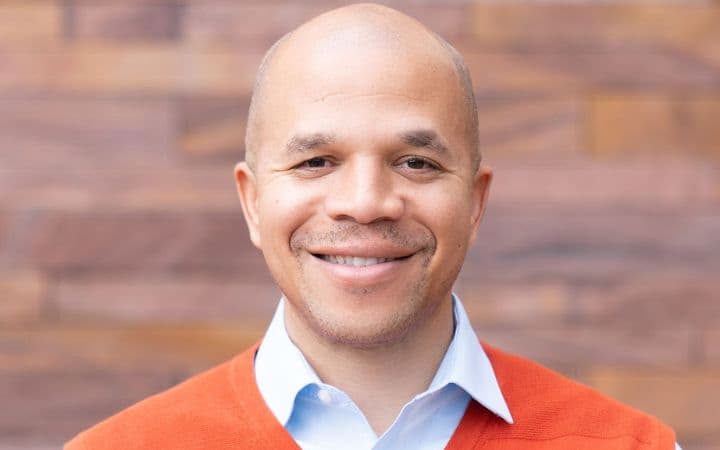
Amani Roberts is a music business professor, professional DJ, and USA Today bestselling author of The Quiet Storm: A Historical and Cultural Analysis of the Power, Passion, and Pain of R&B Groups. He does what the best Black music historians do: connects the sound to the systems behind it. In this conversation, he breaks down how the Telecommunications Act of 1996 promised diversity but instead cleared the way for iHeart, Townsquare and Cumulus to buy up local stations and lock in national playlists. That shift didn’t just change radio. It rewrote a chapter of Black music history in real time.
“The radio stations are playing for the advertisers, not for the listeners.” – Amani Roberts
That’s the quiet part nobody said out loud in the 90s. Before the Act, cities had their own sonic fingerprints. TLC got big in Atlanta first. Boyz II Men in Philly. Destiny’s Child in Houston. Local shows like WPGC’s DC Home Jams could spin a group like Shai before the rest of the country caught on. Once playlisting took over, you could be in Atlanta, Seattle, Vegas or Chicago and hear the exact same songs on “main” radio. R&B groups went from owning the Billboard Hot 100 one week in July 1997 to being pushed aside as hip hop, then EDM, got positioned as more “brand-friendly” sounds. That’s not just a trend. That’s R&B culture getting reprogrammed by policy.
Jay Ray grounds it in memory. He talks about visiting Atlanta in 1997, riding around and hearing a whole world of artists he didn’t recognize, songs that only lived on that city’s airwaves. A decade later, he came back and heard the same thing he heard at home in Philly. The local accent in the music had been flattened out.
“I was literally listening to radio and hearing no one that I knew.” – Jay Ray
But it isn’t just about the playlists. It’s about intimacy. Amani remembers sitting by the radio, finger on the pause button, waiting for New Edition to come on so he could catch the song clean on tape. He remembers discovering Phyllis Hyman’s “Old Friend” on WHUR’s quiet storm, and hearing Jodeci deep cuts that never made it to daytime rotation. Those shows were like free graduate courses in Black music history. When syndication and voice-tracking replaced local jocks and live dedications, listeners lost more than variety. They lost relationship.
Sir Daniel, who still works in terrestrial radio, feels that shift every day. He talks about the “sweet spot” when program and music directors had real courage and could pull album cuts into rotation just because they believed in them. Now, under corporate umbrellas and tight playlists, that bravery is harder to come by.
“The culture and the soul has been gutted out of our music and radio… and I think it’s been gutted on purpose.” – DJ Sir Daniel
The episode doesn’t stay stuck in nostalgia. It looks at the present too. Amani points out how today’s hits are often shorter, simpler, and built around interpolations of past records, while radio is late to songs that clearly resonate in real life, like Ella Mai’s “Boo’d Up.” He and the hosts talk about how artists like Kehlani, Tank, Babyface, Prince, and Rick James used to demand emotional courage from listeners, using metaphor, prelude, and postlude to stretch a story beyond a three-minute hook. That kind of songwriting is a big part of why R&B still feels like a language for our interior lives.
The conversation lands on a simple point: they might “hate us but love the culture,” as Amani says, but Black communities have always found ways to keep our stories alive. Whether it’s through DJ live streams, internet radio, or a campaign like Queue Points’ “Slow Jams Can Heal Us,” the work of preserving R&B culture is still happening in real time. Policy may shape the airwaves, but community joy, memory, and intention keep the music rooted.
Watch
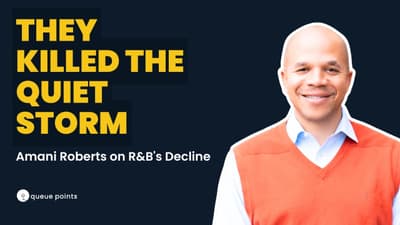
How the Telecommunications Act Changed R&B History Forever | ft. Amani Roberts
There was a week in July 1997 when 12 of the top 20 songs on the Billboard Hot 100 were from R&B groups. Not just the R&B chart. The main chart, across every genre. Less ...
Listen
The Quiet Storm Era & the Decline of R&B: Amani Roberts on What We Lost
DJ Sir Daniel, Jay Ray, and Amani Roberts examine how corporate radio consolidation, advertising priorities, and shifting ownership reshaped R&B and sidelined the genre’s...
Get the stories behind the episodes.
The Queue Points Insider lands every Thursday with what we're working on, what's coming next, and the stories that don't make the episode.
Subscribe Today