
![[Show Notes] From “I Wanna Be Down” to “Ladies Night”: Classic Women in Rap Posse Cuts](https://images.beamly.com/fetch/https%3A%2F%2Fsites.beamly.com%2F65e385bcdcfc57fb25f741f6%2Fmedia%2Fc107014ee7e3db0e808a.webp?w=1200)
Show Notes
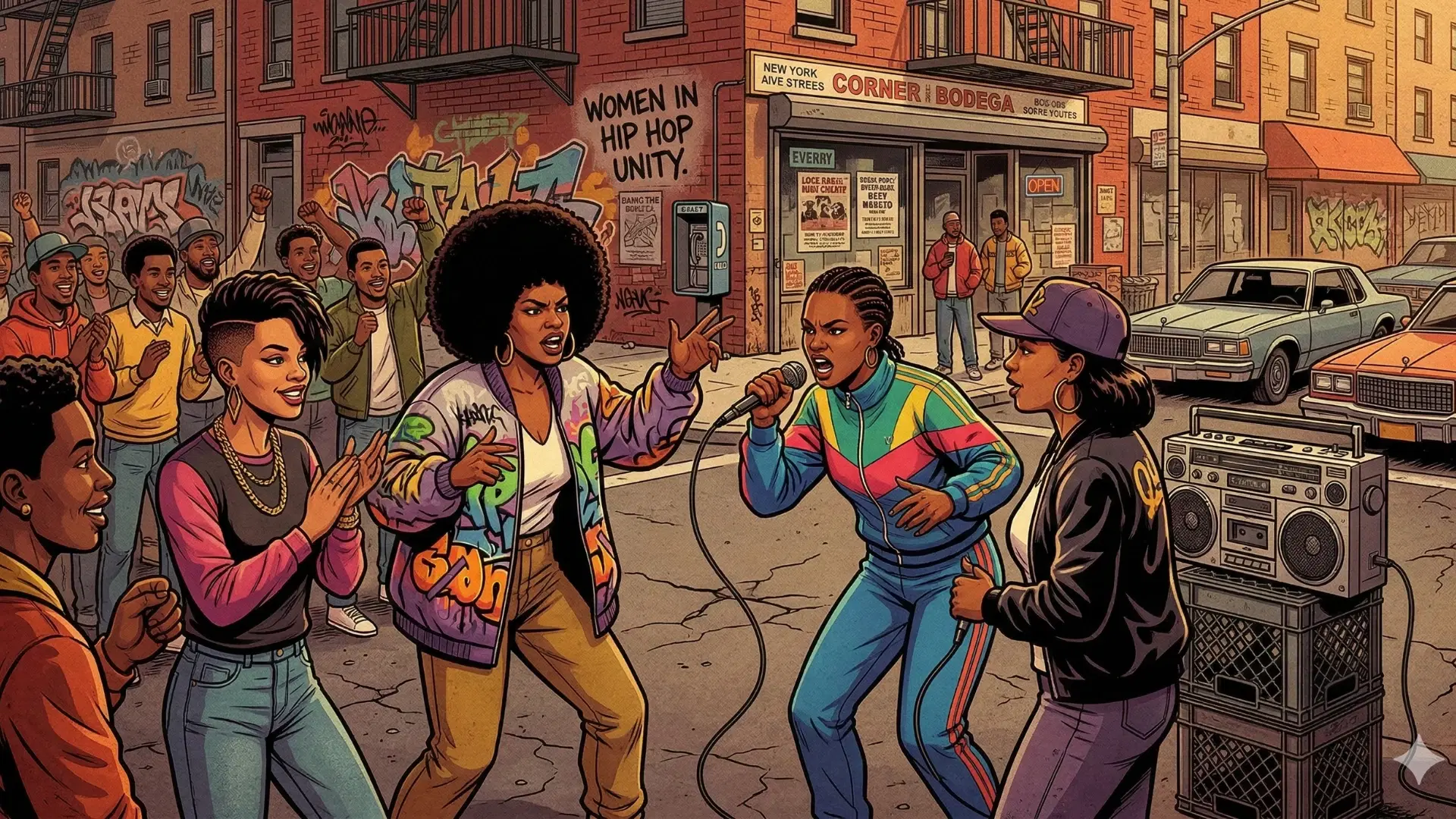
DJ Sir Daniel and Jay Ray sit down for Women’s History Month to trace how Black women in hip hop turned 90s R&B smashes into full-blown rap posse cuts, passing the mic like it was a family reunion cipher. They walk through the songs, videos, and behind‑the‑scenes politics that put women MCs front and center, from Brandy’s “I Wanna Be Down” remix to Lil’ Kim’s “Not Tonight (Ladies Night)” and underground backpack favorites. Along the way, they unpack how these records embodied sisterhood, care, and unity, and why the industry slowly closed the door on women getting to share that kind of shine together on wax.
Listen To This Episode
From “I Wanna Be Down” to “Ladies Night”: Classic Women in Rap Posse Cuts
DJ Sir Daniel and Jay Ray pull up a chair for a women’s history cypher, tracing how Black women MCs turned 90s remixes and rap features into full-on posse cuts that still...
Start Listening Now → Apple Podcasts / Spotify / YouTube
Defining a Real Posse Cut
Sir Daniel pushes back on the default example of “Ladies First” by Queen Latifah and Monie Love, arguing it is a powerful duet, but not technically a posse cut. In his words, a real posse cut is “when three or more are gathered” and the spirit hits the track.
The hosts break down how women in hip hop have often been treated as extra to the crew, even though every early crew had at least one woman—usually a cousin, sister, or partner—holding it down as part of the core lineup.
They reframe posse cuts as snapshots of community: multiple voices, different styles, one shared moment of mic‑passing and mutual respect.
When R&B Went Rap: 90s Remix Queens
Brandy’s “I Wanna Be Down” (Human Rhythm Remix) becomes the starting point: 14‑year‑old Brandy as the little sister on the hook, with MC Lyte, Yo‑Yo, and Queen Latifah turning a smooth R&B cut into a full cypher over stripped‑down production.
They move to Bad Boy’s world with Total’s “No One Else” remix, the only track where Lil’ Kim and Foxy Brown share space alongside Da Brat, riding the “South Bronx” sample like a block‑party showdown.
Lil’ Kim’s “Not Tonight (Ladies Night Remix)” gets love as a true radio‑era women’s posse cut, with Angie Martinez, Left Eye, Da Brat, and Missy Elliott, plus a luau‑style video packed with cameos from Mary J. Blige, Xscape, TLC, and more.
Throughout, the hosts remind us that in the 90s, remixes were remixes—these versions stood on their own and often eclipsed the originals in cultural memory.
Backpack Heroines and Northeast Cipher Energy
Sir Daniel and Jay Ray dig into lesser‑known cuts like DJ Big Kap’s “Da Ladies in Da House”, bringing together Bahamadia, Lauryn Hill (pre‑superstar), and rugged voices like Uneek, Precise, and Treep—firmly rooted in the mixtape circuit and cipher culture.
They spotlight Bahamadia’s “3 the Hard Way” with Mecca Starr and K‑Swift from her Kollage album, a Philly‑heavy, DJ Premier‑produced cut that feels like hearing a cipher spill straight from the street into the studio.
These records show another lane of women’s posse cuts, away from glossy videos and radio, living instead on 12‑inches, mixtapes, and late‑night college radio shows.
“Freedom,” Festivals, and Why Posse Cuts Faded
The conversation shifts to Joi’s “Freedom” from the Panther soundtrack—first as an R&B all‑star moment with SWV, TLC, Changing Faces and more, then as a rap remix anchored by Patra, Queen Latifah, Yo‑Yo, MC Lyte, Nefertiti, Salt‑N‑Pepa, and Left Eye speaking directly to Black struggle, care, and resistance.
The hosts connect that energy to later moments like Erykah Badu’s “Love of My Life (Worldwide)” and the Sugar Water Festival, imagining what it might have looked like if industry structures had supported more women‑led tours and collaborative projects at scale.
They dig into why we rarely get women’s posse cuts now: labels intentionally kept women separated on tour, today’s feature economy makes stacking A‑list women on one song expensive, and there is a quiet fear of the unity and message that can come when Black women line up together on the same track.
Underneath it all is a call: let the women cook together again, with labels and platforms stepping back enough for that love and respect to show up on wax.
The Ultimate Takeaway
When Black women in hip hop get to share the mic, they do more than trade punchlines—they model a kind of unity, care, and complexity that the industry rarely makes room for, but that listeners have never stopped needing.
Bibliography / References
Podcast & Platforms
Queue Points – Official Site: Black music history podcast hosted by DJ Sir Daniel and Jay Ray. https://queuepoints.com
Queue Points on Spotify – Show page and episode feed. https://open.spotify.com/show/75xVeGeYu0MTQW2rLIbGBw
Queue Points on Apple Podcasts – Show page and episode feed. https://podcasts.apple.com/us/podcast/queue-points/id1583327134
Queue Points on YouTube – Video versions and clips. https://www.youtube.com/@queuepointspod
Songs / Videos (Posse Cuts & Remixes)
Brandy - I Wanna Be Down (Remix) Official Video Official remix audio featuring Queen Latifah, MC Lyte, and Yo-Yo, with production credits for Keith Crouch and Kipper Jones, directly matching transcript discussion on the track's origins. (YouTube)
Total - No One Else ft. Lil' Kim, Foxy Brown, Da Brat Official Video - HD music video of the remix with cameos from Biggie and Puff Daddy, highlighting the historic Lil' Kim/Foxy Brown collaboration noted in the episode. (YouTube)
Lil' Kim ft. Missy Elliott, Da Brat, Left Eye, Angie Martinez - Ladies Night Remix - Official explicit video from Nothing to Lose soundtrack, showcasing the Kool & the Gang sample and all-female lineup discussed as a radio posse cut staple. (YouTube)
Big Kap - Da Ladies In The House ft. Bahamadia, Precise, Uneek, Treep, and Lauryn Hill - 1995 Tommy Boy single video featuring backpack era MCs like Uneek and Precise, providing visual context for the mixtape posse cut praised in the transcript. (YouTube)
Bahamadia - 3 The Hard Way ft. K-Swift & Mecca Starr - DJ Premier-produced track from Kollage album, illustrating Philly Northeast rapid rap style and Bahamadia's role in women-led posse cuts. (YouTube)
Various Artists - Freedom - 1995 music video of the rap version of "Freedom" from the Panther film soundtrack. The song features Queen Latifah, Yo-Yo, Lisa 'Left Eye' Lopes, MC Lyte, Patra, Nefertiti, Da 5 Footaz, Salt-N-Pepa, Meshell Ndegeocello and more. (YouTube)
Erykah Badu - Love of My Life Worldwide ft. Queen Latifah, Bahamadia, and Angie Stone - 2003 song from Erykah Badu which is a remix to her single "Love of My Life." This remix features Queen Latifah, Angie Stone, and Bahamadia. The song pays homage to "Funk You Up" by The Sequence, and early all-women rap crew which featured Angie Stone (Angie B). (YouTube)
Context & Culture
Not Tonight (song) - Detailed entry on Lil' Kim's track and Ladies Night remix, covering production by Rashad Smith and chart performance, supporting episode's radio history analysis. (Wikipedia)
Fashioning Power and Gender in Hip-Hop - Smithsonian overview of how women helped shape hip-hop’s sound and style, from early B‑girls and MCs through Salt‑N‑Pepa and beyond, with a focus on image, fashion, and power. It offers accessible historical context for women’s contributions in a male‑dominated culture. (National Museum of African American History and Culture)
Turning 50: Writing Women into the Story of Hip-Hop - Ms. Magazine traces five decades of women’s roles in hip-hop, from early pioneers like MC Sha‑Rock to later stars, arguing that any serious history of the genre must center women’s labor and artistry. It’s a strong feminist framing of how women MCs, DJs, and dancers have been erased and reclaimed. (Ms. Magazine)
Let’s Talk About The Female Rappers Who Shaped Hip-Hop - uDiscover Music runs through key women rappers across eras, highlighting artists like Queen Latifah, MC Lyte, Lauryn Hill, Lil’ Kim, and others who pushed style, politics, and storytelling forward. It’s a readable primer on impact rather than a technical critique. (UDiscover Music)
25 Trendsetting Women Who’ve Impacted Hip-Hop Forever - This iHeart / Black Music Month feature spotlights a wide range of women MCs and contributors, from Roxanne Shanté to Gangsta Boo, summarizing how each shifted sound, image, or business. It’s useful for quick snapshots of influence across regions and generations. (KCDA 103.1)
The History of the Posse Cut in 5 Songs - Pitchfork’s “The History of the Posse Cut in 5 Songs” traces how multi-MC tracks evolved from early collaborative records into showcases for all‑star lineups, using five key songs as milestones across decades. The piece explains how each track reflects a shift in rap’s crew culture, competition, and commercial ambition, helping define what fans now recognize as the classic posse cut format. (Pitchfork)
Clans, Posses, Crews & Cliques - XXL looks at hip-hop’s most important crews, from the Juice Crew forward, framing how collectives functioned as creative hubs and power bases. It’s a solid backgrounder on crew culture to pair with any discussion of posse records. (XXL Magazine)
10 of the Best Rap Posse Cuts Since 2010 (And The Winning Rapper) - Okayplayer rounds up modern posse cuts like “Mercy,” “Vice City,” and Dreamville’s “Down Bad,” briefly explaining each track and naming who they think “won” the song. It connects classic posse‑cut logic to contemporary rap for listeners used to 2010s–2020s crews. (Okayplayer)
Get the stories behind the episodes.
The Queue Points Insider lands every Thursday with what we're working on, what's coming next, and the stories that don't make the episode.
Subscribe Today