
![[Show Notes] The Quiet Storm Era & the Decline of R&B: Amani Roberts on What We Lost](https://images.beamly.com/fetch/https%3A%2F%2Fsites.beamly.com%2F65e385bcdcfc57fb25f741f6%2Fmedia%2Fdc83deb78bd023ab79bb.jpg?w=1200)
Editor’s Note: These show notes were developed using AI assistance to repurpose content from our original episode, The Quiet Storm Era & the Decline of R&B: Amani Roberts on What We Lost, and was subsequently reviewed, fact-checked, and edited by the Queue Points team to ensure accuracy and voice.
Play This Episode
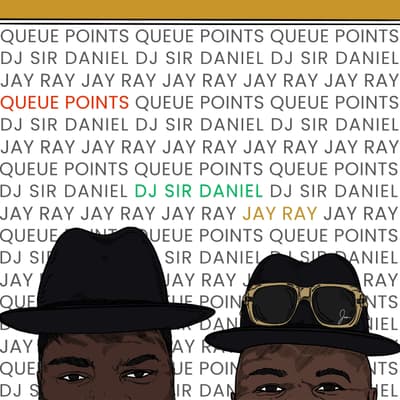
The Quiet Storm Era & the Decline of R&B: Amani Roberts on What We Lost
DJ Sir Daniel, Jay Ray, and Amani Roberts examine how corporate radio consolidation, advertising priorities, and shifting ownership reshaped R&B and sidelined the genre’s...
The Big Picture
The Quiet Storm era was more than a late-night radio format, it was a whole mood and a shared language for Black listeners learning about love, heartbreak, and intimacy through R&B slow jams. In this episode of Queue Points, DJ Sir Daniel and Jay Ray sit down with DJ, professor, and author Amani Roberts to unpack how the Telecommunications Act of 1996 quietly helped push R&B out of mainstream radio. Together they trace the shift from locally curated playlists and community-driven radio to corporate consolidation and nationalized programming. At the heart of the conversation is a question: what happens to Black music history when the people who built the sound lose control over how it’s heard?
Radio Policy, Playlisting and R&B’s Disappearing Dominance
Telecommunications Act of 1996 was sold as a way to diversify radio ownership, but it opened the door for conglomerates like iHeart Media, Townsquare Media, and Cumulus Media to buy up local stations and standardize playlists.
Where R&B groups once dominated the Billboard Hot 100, corporate playlisting shifted attention toward hip hop and later EDM, which advertisers viewed as more “brand-friendly” than songs about heartbreak and emotional vulnerability.
Radio stopped programming for listeners and started programming for advertisers, which reshaped how often – and where – R&B culture could be heard.
The Loss of Local Radio and Community Discovery
Before consolidation, each city had its own sonic fingerprint:
TLC broke out in Atlanta.
Boyz II Men rose from Philadelphia.
Destiny’s Child came up through Houston.
Shows like WPGC’s DC Home Jams helped groups like Shai reach their first audiences.
Local Quiet Storm shows introduced listeners to deep cuts and unsung artists – like discovering Phyllis Hyman’s “Old Friend” or lesser-known Jodeci ballads during late-night sets.
Syndicated programming and voice-tracking weakened the relationship between DJs and listeners, making it harder to build that intimate, city-specific bond around R&B music.
DJ Craft, Mentorship and the Fight to Keep Soul in the Mix
Amani talks about learning to DJ, training at Scratch Academy, and being part of a tight global DJ community that still treats reading the crowd as a craft, not a playlist.
He draws a line between his hospitality background and his DJ ethic: respecting staff, understanding the “back of house,” and using music to support the whole room, not just the dance floor.
The hosts point out that corporate structures have tied the hands of many program and music directors who used to break album cuts and take chances on new artists.
In response, DJs are leaning into internet radio, livestreams, and curated sets that play anything and everything – a modern extension of the Quiet Storm spirit.
Slow Jams, Emotional Language and R&B’s Courage
Amani runs down some of his favorite slow jams – from The Isley Brothers’ “Between the Sheets” and New Edition’s “Can You Stand the Rain” to Teena Marie’s “Dear Lover” and Usher’s “U Got It Bad” – as examples of songs that demand emotional honesty.
The conversation highlights how older R&B records used metaphor, prelude, and postlude (think Babyface compositions) to explore complex feelings, while much of today’s music is shorter, more direct, and often built on interpolations of past hits.
The hosts argue that these songs gave listeners language for their own emotions, and that today’s artists and industry could stand to reclaim that kind of vulnerability and nuance.
Campaigns like Queue Points’ “Slow Jams Can Heal Us” speak to the belief that these records still have the power to restore, reconnect, and teach in ways that go beyond nostalgia.
FAQ: Your Questions About the Quiet Storm Era and R&B’s Shifting Landscape
Q: What is the Quiet Storm era, and why does it matter for Black music history?
A: The Quiet Storm era refers to late-night radio programming built around smooth, romantic R&B and soul, often with dedications and deep cuts. It matters because it was a key way Black listeners discovered music, shared feelings, and built community around sound.
Q: How did the Telecommunications Act of 1996 affect R&B on the radio?
A: The Act allowed large companies to own more stations, which led to consolidation and standardized playlists. That reduced local control and pushed R&B groups off mainstream playlists in favor of formats that advertisers preferred.
Q: Why does the loss of local radio matter so much in this conversation?
A: Local radio once reflected a city’s unique musical identity and gave local artists a path from neighborhood fame to national recognition. When programming became centralized, that local discovery pipeline and sense of place in the music weakened.
Q: Are slow jams still relevant in today’s R&B culture?
A: Absolutely. Slow jams continue to shape how people talk about love, heartbreak, and desire. They remain a core part of R&B culture, even if they’re less visible on commercial playlists, and communities still turn to them for comfort, memory, and connection.
Q: What can listeners do if they miss the Quiet Storm energy on mainstream radio?
A: Seek out independent stations, DJ livestreams, curated playlists, and platforms where Black DJs still have the freedom to program deep R&B cuts, classic slow jams, and local artists. Supporting those spaces helps keep the Quiet Storm ethos alive.
The Ultimate Takeaway
The soul of R&B has always lived in the relationship between the music, the people who play it, and the communities that receive it. Policy may change the airwaves, but as long as listeners, DJs, and artists stay intentional, Black music history and the spirit of the Quiet Storm will keep finding new ways to be heard.
Bibliography & References
Artists Referenced
The Isley Brothers – "Between the Sheets" (Official Audio, YouTube): Official audio upload of the Isley Brothers' 1983 slow jam classic, cited by Amani Roberts as his #1 favorite slow jam and as evidence of a group that "doesn't get enough credit" despite six decades of hits.
New Edition – "Can You Stand the Rain" (Official Music Video, YouTube): Remastered official video for New Edition's beloved ballad, named by Roberts as a top slow jam and emblematic of the emotional courage in R&B that the episode argues has been lost.
SWV – "Weak" (Official HD Video, YouTube): Official HD video for SWV's 1992 debut single, held up in the episode as an example of the harmonic depth and emotional vulnerability that defined '90s R&B vocal groups.
Usher – "U Got It Bad" (Official Video, YouTube): Official music video for Usher's 2001 classic from the album 8701, cited by Roberts as one of his top slow jams and a rare 2000s example of authentic R&B emotional storytelling.
Teena Marie – "Dear Lover" (Official Audio, YouTube): Official audio of Teena Marie's 1983 deep cut, specifically name-dropped by Roberts as a song he discovered through the Quiet Storm radio format — illustrating the format's power to surface rare, nuanced R&B.
Phyllis Hyman – "Old Friend" (Official Audio, YouTube): Official audio of Phyllis Hyman's iconic track, which Roberts cites as a song he discovered exclusively through the Quiet Storm on WHUR — a key example of the rare cuts lost to corporate playlisting.
Ella Mai – "Boo'd Up" (Official Music Video, YouTube): Official video for Ella Mai's sleeper R&B hit, referenced by Roberts as proof that authentic R&B can still break through — though radio was "very, very late" in picking it up compared to its online popularity.
References for Context & Research
Amani Roberts – The Quiet Storm (Official Book Site): The official hub for Amani Roberts' USA Today bestselling book; a historical and cultural analysis of over 60 R&B groups from the 1950s to early 2000s, directly central to the episode's core subject.
Berklee Feature: "New Book Explores How the Quiet Storm Shaped Modern R&B": Berklee Online's profile of alumnus Amani Roberts and his book, covering how the Quiet Storm radio format defined American music and Roberts' academic background in R&B decline.
MIM Magazine: "The World is Ready for Amani Roberts and The Quiet Storm": Long-form feature reviewing Roberts' book, with analysis of its dual function as a reference guide for 50+ R&B groups and a cultural history spanning five decades.
WHUR – The Quiet Storm Station History: The official historical record of WHUR 96.3 FM and the origination of the Quiet Storm format by Melvin Lindsey in 1976, directly referenced in the episode conversation.
Wikipedia: Melvin Lindsey: Biographical entry on the Howard University intern who originated the Quiet Storm late-night radio format in 1976, a pivotal figure in the episode's discussion of local radio and R&B culture.
A3C Blog: "How the Telecom Act of 1996 Impacted Hip-Hop": Examines how the 1996 Telecommunications Act enabled mass consolidation of radio stations, eliminating independent Black radio — the structural shift Amani Roberts identifies as a root cause of R&B's decline.
Shatter the Standards: "How Deregulation from the Telecom Act Gutted Black Radio": A 30th-anniversary deep dive into how the 1996 Act stripped Black communities of culturally rooted radio stations, replacing community playlists with shareholder-driven programming.
Billboard: "Fewer and Fewer African American–Owned Radio Stations": Billboard reporting on the dramatic post-1996 decline in Black-owned radio stations, providing data context for the episode's argument about the institutional erasure of R&B's broadcast infrastructure.
Rolling Stone: "How Racism Shapes the Music Industry": Critical long-form feature tracing the racial foundations of the music industry — including the coinage of "R&B" to replace "race music" — directly relevant to the episode's discussion of cultural erasure.
Genres & Formats
Quiet storm – A late-night radio format centered on smooth, romantic R&B and soul, originating in the 1970s in Washington, D.C. on WHUR.
https://en.wikipedia.org/wiki/Quiet_stormSlow jam – A subgenre of R&B ballads known for their slow tempo, emotional vocals, and focus on love and intimacy, often featured in Quiet Storm playlists.
https://en.wikipedia.org/wiki/Slow_jamContemporary R&B – A modern form of rhythm and blues that blends soul, pop, hip hop, and electronic influences, dominant in Black popular music since the 1980s.
https://en.wikipedia.org/wiki/Contemporary_R%26BHip hop – A cultural movement and musical genre built on rap, DJing, breakdancing, and graffiti, which rose to chart dominance and increasingly shaped mainstream radio playlists in the late 1990s and 2000s.
https://en.wikipedia.org/wiki/Hip_hop_musicEDM (Electronic dance music) – A broad range of electronic music styles designed for clubs and festivals, often instrumental and uptempo, which advertisers and radio programmers embraced as a high-energy, “feel-good” format.
https://en.wikipedia.org/wiki/Electronic_dance_musicTerrestrial radio – Traditional over-the-air broadcast radio transmitted via radio waves, as opposed to satellite or internet radio, and the primary space where Quiet Storm and classic R&B formats originally lived.
https://en.wikipedia.org/wiki/Broadcast_radio
Get the stories behind the episodes.
The Queue Points Insider lands every Thursday with what we're working on, what's coming next, and the stories that don't make the episode.
Subscribe Today