
Editor's Note: Blog post was developed using AI assistance to repurpose content from our original episode, Got That Oil: Gospel Roots of Black Music, and was subsequently reviewed, fact-checked, and edited by the Queue Points team to ensure accuracy and voice.
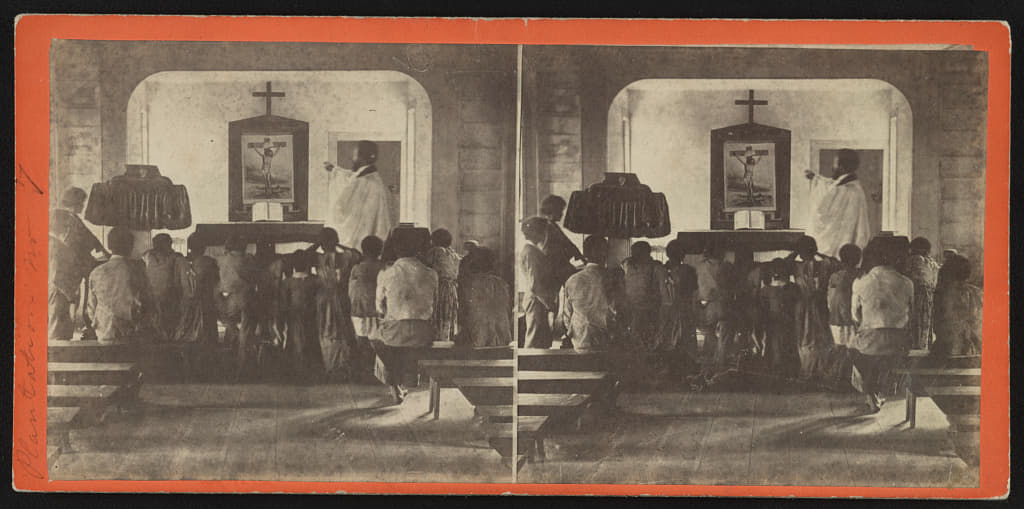
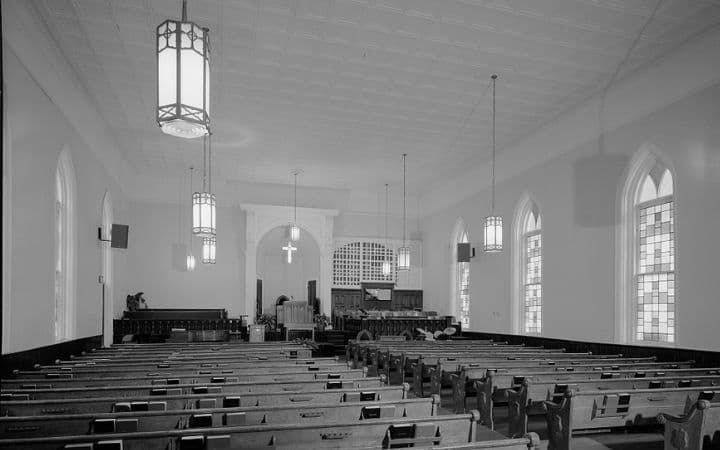
The relationship between Black music and faith is not a subplot. It is the origin story. Before Aretha Franklin became the Queen of Soul, she was the daughter of the Reverend C.L. Franklin, singing in his Detroit church. Before Whitney Houston sold out arenas, she was in the choir at New Hope Baptist Church in Newark. The spiritual roots of Black music are not background detail — they are the architecture. That's the central argument in the latest episode of Queue Points, where DJ Sir Daniel and Jay Ray trace how the Black church shaped generations of artists, why so many of them eventually crossed between sacred and secular worlds, and how to tell the difference between a genuine conversion and a career pivot dressed up in scripture.
The baseline, as Sir Daniel frames it, is historical. During the Jim Crow era, the church was one of the few institutions Black Americans fully controlled — a space for community, joy, and identity at a time when those things were systematically denied everywhere else. The artists who came out of that environment didn't leave the church behind so much as they carried it with them. You hear it in the call-and-response of James Brown's performances, in the gut-level testifying of Aretha Franklin's Amazing Grace, recorded live in 1972 at New Temple Missionary Baptist Church in Watts — sessions so powerful that Mick Jagger and Charlie Watts showed up to watch. That album remains Franklin's best-selling record, a fact that says something about where people go when they want music that reaches past entertainment.
"The stuff that we love has some sort of spiritual center. That's what make, that's the sauce. If people wanna know what the sauce is, part of the sauce is some kind of spiritual center where you understand that gift that you've been given." — Jay Ray
Jay Ray points to Archbishop Carl Bean as a clarifying example of the gospel crossover dynamic. Bean — who recorded "I Was Born This Way" in 1977 — deliberately moved out of gospel because he believed the message had a wider audience than the church could reach. That tension, between the spiritual obligation to stay in the community and the pull to take the music further, defined a generation of artists who built Black popular music as we know it.
The gospel crossover question is also a story about consequences. Jay Ray references Bunker Hill — born David Walker, a member of the Mighty Clouds of Joy — who had to adopt a stage name to record secular music because being identified would have ended his gospel career immediately. The boundary between sacred and secular was, for much of the 20th century, a hard one to cross in either direction.
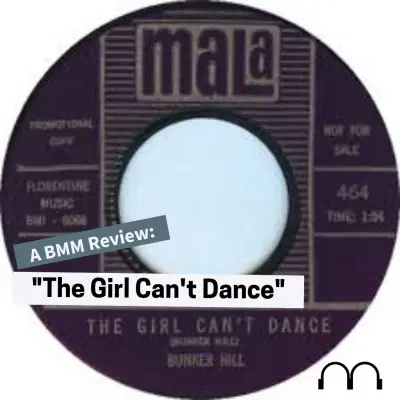
Black Music Mixtape: Reviewing "The Girl Can't Dance" by Bunker Hill
PAID MEMBERS ONLY: Jay Ray reviews the Norton Records reissue of 'The Girl Can't Dance' he purchased on Discogs and share why the track remains a rock classic.
The conversation shifts when it moves to crisis conversions — the artists who didn't plan a crossover so much as they ran out of road. Vanity, born Denise Matthews, became a born-again Christian in 1992 following years of drug addiction that ultimately cost her her kidneys. She walked away from entertainment entirely. Sir Daniel and Jay Ray hold her up as one of the clearest examples of a genuine transformation — someone who needed saving and found it, not someone building a brand.
"She's one of those artists — she got that religion, honest. She talked about how she got to God and saw that as God saving her from the life she was living. And I really respect that." — Jay Ray
That same context applies to the wave of early hip-hop pioneers who turned to ministry later in their careers. Kurtis Blow, the first commercially successful rapper and first to sign with a major label, is an ordained minister who founded the Hip Hop Church in New York. The hosts note that these artists — who survived Reaganomics, the crack epidemic, and an industry that built itself on their innovations without paying them accordingly — had specific reasons to look for solid ground.
"If you survived the '80s, you had a crack addiction or whatever, and you came out of that, I kinda see why you're like — the Lord pulled me out of that." — Sir Daniel
That sympathy does not extend uniformly. The prosperity gospel, which both hosts trace from the Reverend Ike era through its absorption into hip-hop culture, created a different kind of religious figure: one whose theology aligned suspiciously well with rap's existing obsession with wealth. When Mase opened a church after leaving Bad Boy Records, Sir Daniel and Jay Ray were skeptical. When Reverend Run started appearing in fedoras and clerical collars, they were skeptical there too. The line they draw is between people who turned to faith because they had nowhere else to go and those who turned to faith because it was the next available platform.
The episode closes on the question of what that original spiritual authority sounds like when it's still intact — when an artist has, as Sir Daniel puts it, "that oil." He names Whitney Houston without qualification. He names Fantasia. He names Avery Sunshine, a Chester, Pennsylvania native whose music carries a similar weight. These are artists whose connection to a spiritual tradition isn't a narrative they're telling about themselves — it's audible.
"We cannot have this discussion without mentioning Whitney Elizabeth Houston. When you talk about oil, that's who we talking about." — Sir Daniel
On the question of gospel rap specifically, the hosts are candid: neither of them has found much that works. Kirk Franklin gets his due — not as a rapper, but as the clearest example of how to operate at the intersection of ministry and entertainment without sacrificing either. His collaboration with Salt on "Stomp" remains a reference point for what that balance looks like when it actually lands. Chance the Rapper is the one name Jay Ray offers as a rapper whose spiritual center comes through without feeling like a product. The rest, they say, is still an open question.
Listen
Got That Oil: Gospel Roots of Black Music
Got That Oil: Gospel Roots of Black Music traces the sacred threads running through soul, R&B, hip-hop, and gospel, exploring how artists who grew up in the church—like A...
Watch
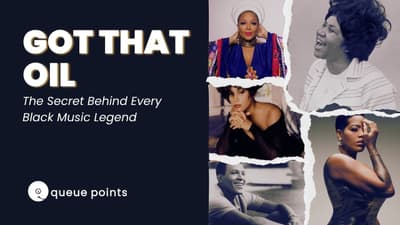
Got That Oil: The Secret Ingredient of Every Black Music Legend
Exploring the spiritual roots of Black music, this episode traces a sacred thread from the Black church to Aretha Franklin, Whitney Houston, and beyond, examining how fai...
Get the stories behind the episodes.
The Queue Points Insider lands every Thursday with what we're working on, what's coming next, and the stories that don't make the episode.
Subscribe Today