
![[Show Notes] Dancing Through Black History With Dr. Marcus Borders: Line Dancing, Skating, and Community](https://images.beamly.com/fetch/https%3A%2F%2Fsites.beamly.com%2F65e385bcdcfc57fb25f741f6%2Fmedia%2Ff775f9385a85b51bfd8e.webp?w=1200)
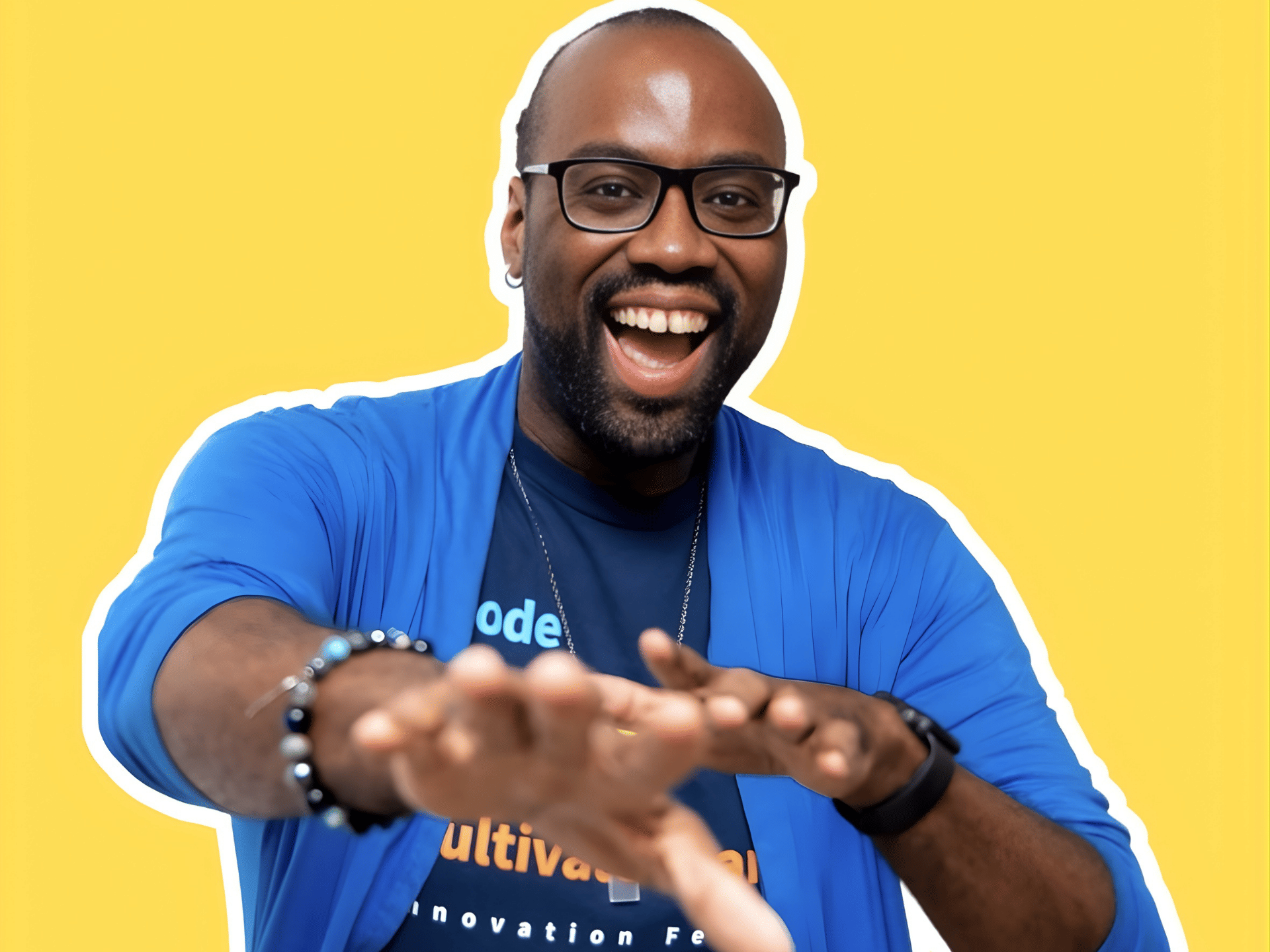
Dr. Marcus J.W. Borders (Image Courtesy of subject)
Show Notes
This episode of Queue Points is a love letter to Black joy, movement, and community, told through the story of line dancing and roller skating in Atlanta. DJ Sir Daniel, Jay Ray, and guest Dr. Marcus Borders explore how dance floors and skating rinks become sacred spaces where Black folks can breathe, connect, and be fully themselves. From Black family functions and Southern Soul nights to trail ride line dances and quiet storm skate sets, the conversation shows how these spaces carry history, heal the spirit, and keep culture alive across generations. At its heart, this is an episode about protecting the places that protect our joy.
Listen To This Episode
Dancing Through Black History With Dr. Marcus Borders: Line Dancing, Skating, and Community
DJ Sir Daniel and Jay Ray sit down with Dr. Marcus Borders to explore how roller skating rinks, line dance floors, and Southern Soul nights in Atlanta become spaces of Bl...
Start Listening Now → Apple Podcasts / Spotify / YouTube
“Hiding in the Crowd”: How Line Dancing Frees the Introvert
Dr. Marcus describes himself as an introvert who used to be perfectly fine posted up on the wall—until a line dance song came on.
As a kid, he loved to dance but hated being put on the spot, so line dances became a way to “hide within a crowd and enjoy” himself without feeling like all eyes were on him.
Classic line dances like the Electric Slide, Cha-Cha Slide, The Wobble, and newer routines linked to Southern Soul and trail ride culture function like invitations for everyone—especially the shy folks—to step into the circle together.
He talks about hearing a specific song and making a beeline to the floor, then quietly leaving again once the song is over, satisfied and recharged.
This isn’t just about steps; it’s about how the brain and spirit respond to shared rhythm. Something powerful happens when a room full of people hits the same move at the same time, then adds their own flavor—a spin here, a dip there—while still moving in sync. That mix of structure and self-expression is where the freedom lives.
From Fun Friday to Cascade: Skating, Nostalgia, and Black Southern Soul
Marcus traces his journey through movement all the way back to Fun Fridays in elementary school, where his teacher had the class doing MC Hammer moves and learning the Electric Slide in the early 1990s. Those early memories planted a seed that wouldn’t fully bloom until adulthood.
Skating Sparked the Shift
During the summer of 2020, in the middle of the pandemic, Marcus decided to go to Cascade Skating Rink in Atlanta—and never looked back.
He has not missed a week of skating since, often going three to six days a week.
Atlanta’s skate scene is so rich that you can skate seven nights a week at different rinks and still hear top‑tier DJs.
Sunday nights at Cascade feel like stepping onto the set of a movie like ATL in real time.
Skating, for Marcus, is where he learned to be fully present in his body. It also introduced him to many of the same people he would later see at Southern Soul and trail ride line dance events, making the transition from the rink to the dance floor feel natural and safe.
Quiet Storm on Wheels
When it comes to skating, Marcus is a slow-set person through and through.
He loves gliding to ’90s R&B and Quiet Storm classics—artists like Johnny Gill, Keith Sweat, Kut Klose, and Xscape (think “Who Can I Run To”), often tied to the LaFace / Atlanta sound.
He describes his skating style as a classic Lincoln or Cadillac: slow off the line, but smooth and fast once he gets going—not doing flips or splits, just clean, confident motion.
These musical choices root his skating practice firmly in Black Southern nostalgia, turning each slow set into a rolling meditation on memory, romance, and community.
The Cookout on the Dance Floor: Community, Generations, and Black Joy
The episode repeatedly comes back to a simple truth: Black line dancing and skating spaces feel like a family reunion—even when you don’t know everyone’s name.
Intergenerational Dance Floors
In the line dance classes Marcus attends, ages range from early 20s to folks in their 60s, and everyone is treated like kin.
Older dancers—the aunties and “Ms. Jones” types—might greet you with a “Hey baby, how you doing?” and try to teach you a move.
Younger dancers introduce new trail ride or Southern Soul routines, sometimes being invited by the DJ to come up and teach the room their latest line dance.
The vibe is like Memorial Day or 4th of July at the park: aunties, cousins, and friends spanning decades all sharing the same floor and the same groove.
This intergenerational mix keeps Black dance traditions circulating—from the Electric Slide to modern Southern Soul steps—so kids, teens, and elders can all recognize themselves in the culture.
Safety, Trust, and Shared Rhythm
For an introvert like Marcus, safety and trust are non‑negotiable.
He leans on his discernment to choose which rooms to enter, preferring spaces where he already knows a few people from the rink or prior events.
Being surrounded by familiar faces—or at least by people doing the same choreography—creates a feeling of belonging that lets him disappear into the music.
Even small customizations in the choreography, like adding an extra spin or personal flair, help people claim ownership of the dance while still moving as a unit.
Jay Ray adds stories of being on a crowded house‑music dance floor—like at Tambo in Atlanta—when a DJ suddenly flips from a Thriller‑inspired house remix into Prince’s “Controversy,” and hundreds of people literally jump together on the downbeat. That shared shock of joy is the exact energy this episode celebrates.
“Dancing Like a Video Game”: Learning, Messing Up, and Leveling Up
One of the most relatable threads in this conversation is how Marcus talks about learning to line dance.
Line Dancing Is Like Math (Or a Video Game)
Marcus jokes that line dancing is like math, and math is not his strong suit. When he first sees a new routine, his brain almost short‑circuits as he tries to piece it together.
He compares learning line dances to leveling up in a video game—the real question is, “Can I conquer this dance?” more than “Do I love this particular song?”
Over time, he realized that most line dances share the same seven to ten core steps, just remixed at different speeds and in different orders.
Once those base moves are in your body, you can often jump into a dance you’ve never formally learned just by watching the room.
This mental model turns what could feel intimidating into a fun, ongoing challenge.
The Tamia Shuffle Saga
Marcus’s story about learning the Tamia Shuffle (set to Tamia’s “Can’t Get Enough”) is a whole journey.
He first saw it around 2014–2015 at a Detroit‑connected family party and thought it looked “simple” on the surface.
In reality, the footwork and timing gave him fits—so much so that it took about a year and a half of on‑and‑off practice before it finally clicked.
The breakthrough came from finding an Instagram Reel where someone “chopped and screwed” the dance, slowing it down and breaking it into digestible chunks.
By the time of this episode, the Tamia Shuffle has become one of the go‑to line dances in Southern Soul and trail ride spaces—so now, when Marcus hears it at an event, he runs to the floor both for joy and to sharpen his skills.
You Have to Skate (and Dance) Badly First
A key lesson Marcus carries from skating into line dancing is this: to do it well, you have to be willing to do it badly first.
In skating, that means paying your “wood taxes”—falling, scraping your elbows, and learning how to fall safely (protecting your head, not bracing with your wrists).
In line dancing, it means stepping on toes, going left when the line goes right, and saying “I’m sorry” while you figure it out.
Over time, repetition turns awkwardness into muscle memory, and people in the room often help—pulling you aside to demo a step more slowly or encouraging you to stick with it.
For folks like Jay Ray who are nervous about bumping into others or taking up space, Marcus suggests starting in classes rather than in the middle of a packed club.
Classes as Safe Laboratories
Marcus shouts out line dance environments where the teaching is as thoughtful as the music.
In Atlanta, he highlights DJ Trael Tsunami and crews like Locked and Loaded, who host free or low‑pressure classes designed to help people learn without shame.
These teachers break the dances down step by step, call out the “AP version” (advanced spins and kicks) versus the standard version, and make it clear that beginners are welcome to keep it simple.
Practicing in these spaces gave Marcus the confidence to later walk into social events and jump into dances he might have once watched from the sidelines.
The throughline: messing up is not a failure—it’s part of the process of joining the community.
DJs, BPMs, and Letting the Music Breathe
As a DJ himself, Sir Daniel uses this episode to ask Marcus directly: What do you want from DJs when you come out to dance?
Reading the Room vs. Experimenting on It
Marcus emphasizes that he’s not against experimentation—but he can hear and feel when a DJ is experimenting on the crowd instead of with them.
In both skating rinks and clubs, he appreciates DJs who watch the floor, see how people respond, and adjust accordingly.
After a slow set at the rink, for example, skaters expect something like a slow walk or slightly faster groove—not a jarring jump into something that clashes with the mood.
He notes that Atlanta skaters are spoiled with DJs who know their craft so well that a session can feel like a perfectly sequenced journey.
The main plea: “Don’t take me on a haphazard journey.”
The Art of the Transition
Marcus also talks about not wanting every transition to feel like a software auto‑mix.
He gently drags auto‑DJ tools that crossfade in the next track for 45 seconds in a way that telegraphs the next song (“I don’t want to know halfway through the first song that you’re getting ready to play Juvenile”).
Instead, he wants DJs to “let the story breathe, let the music breathe,” trusting the emotional arc of the songs rather than over‑blending everything for the sake of it.
This frames the DJ not just as someone who plays line dances, but as a storyteller who shapes how Black joy and connection unfold over the night.
Sacred Safe Spaces: A Life Philosophy From the Rink and the Dance Floor
Toward the end of the episode, Sir Daniel asks Marcus what philosophy skating and line dancing have given him for life moving forward.
Protect What Protects You
Marcus’s answer is simple and profound: keep your safe spaces sacred—and protect them.
He schedules his life around skating and line dancing—blocking off class nights, declining meetings that clash, and letting people know, “He’s probably out skating or line dancing” as just part of who he is.
These practices support him emotionally, mentally, spiritually, and physically, so he treats them not as hobbies but as essential maintenance for his well‑being.
In these spaces, he’s not just the quiet, mild‑mannered educator people might assume him to be; he’s animated, expressive, and fully seen.
Jay Ray connects this to the broader Black cultural tradition of turning dance and music into a shared language—one that has traveled from the African continent through the diaspora to modern‑day Atlanta line dance floors and skating rinks.
Passing the Steps Down
The episode closes on the importance of passing this culture forward.
Marcus mentions a younger cousin in college who now sends videos of himself practicing line dances after seeing Marcus do them at a family wedding.
Kids in elementary school light up when certain songs come on, instantly recognizing the dances they’ve seen at home, online, or in their communities.
Social media helps spread routines, but it’s the in‑person sharing—at cookouts, classrooms, rinks, and clubs—that keeps the lineage alive.
For the hosts and their guest, these aren’t just trends. They’re living languages of Black survival, joy, and connection.
The Ultimate Takeaway
The single most important message in this episode: Black joy is worth scheduling your life around. The spaces where you feel free, seen, and safe—whether that’s a skating rink on a Sunday night or a Southern Soul line dance class on a Tuesday—are worth treating as sacred. Protect the places that protect your spirit.
Bibliography / References
Podcast Episode
Queue Points (2026). Dancing Through Black History With Dr. Marcus Borders: Line Dancing, Skating, and Community. Hosted by DJ Sir Daniel and Jay Ray, featuring Dr. Marcus Borders. Queue Points – Black Music History Podcast. Episode page: https://queuepoints.com/episode/dancing-through-black-history-with-dr-marcus-borders-line-dancing-skating-and-community
Queue Points Articles and Platforms
Queue Points. “Line Dancing & Skating: Keeping Black Joy Alive in Atlanta w/ Dr. Marcus Borders.” Queue Points blog. Explores the same themes of Atlanta skating rinks, Southern Soul line dances, and Black joy as communal practice. https://queuepoints.com/blog/dr-marcus-borders-on-how-line-dancing-and-skating-keep-black-joy-alive
Queue Points. Main site and episode archive. Context for the show’s mission to “drop the needle on Black music history.” https://queuepoints.com
Queue Points – YouTube Channel. Video version of Dancing Through Black History With Dr. Marcus Borders and related clips. https://www.youtube.com/@queuepointspod
News & Culture Coverage (External)
NBC 11Alive. Video exploring Atlanta's roller skating culture as a family bonding tradition in Black communities, with historian Tasha Klusmann on its deep roots. https://link.queuepoints.com/show214-ref1
Atlanta Voice. Feature on Cascade Skating Rink's 25+ year history as Atlanta's cultural hub, influencing fashion, music, dance, and serving as a safe space for Black families. https://link.queuepoints.com/show214-ref2
Great Big Story. Documentary tracing roller skating's Black history from segregation-era "Soul Nights" to Atlanta's Cascade as a key hub, evolving into a unique subculture. https://link.queuepoints.com/show214-ref3
Black Excellence Excellist. Showcase of Black-owned rinks like Cascade, highlighting roller skating's role as refuge, self-expression, and addiction in African American communities. https://link.queuepoints.com/show214-ref4
NBC News. Article on roller skating's Black roots as sanctuary, Civil Rights ties, street skating evolution, and modern revival amid rink closures. https://link.queuepoints.com/show214-ref6
Associated Press. “Black Cowboy joy is spread by ‘Boots on the Ground’ viral line dance.” 2025. Article on Southern Soul and trail ride‑inspired line dancing, highlighting how songs like “Boots on the Ground” have become fixtures at Black gatherings. https://www.ap.org/news-highlights/spotlights/2025/black-cowboy-joy-is-spread-by-boots-on-the-ground-viral-line-dance/
ARTS ATL. “Reader’s choice in dance in 2025: To the left now! Your complete guide to line dancing in Atlanta.” 2025. A city‑wide look at soul line dancing, the Electric Slide, the “Tamia Dance,” and queer‑inclusive line dance nights in Atlanta. https://www.artsatl.org/readers-choice-in-dance-in-2025-to-the-left-now-your-complete-guide-to-line-dancing-in-atlanta/
Peekskill Herald. “Soul Line Dance Makes Black History.” 2025. Explains soul line dance as an extension of long-standing African and Caribbean communal dance traditions, using R&B, soul, hip‑hop, and gospel instead of country. https://peekskillherald.com/28953/feature/soul-line-dance-makes-black-history/
Pride. “15 Black LGBTQ+ Podcasts You Should Listen To.” 2024. Includes Queue Points and highlights “Dancing Through Black History With Dr. Marcus Borders” as a recommended episode, situating the show within Black LGBTQ+ media. https://www.pride.com/podcast/black-queer-podcasts-list
MyGayPrides. “15 podcasts Black LGBTQ+ que vous devriez écouter.” 2024. French‑language roundup that names Queue Points and this episode as a key Black LGBTQ+–centered podcast experience. https://www.mygayprides.com/15-podcasts-black-lgbtq-que-vous-devriez-ecouter/
Songs and Artists Mentioned
Tamia – “Can’t Get Enough” – R&B track that underpins the Tamia Shuffle line dance; Marcus describes taking about a year and a half to master this routine and now runs to the floor whenever it plays.
Johnny Gill – various Quiet Storm tracks – Featured in Marcus’s ideal slow‑set skate playlists, representing ’90s Quiet Storm R&B.
Keith Sweat – various Quiet Storm tracks – Another core artist in Marcus’s preferred slow skate sets, tied to the ’90s Atlanta / LaFace‑era sound.
Kut Klose – “Surrender” – Named by the hosts as a perfect example of a smooth R&B cut that feels ideal for skating.
Xscape – “Who Can I Run To” – Classic ’90s R&B ballad Marcus cites as part of his Quiet Storm skating soundtrack and a sonic link to Atlanta’s musical identity.
Prince – “Controversy” – Jay Ray recalls a DJ slam‑mixing this in after a Thriller‑inspired house remix, creating an unforgettable collective jump on the downbeat.
Jack Son - "Thrill Her" – Used in a house remix that set up the legendary transition into “Controversy” on the dance floor Jay Ray describes.
803Fresh – “Boots on the Ground” – Southern Soul / trail ride‑inspired line dance song referenced more broadly in conversation about 2024’s “boots on the ground” movement; spotlighted by AP as a viral Black cowboy line dance moment.
Foundational Themes, Dances, and Steps
Electric Slide – Foundational Black line dance taught to Marcus in elementary school during Fun Fridays and still a staple at Black gatherings.
Cha-Cha Slide – Modern line dance classic frequently cited in conversations about the “sacred science” of Black line dances.
The Wobble – Contemporary line dance that pulls introverts from the wall to the center of the floor; discussed as both overplayed and beloved for its unifying power.
Tamia Shuffle – R&B‑driven line dance to Tamia’s “Can’t Get Enough”; Marcus’s hardest dance to learn and now a favorite benchmark of his skills.
Trail ride / Southern Soul line dances – Contemporary line dance styles rooted in country‑adjacent and Southern Soul scenes, often performed outdoors or at specialized events.
Core step vocabulary – Marcus notes that most line dances in these scenes are built from a shared vocabulary of roughly seven to ten basic steps, recombined at different tempos and in different patterns.
Regional Genres and Formats
Southern Soul – Southern Black music genre blending soul, blues, and country influences; underpins many of the line dances and trail ride parties discussed in the episode.
Trail ride music – Regional style connected to outdoor rides, Black cowboy aesthetics, and line dancing; provides the soundtrack for many of the newer line dance routines Marcus practices.
Quiet Storm – Slow, sensual R&B radio and playlist format emphasizing smooth ballads; for Marcus, it defines the ideal slow skate musical palette.
Atlanta bass / Freaknik‑era party music – Fast, bass‑heavy Southern hip‑hop and dance tracks that some of the DJs Marcus knows can drop when they switch from line dance formats to full‑on party sets.
People, Places, and Crews
Dr. Marcus Borders – Learning Innovation Specialist with Ed Farm, Atlanta native, and passionate skater and line dancer whose journey from introvert to floor mainstay anchors this episode.
DJ Sir Daniel – Co‑host of Queue Points, DJ, and curator who frames the conversation through the lens of Black music history and the responsibilities of DJs to read the room.
Jay Ray (Johnnie Ray Kornegay III) – Co‑host, producer, and storyteller who connects Marcus’s experiences to broader themes of Black culture, memory, and communication.
DJ Trael Tsunami – Atlanta DJ and educator who hosts free or low‑pressure line dance classes and sets that helped Marcus and many others build confidence on the floor.
DJ Soufside – Another Atlanta DJ associated with line dance‑friendly events and classes, recommended in the conversation for people wanting to get started.
Locked and Loaded (line dance crew) – Group noted for hosting or supporting teaching environments where new dancers can safely learn routines.
Cascade Skating Rink (Atlanta) – Legendary Atlanta rink that became Marcus’s home base during and after the 2020 pandemic summer, central to his skating story.
Get the stories behind the episodes.
The Queue Points Insider lands every Thursday with what we're working on, what's coming next, and the stories that don't make the episode.
Subscribe Today