
![[Show Notes] Conversations on Wealth, Hip Hop, and the "Black Trump" Era](https://images.beamly.com/fetch/https%3A%2F%2Fsites.beamly.com%2F65e385bcdcfc57fb25f741f6%2Fmedia%2Fa08296b570e7bedff0d4.png?w=1200)


Listen to This Episode
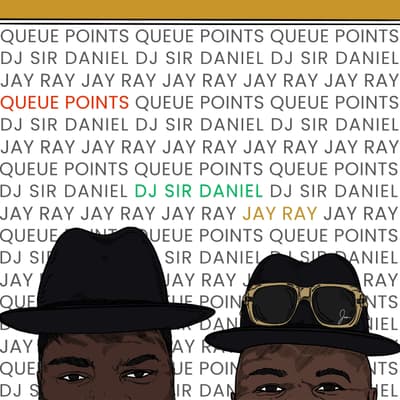
Conversations on Wealth, Hip Hop, and the "Black Trump" Era
This episode traces how Donald Trump’s name evolved into a symbol of wealth, access, and status within Black music in the late ’80s and ’90s, linking lyrics to the era’s ...
Show Notes
The Big Picture
DJ Sir Daniel and Jay Ray sit down to trace how Donald Trump's name became embedded in Black music history — not through politics, but through the cultural weight of wealth, status, and aspiration in the late 1980s and early 1990s. From Dynasty on primetime television to Prince writing "Donald Trump (Black Version)" for Morris Day to sing, this episode maps the specific conditions — Reaganomics, the crack era, the Exonerated Five, and the rise of Mafioso rap — that made that name a shorthand for "making it." This is a story about hip hop culture, what we put in the music, and what the music puts in us.
The 80s Made Wealth the Only Language That Mattered
Growing up in the "ME era" meant seeing wealth as the measure of everything. Shows like Dynasty, Dallas, The Colbys, and Lifestyles of the Rich and Famous didn't just entertain — they defined a standard.
Reaganomics created a visible gap between the haves and have-nots in every major city with a large Black population
The crack era, HIV, and mass incarceration were simultaneously dismantling Black communities
Hip hop was rising at exactly this moment — giving young Black people visibility, money, and a path toward that same standard of success
The psychological effect wasn't subtle: if white wealth was the model, then assimilation to it — the right car, the right house, the right appliances — meant you had "made it"
"There's a very concrete line — a gold line, if you will — that was drawn in the sand of the world, of the haves and the have nots. And so that was pushed in our faces." — DJ Sir Daniel

May 1, 1989: Two Stories, One Date
Jay Ray zooms in on a moment that most people have never connected before.
On May 1, 1989, Donald Trump took out full-page ads in four New York newspapers — the New York Times, New York Daily News, New York Post, and New York Newsday — calling to "bring back the death penalty, bring back our police," targeting the young men we now know as the Exonerated Five
The Exonerated Five: Antron McCray, Kevin Richardson, Yusef Salaam, Raymond Santana, and Korey Wise — convicted but later exonerated
That same year, Trump's name started appearing in hip-hop records as a symbol of extreme wealth:
The Fat Boys used his name as a unit of money
The Beastie Boys on Paul's Boutique created "Donald Tramp," a character experiencing homelessness — a counter-image
Prince wrote "Donald Trump (Black Version)" for The Time, with Morris Day singing about a man who can give a woman "her every dream, her every wish" — a song that eventually landed on Pandemonium (1990)
"By 1989, this figure has started to transition to a symbol — a unit of measure — of opulence, of money, of all of those things." — Jay Ray
Mob Bosses, Tony Starks, and the "Black Trump"
The early 90s brought a new wave of imagery into hip hop — the Mafioso aesthetic.
Films like Scarface and The Godfather were being romanticized across Black communities despite complicated racial dynamics
On the streets, the crack kingpin was the real aspirational figure: the Mercedes, the Dapper Dan fit, the gold medallions, the parties
Wu-Tang Clan tapped into all of it — particularly Ghostface Killah adopting the persona of Tony Starks, named after a man with his name on a building in gold
On Raekwon's "Incarcerated Scarfaces" (featuring Ghostface Killah), the question is asked plainly: "Who is the Black Trump?"
"Black folks were aspiring to be the Black version of this very rich, of this rich white [person]. And you becoming the Black version of that meant your status within community was higher than everyone else's." — Jay Ray
What We Platform, and What It Costs
The episode closes on a harder question — not just about the past, but about the present.
Trump's name moved from records to music videos, from videos to television cameos, and from there into a fully constructed celebrity character the world felt like it already knew
India.Arie's current tour message — the power of the tongue and what we speak life into — connects directly to this history
Making the Band, Diddy, and the culture of aspiring to emulate this figure are referenced as part of the same arc
The Coup and Boots Riley are named as artists who flipped the Trump reference into cultural criticism rather than celebration
Sir Daniel closes with the idea of the "algorithm of your mind" — a call to be selective about what you let in and what you hold up as the standard
"The algorithm is not just about the app that's on your phone, but the algorithm of your mind, of your brain. You behold, you become changed by what you behold." — DJ Sir Daniel
FAQ: Your Questions About Trump, Wealth, and Hip Hop History
Q: Why did hip hop start using Trump's name as a wealth reference?
A: In the 1980s, Trump Tower was already a fixture of New York's skyline, and Trump's persona as a real estate mogul made him the most visible symbol of extreme wealth in the city. As hip hop was rising and artists were searching for language to describe the level of money they were reaching for, his name became a natural shorthand.
Q: Is "Donald Trump (Black Version)" a real song?
A: Yes. It was written by Prince for The Time's shelved album Corporate World and eventually released on Pandemonium (1990). Morris Day sings it. The song frames Trump-level wealth as the ultimate thing a man can offer a woman.
Q: Are Sir Daniel and Jay Ray saying Black music caused Trump's political rise?
A: No — and they say so directly. Their point is that art reflects the cultural conditions around it. Hip hop absorbed the wealth symbolism it was surrounded by, and that helped build a particular image. They're not placing blame; they're tracing a cultural pattern.
Q: What is "Mafioso rap" and how does it connect here?
A: Mafioso rap is a subgenre of hip hop from the early-to-mid 1990s — rooted in New York — that drew heavily on the imagery of Italian-American mob films and crime boss aesthetics. Artists like Raekwon, Ghostface Killah, and Nas used this framework to talk about street power and money. The connection to Trump comes through the shared language of wealth, impunity, and having your name on buildings.
Q: Who were the Exonerated Five?
A: Antron McCray, Kevin Richardson, Yusef Salaam, Raymond Santana, and Korey Wise — five young Black and Latino men wrongfully convicted in connection with the 1989 Central Park jogger case. They were exonerated in 2002 after the real perpetrator confessed and DNA evidence confirmed his guilt.
The Ultimate Takeaway
"You behold, you become changed by what you behold. Be real selective about who you let in and out of your mind." — DJ Sir Daniel
Bibliography & References
Artists & Music
People & Places
Exonerated Five (Central Park Five) — Wikipedia
Dapper Dan — Harlem fashion designer who outfitted hip hop and street culture royalty
Genres & Formats
Mafioso Rap — A New York hip hop subgenre drawing on mob-film imagery to discuss power, money, and street life
Golden Era Hip Hop — Generally the late 1980s to mid-1990s, considered hip hop's artistic peak
Reaganomics — Economic policies under President Ronald Reagan emphasizing tax cuts and deregulation; widely criticized for widening income inequality
References for Context & Research
Music
The Time – Donald Trump (Black Version) (Official Audio, YouTube): The official audio upload of the 1990 Prince-written song performed by Morris Day and The Time — the key musical artifact discussed at length in the episode.
Raekwon & Ghostface - Incarcerated Scarfaces (Official Audio, YouTube): Official audio for the Raekwon single the song where the Black Trump question is raised directly.
Other References
Donald Trump in Music – Wikipedia: A comprehensive catalog of Trump appearances in songs across decades, including early hip-hop shoutouts and later critical references.
Donald Trump Rap Version (The Nelson George Mixtape Substack): Nelson George traces how Donald Trump became a symbol of wealth and swagger in hip hop, widely name‑checked by rappers who admired his branding and celebrity long before his presidency.
HuffPost: 67 Times Rappers Name-Dropped Donald Trump: A journalism roundup tracking over 25 years of Trump name-drops in rap lyrics, with artist and lyric examples useful for understanding the scope of the Black Trump concept.
Politics in Hip Hop, Sleepover Podcast, & Twinkies (New Hampshire Public Radio): The page is a show description for an NHPR “Word of Mouth” episode that explores how hip hop lyrics have long critiqued political and economic oppression and how references to Donald Trump shifted from symbols of wealth to targets of criticism during his 2016 presidential campaign.
BET Documentary: Hip Hop's Rocky Relationship With Trump (YouTube): A 30-minute BET documentary exploring how 80s and 90s rappers used Trump as a wealth symbol and how that image fractured when his racial politics came into focus.
Rolling Stone: Hear Prince and The Time's 1990 Song About Donald Trump: A short but essential Rolling Stone feature on Donald Trump (Black Version), confirming Prince's authorship and the song's Corporate World origins.
KEXP: 50 Years of Music – Raekwon, Incarcerated Scarfaces (1995): A music journalism deep-dive into Raekwon's landmark track, placing it inside the Wu-Tang world of wealth mythology, mob aesthetics, and Black identity in New York.
Incarcerated Scarfaces – Wikipedia: Wikipedia entry on the Raekwon single, including lyrical content, production context, and cultural significance — the song where the Black Trump question is raised directly.
Mafioso Rap – Hip Hop Music History: A detailed historical overview of Mafioso rap from its Kool G Rap origins through Wu-Tang's peak, providing essential genre context for the episode's second half.
The Evolution of Mafioso Rap – Shatter the Standards: A long-form narrative piece tracing Mafioso rap's arc from Kool G Rap to Jay-Z, explaining how crime-film aesthetics merged with Black aspirational identity.
PBS – Conviction and Exoneration: The Central Park Five: Ken Burns' PBS companion page to the Central Park Five documentary, covering the arrest, trial, and exoneration of the five young men central to the 1989 story in the episode.
The Central Park Five – Full Documentary (PBS): The full Ken Burns documentary on the wrongful conviction and exoneration of five Black and Latino teenagers, providing essential background on the case discussed in the episode.
Paris Is Burning Clip on Being Rich in America: Two‑minute excerpt from Paris Is Burning analyzing how white beauty, wealth, and lifestyle are imposed as America’s ideal and how Black and other people of color navigate that reality.
Get the stories behind the episodes.
The Queue Points Insider lands every Thursday with what we're working on, what's coming next, and the stories that don't make the episode.
Subscribe Today